Pastel Hijabs and the Illusion of Effortless Piety: A Satirical Ode to Soft-Spoken Sanctimony
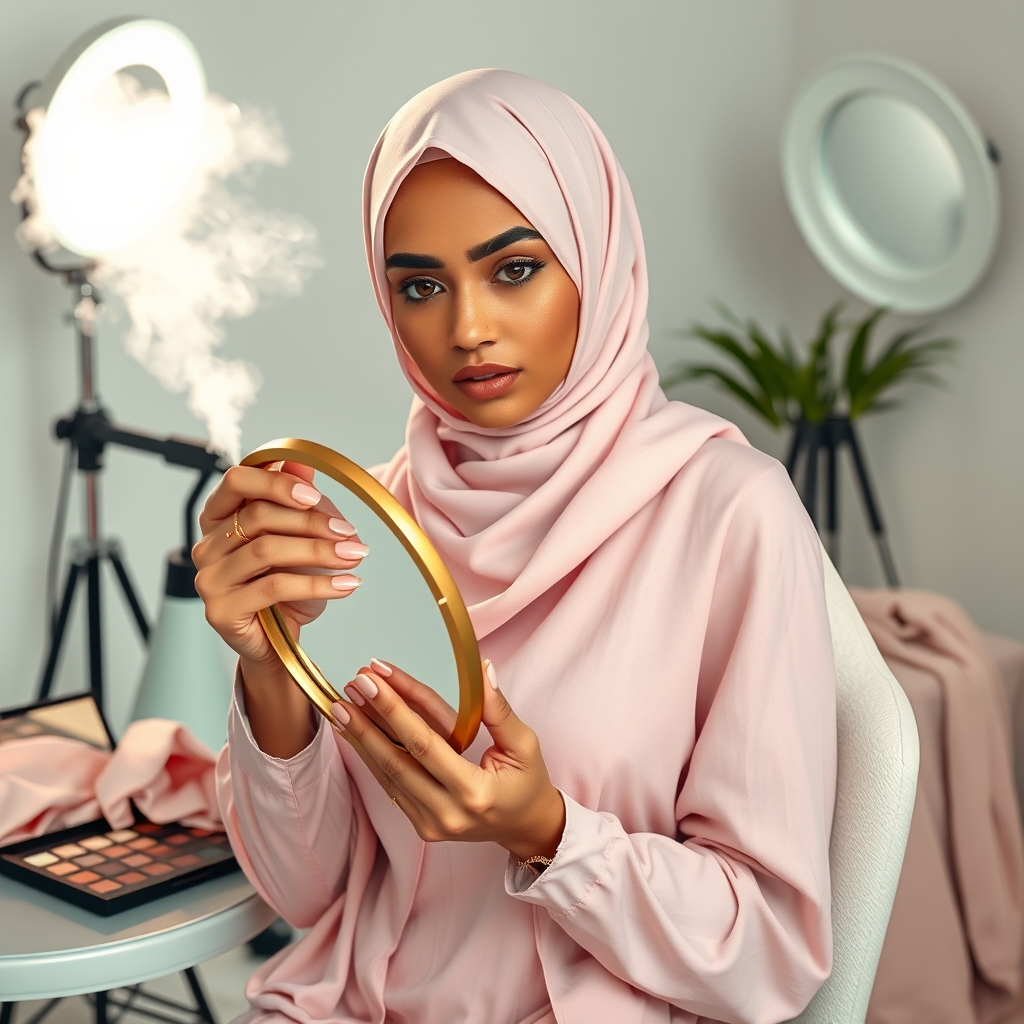
Ah, the pastel hijab—nature’s way of telling you that modesty doesn’t have to be loud to be insufferable. In a world where Instagram influencers treat piety like a Pantone swatch, the pastel hijab has emerged as the ultimate flex: “Look at me, I’m devout, but make it *aesthetic*.” Because nothing says “I submit to the divine” quite like a lavender chiffon draped just so, accessorized with the quiet confidence of someone who definitely owns a ring light.
The Myth of Effortless Grace
Let’s be real—there’s nothing effortless about a pastel hijab. Behind that soft-focus, sun-dappled Instagram post lies a battlefield of fabric choices, steaming sessions, and at least three failed attempts at achieving the “I woke up like this” look. The pastel hijab isn’t just a headscarf; it’s a performance. A delicate dance between piety and perfection, where one wrong pin can send the entire illusion crumbling faster than a gluten-free cookie.
And yet, we’re supposed to believe that these women just *happen* to coordinate their hijabs with their abayas, their nails, and the exact shade of their latte foam. Sure, Jan. The only thing effortless about it is the way they effortlessly ignore the fact that their entire aesthetic is a carefully curated fantasy, designed to make the rest of us feel like we’re failing at both faith and fashion.
The Psychology of Pale: Why Pastels Make Us Question Our Life Choices
Pastels are the emotional support colors of the modest fashion world. They whisper instead of shout, they soothe instead of provoke, and they make you feel like a monster for ever daring to wear black on a Tuesday. There’s something deeply unsettling about a color palette that refuses to acknowledge the chaos of real life. A pastel hijab doesn’t just cover your hair—it covers your existential dread, your questionable life choices, and the fact that you haven’t folded your laundry in three weeks.
And yet, we’re drawn to them like moths to a very expensive, ethically sourced candle. Because in a world where everyone is screaming for attention, pastels offer the illusion of serenity. They’re the sartorial equivalent of a yoga retreat—expensive, vaguely spiritual, and guaranteed to make you feel inadequate if you don’t participate.
The Pastel Hijab Industrial Complex
Of course, none of this would be possible without the modest fashion industrial complex, which has turned pastel hijabs into a lucrative business. Brands have capitalized on the idea that piety should be pretty, and pretty should be profitable. Suddenly, every modest fashion label worth its salt has a “soft neutrals” collection, because nothing says “I fear God” like a $200 blush-pink hijab that will probably bleed in the rain.
And let’s not forget the accessories. Oh, the accessories. The delicate gold pins, the matching undercaps, the silk-lined storage pouches—because nothing says “modesty” like treating your hijab like a Fabergé egg. The pastel hijab isn’t just a piece of fabric; it’s a lifestyle. A lifestyle that requires an alarming number of tiny, specialized tools and an unholy amount of patience.
The Dark Side of Delicate Devotion
But here’s the thing about pastel hijabs—they’re not just harmless fashion statements. They’re part of a larger, more insidious trend: the commodification of piety. When faith becomes a trend, it stops being about devotion and starts being about optics. The pastel hijab isn’t just a color choice; it’s a way of signaling virtue without actually having to, you know, *do* anything virtuous.
And that’s the real tragedy. Because beneath all that chiffon and carefully curated serenity, there’s a very real risk of reducing spirituality to a filter. A pastel hijab might look good in a flat lay, but it won’t absolve you of your sins, pay your rent, or make your mother-in-law like you. At the end of the day, it’s just fabric. Beautiful, overpriced, Instagram-friendly fabric.
The Unspoken Rules of Pastel Hijab Etiquette
Of course, with great pastel power comes great pastel responsibility. There are rules, darling. Unwritten, but strictly enforced. Rule number one: Thou shalt not wear pastels to a funeral. This isn’t a suggestion; it’s a commandment. Rule number two: Thou shalt not mix pastels with neon. Unless you’re going for the “I’ve been kidnapped by a Lisa Frank sticker book” look, in which case, carry on.
And perhaps the most important rule of all: Thou shalt not let thy pastel hijab touch the floor. Because nothing ruins the illusion of effortless grace like a hijab that’s been dragged through the mud, the subway, and the questionable life choices of a New York City sidewalk. A pastel hijab on the ground isn’t just a fashion faux pas—it’s a metaphor for the fragility of the entire modest fashion ecosystem.
So here we are, trapped in a world where modesty is measured in shades of blush and mint, where piety is performative, and where the most devout thing you can do is curate the perfect Instagram grid. The pastel hijab isn’t just a trend—it’s a testament to our collective ability to turn even the most sacred things into content. And if that isn’t the most ironic twist of all, I don’t know what is. Maybe we should all just wear black and call it a day. At least then, no one would expect us to look like we’ve got it all together.