
Guardian Design and the New Poetics of Slow Living: How Romantic Fabrics and Utility Dressing Are Crafting a Quieter Revolution
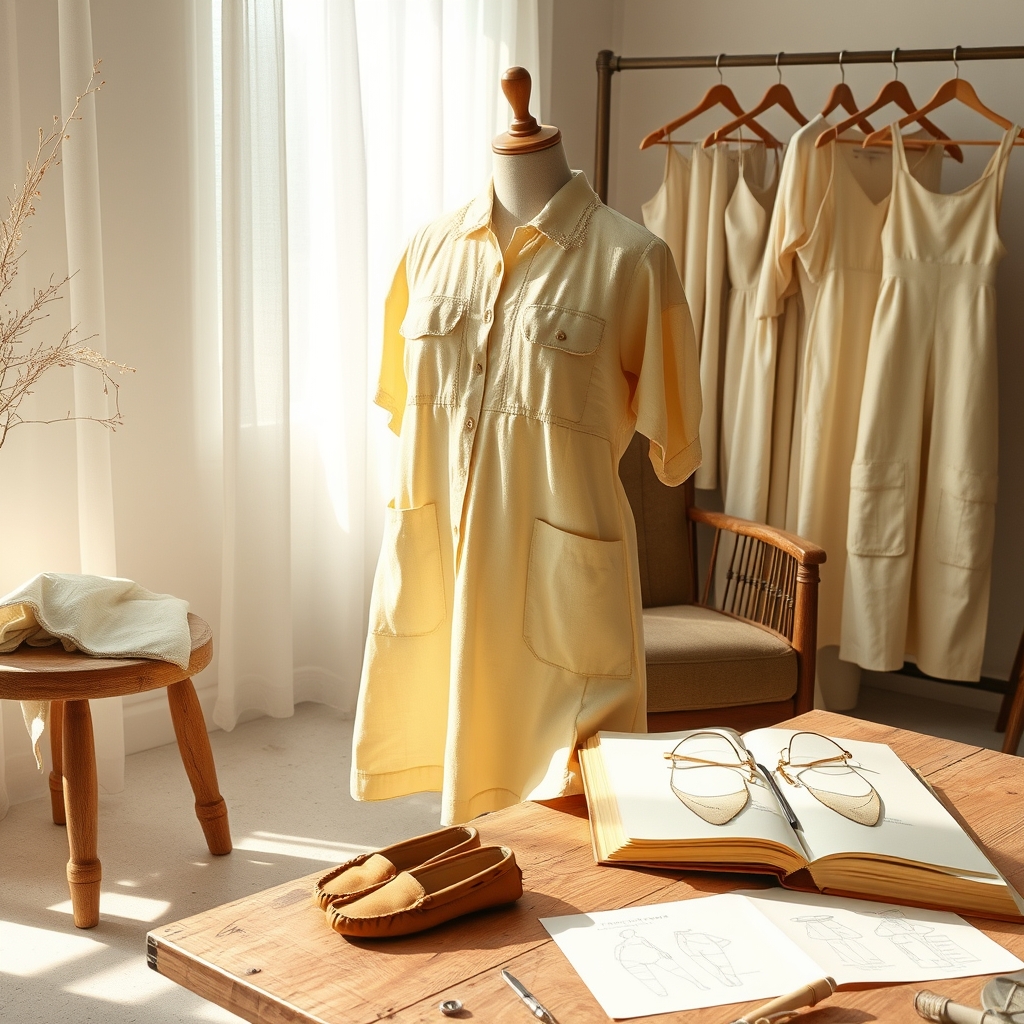
The fashion landscape has long been dominated by the loud, the bold, and the transient—animal prints that roar, gold lamé that dazzles, and denim so brutal it feels like armor. Yet, beneath the cacophony of trends, a quieter revolution has been taking shape, one that privileges intention over impulse, craftsmanship over consumption, and subtlety over spectacle. This is the domain of Guardian Design, a philosophy that marries the rigor of utility dressing with the ethereal beauty of romantic fabrics, all while embracing the principles of slow living. It is a movement that asks not how to stand out, but how to endure.
The Architecture of Intention
Guardian Design is not merely a trend; it is a corrective to the excesses of fast fashion. At its core, it is about garments that serve a purpose beyond aesthetics—clothing that protects, adapts, and lasts. The utility dress, once a symbol of wartime pragmatism, has been reimagined through this lens, stripped of its militaristic connotations and infused with a softer, more poetic sensibility. Think of the structured pockets of a creamy yellow linen dress, not as functional afterthoughts, but as deliberate choices that balance form and utility. The fabric sways with movement, yet the silhouette remains disciplined, a testament to the idea that beauty and purpose need not be mutually exclusive.
This approach extends to footwear as well. Moccasins, with their supple leather and minimalist design, embody the Guardian ethos. They are shoes that mold to the wearer, aging gracefully with each step, much like the philosophy they represent. Unlike the fleeting allure of snake print heels or the rigid structure of brut denim boots, moccasins offer a quiet resistance to the disposable nature of modern fashion. They are a reminder that elegance is not found in the new, but in the well-worn.
The Romance of Restraint
If utility dressing provides the skeleton of Guardian Design, romantic fabrics are its soul. The movement draws heavily from the Poet Core aesthetic, where materials like lace, chiffon, and brocade are not frivolous indulgences but essential components of a wardrobe built to last. The key difference lies in the execution: where Poet Core can veer into the overly ornate, Guardian Design tempers its romanticism with restraint. A butter yellow silk blouse, for instance, might be paired with a utilitarian cargo pant, the contrast creating a dialogue between softness and strength. The result is a look that feels both timeless and thoroughly modern, a rejection of the binary that pits femininity against functionality.
This balance is particularly evident in the resurgence of retro summer influences. The Jazz Age, with its drop-waist dresses and art deco embellishments, is often romanticized for its opulence, but Guardian Design strips away the excess, focusing instead on the era’s craftsmanship. A bias-cut slip dress in creamy yellow, for example, might be reimagined in a durable cotton-linen blend, its delicate drape preserved but its longevity ensured. The garment becomes a bridge between past and present, a nod to history without being shackled by it.
The Slow Living Imperative
At its heart, Guardian Design is inseparable from the principles of slow living. In a world where trends are dictated by algorithms and garments are discarded after a handful of wears, the movement insists on a different pace. It is about investing in pieces that tell a story, whether through the patina of well-loved leather or the subtle fading of a hand-dyed fabric. This is not nostalgia for nostalgia’s sake, but a deliberate choice to reject the ephemeral in favor of the enduring.
The color palette of Guardian Design reflects this ethos. Shades like creamy yellow and butter yellow are favored not for their vibrancy, but for their warmth and versatility. They are hues that age gracefully, their tones deepening over time like the pages of a well-read book. Even prints, when they appear, are chosen with care. Animal prints, for instance, are rendered in muted tones or abstract interpretations, their wildness tamed by a softer, more contemplative execution. The goal is not to shock, but to soothe—to create a visual language that feels both familiar and fresh.
The Future of Fashion’s Quiet Rebellion
Guardian Design is not a rejection of fashion’s capacity for joy or playfulness, but a redefinition of what those qualities can look like. It is a movement that finds beauty in the unassuming, strength in the subtle, and luxury in longevity. In a cultural moment obsessed with the next big thing, it dares to ask: What if the most radical act is to choose less, but better? What if elegance is not about standing out, but about standing the test of time?
The garments that embody this philosophy—whether a pair of ballet flats worn to threads, a utility dress that has accompanied its owner through seasons of change, or a creamy yellow blouse that carries the faintest imprint of a life well-lived—are not just clothes. They are artifacts of a quieter, more deliberate way of being, a testament to the idea that fashion, at its best, is not about consumption, but about connection. To wear them is to participate in a rebellion, one that values substance over spectacle, and meaning over momentary thrill. It is a revolution that does not need to shout to be heard.