The Modest Millionaire: A Critique of High-End Hijab Hysteria
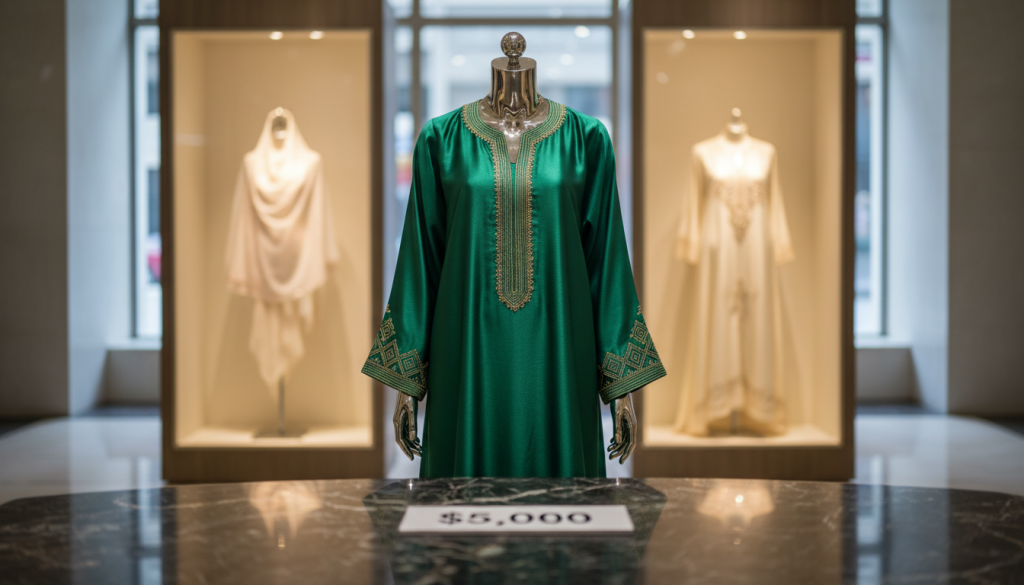
Ah, modesty. A virtue whispered through centuries, preached from pulpits, and now, apparently, embroidered onto silk abayas with threads spun from pure gold, or at least, the equivalent in designer markups. One might assume that modesty, by its very definition, would shun ostentation, preferring instead a quiet elegance, perhaps even a humble anonymity. But oh, how delightfully naive we were! In the dizzying carousel of contemporary fashion, modesty has not only found its voice but has apparently found its platinum-plated megaphone, shouting its presence from the most exclusive boutiques and online storefronts where prices are listed with a casual disregard for anything resembling ‘modest’ finances.
The Golden Veil: Unpacking the ‘Luxury’ Abaya
The journey of the abaya, from a utilitarian garment of practical covering to a canvas for haute couture extravagance, is a tale worthy of a satirical novel. What was once a simple, often black, cloak designed for discretion has morphed into a veritable fashion statement, complete with intricate embellishments, rare fabrics, and price tags that could easily fund a small village’s annual wardrobe budget. We are no longer simply covering up; we are curating our covering, ensuring every pleat, every stitch, screams ‘discreet wealth’ rather than just ‘discretion’.
From Humble Cloak to Haute Couture
Remember when an abaya was just… an abaya? A practical garment for daily wear, perhaps chosen for its comfort or durability. Those were simpler times, weren’t they? Now, we have ‘designer abayas,’ ‘couture abayas,’ ‘limited edition abayas’ – terms that, when paired with the word ‘modest,’ create a linguistic paradox so dazzling it almost blinds you to the sheer absurdity. These aren’t just clothes; they are statements. Statements that whisper, “Yes, I am covered, but darling, my covering is more expensive than your entire outfit.” It’s modesty, but make it fashion, and by ‘fashion,’ we mean ‘financially exclusive’.
The Price of Piety (or, Rather, Polyester)
One must truly marvel at the ingenuity of marketing teams who can convince consumers that a garment whose core purpose is to obscure the body warrants a price tag typically reserved for high-end electronics or a month’s rent in a moderately-sized city. Is it the fabric? Perhaps a rare breed of silk spun by artisanal silkworms fed only organic kale? Or is it the ‘hand-stitched’ crystals, each one blessed by a fashion guru before being meticulously placed? More often than not, it’s a clever blend of branding, perceived exclusivity, and the age-old human desire to signal status, even when the status symbol is ostensibly designed to reduce outward signaling. The irony, one might say, is as rich as the fabric itself.
Bridal Bling: When ‘Modest’ Meets ‘Million-Dollar’
And then, we arrive at the zenith of this opulent paradox: Modest Bridal Wear. The wedding day, a sacred union, a celebration of love and commitment. Naturally, it’s also an occasion for an unparalleled sartorial spectacle, where ‘modesty’ is interpreted as ‘covering every inch in the most expensive lace, pearls, and diamantes imaginable’.
The Covered Bride, Uncovered Wallet
The modern modest bride is a vision of ethereal beauty, swathed in yards of silk, satin, and chiffon, often accompanied by a train so long it requires its own retinue of attendants. The concept of ‘modest’ here seems to refer less to the garment’s visual simplicity and more to its ability to completely obscure any part of the bride’s body that hasn’t been specifically approved by a committee of traditionalists and fashionistas. The cost, however, is anything but modest. We’re talking figures that could put a down payment on a small house, all for a dress designed to be worn for a few hours and then, presumably, archived as a testament to one’s commitment to both matrimony and extravagant expenditure.
Layers of Lace, Layers of Irony
It’s a delicate balance, isn’t it? The desire to adhere to cultural or religious norms of modesty, juxtaposed with the irresistible allure of the bridal industry’s relentless push for grandeur. So, we get dresses with high necklines and long sleeves, but also with intricate beadwork that shimmers like a thousand tiny disco balls, fabrics so luxurious they practically purr, and silhouettes that, while covered, still manage to be utterly dramatic. The irony is layered as thickly as the tulle on a five-tiered wedding gown: an insistence on modesty that, through sheer expense and elaborate detailing, becomes the very antithesis of understated humility. One might even argue it’s a more conspicuous display than a sleeveless gown, simply because of the sheer effort and cost involved in making a covered dress look that opulent.
Sustainable Hypocrisy?
And let’s not forget the latest darling of the fashion world: “Sustainable Modest Fashion.” Because nothing says environmental consciousness quite like paying triple the price for an organic cotton hijab that traveled halfway across the globe, packaged in recycled materials, only to be worn once and then stored in a climate-controlled wardrobe alongside its non-sustainable brethren. The intentions, I’m sure, are as pure as the ethically sourced dyes, but the execution often feels like another layer of moral superiority draped over an already self-congratulatory industry. It’s not just modest; it’s virtuously modest, and you’ll pay a premium for that moral high ground, thank you very much.
So, as we navigate the glittering aisles of ‘luxury modest wear,’ one has to wonder: what exactly are we buying into? Is it genuine adherence to a principle, or is it the latest iteration of consumerism, cleverly disguised as piety? Is true modesty found in the thread count of a designer abaya, or the subtle shimmer of a diamond-encrusted hijab pin? Or perhaps, just perhaps, true modesty remains an inner state, utterly impervious to price tags, brand labels, and the relentless pursuit of making ‘less’ look like ‘more’ – especially when ‘more’ costs an absolute fortune.