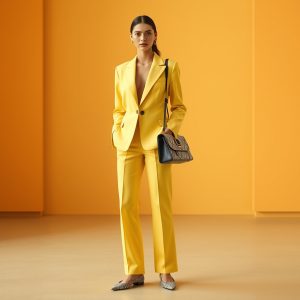
The Silent Revolution: How Quiet Luxury and Slow Fashion Are Redefining Elegance
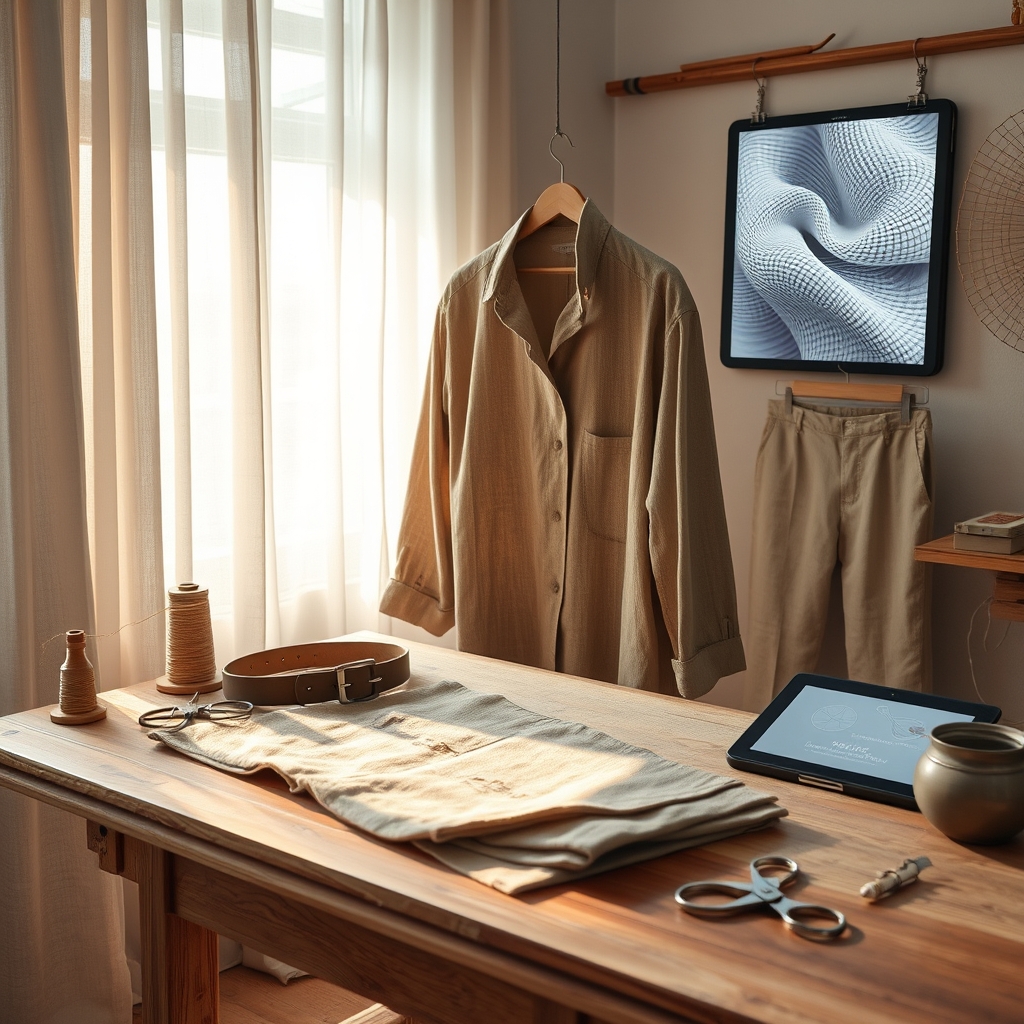
The world hums with the relentless rhythm of consumption, a symphony of trends rising and falling like tides. Yet, beneath the clamor, a softer melody emerges—one of intention, of reverence, of time slowed to a whisper. This is the song of quiet luxury and slow fashion, a movement that asks not what we can wear, but how we can wear our values.
The Alchemy of Less
There is a peculiar magic in the art of subtraction. A capsule wardrobe, for instance, is not merely a collection of garments but a curated dialogue between necessity and desire. Each piece, chosen with deliberation, becomes a verse in a personal poem of identity. The minimalist style does not shout; it murmurs, allowing the wearer to speak through the absence of excess. In a world saturated with noise, this quietude is its own form of rebellion.
Consider the fabrics that drape our skin—eco-friendly textiles like organic cotton, hemp, or Tencel, grown without the violence of pesticides or the thirst of excessive water. These materials carry stories of their own, woven into their fibers: the hands that tilled the soil, the rain that nourished the crops, the artisans who spun the threads. When we choose ethically made clothing, we do not just wear a garment; we become custodians of these narratives.
The Craftsmanship of Time
Artisanal craftsmanship is the antithesis of fast fashion’s disposable ethos. It is the patient stitch of a seamstress’s needle, the careful dyeing of fabric in vats of natural indigo, the meticulous embroidery that transforms cloth into a canvas. These are not just techniques; they are acts of devotion, each piece a testament to the belief that beauty is worth the wait. In a culture that equates speed with success, slow fashion dares to ask: What if we measured value not in units produced, but in moments preserved?
The circular economy takes this philosophy further, envisioning a world where garments are not discarded but reborn. Upcycled garments, for example, are not secondhand in the pejorative sense but reimagined—old denim transformed into a patchwork jacket, vintage scarves repurposed into a quilted bag. This is fashion as alchemy, turning the forgotten into the coveted, the broken into the beautiful. It is a reminder that nothing is ever truly wasted, only waiting for its next incarnation.
The Poetry of Gender Neutrality
Clothing has long been a battlefield of binaries, a rigid demarcation of what is deemed masculine or feminine. Yet, gender-neutral fashion is not just a trend; it is a reclamation of fluidity, a celebration of the self unshackled from societal expectations. A well-tailored blazer, a flowing linen shirt, a pair of perfectly fitted trousers—these are not garments assigned to a gender but tools of self-expression, available to all who wish to wield them.
This shift is not merely aesthetic but philosophical. It challenges the notion that identity must be confined to a box, that style must adhere to a script. In embracing gender-neutral clothing, we acknowledge that elegance is not a privilege of one gender but a birthright of all. It is a quiet revolution, one that does not demand attention but commands respect.
The Future Woven in Code
Even as we look backward to the artistry of the past, fashion is hurtling forward into the future. Smart textiles, embedded with technology, are blurring the lines between garment and gadget. Imagine a jacket that adjusts its insulation based on the weather, or a dress that changes color with a tap on your phone. These are not fantasies but the tangible manifestations of high-tech apparel, where innovation meets elegance.
Digital fashion, too, is carving out its own space in this landscape. Virtual garments, designed to be worn in augmented reality or shared on social media, offer a new frontier of self-expression. They allow us to experiment with identity without the environmental cost of physical production. In a world where our online and offline selves are increasingly intertwined, digital fashion is not just a novelty but a necessity—a way to explore who we are in spaces where the body is not bound by physics.
The Accessories That Speak
Sometimes, it is the smallest details that carry the most weight. Statement accessories—whether a handcrafted leather belt, a vintage brooch, or a pair of upcycled earrings—can transform an outfit from ordinary to extraordinary. These pieces are not mere adornments but punctuation marks in the story of our style. They hold memories, like the scent of a perfume or the weight of a well-loved ring. In a capsule wardrobe, they are the exclamation points, the question marks, the ellipses that give our outfits their rhythm.
Yet, even in their boldness, these accessories often carry a whisper of sustainability. A bohemian chic necklace made from recycled metals, a bag crafted from upcycled leather—these are not just beautiful objects but testaments to the possibility of beauty without exploitation. They remind us that luxury does not have to come at the earth’s expense, that elegance and ethics are not mutually exclusive.
The streets, too, have their own language of style. Streetwear aesthetic, once the domain of subcultures, has become a global phenomenon, a visual dialect spoken in sneakers and graphic tees. But even here, there is room for quiet luxury. A minimalist hoodie in organic cotton, a pair of ethically made sneakers—these are the building blocks of a wardrobe that is both effortlessly cool and deeply conscious. Streetwear is no longer just about making a statement; it is about making a difference.
In the end, fashion is not just about what we wear but how we choose to move through the world. It is a dialogue between the self and the collective, a negotiation between desire and responsibility. Quiet luxury and slow fashion are not just trends but philosophies, invitations to live with intention, to cherish the craftsmanship of both cloth and time. They ask us to consider not just the cost of what we wear, but the value of how we wear it. And perhaps, in that consideration, we find not just a wardrobe, but a way of being.