
The Poetry of Less: How Minimalist Style and Eco-Friendly Fabrics Are Crafting a New Language of Beauty
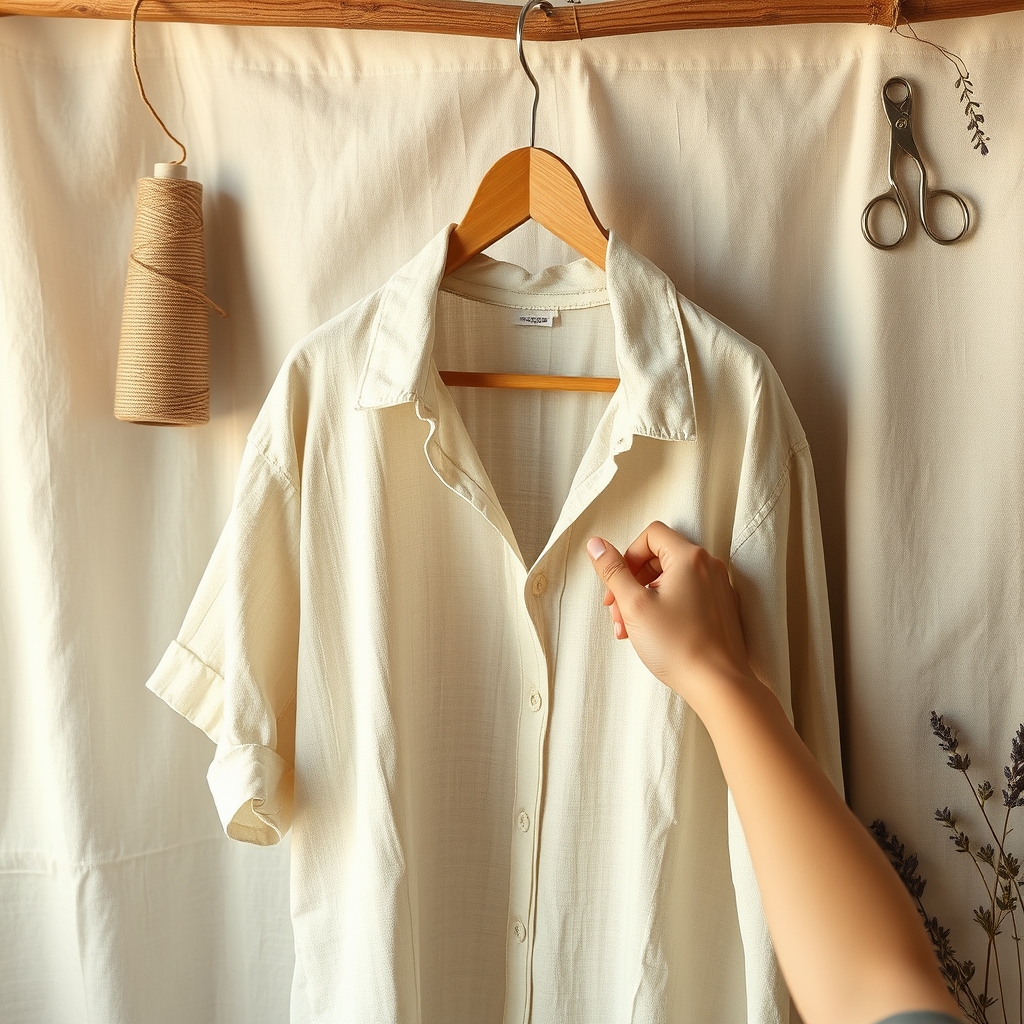
The first time I held a garment made from organic linen, I understood what it meant to touch silence. Not the absence of sound, but the presence of something deeper—a quietude woven into the very fibers, a whisper of the earth still clinging to the threads. There was no fanfare, no logo screaming for attention, just the unassuming elegance of something made to last, to be cherished, to exist without apology. It was then I realized that minimalist style is not about deprivation, but about reverence. It is the art of choosing what deserves to remain in your life, and in doing so, allowing those choices to speak for you.
The Alchemy of Simplicity
Minimalism in fashion is often misunderstood as a rigid doctrine of neutrals and stark lines, a uniform of self-denial. But true minimalism is far more poetic. It is the distillation of identity into its purest form, a curation of self that strips away the noise to reveal what truly resonates. A capsule wardrobe, for instance, is not a limitation but a liberation. It is the freedom from the tyranny of excess, the mental clutter of too many choices, the guilt of impulse buys that gather dust in the back of a closet. When every piece is intentional, every item becomes a brushstroke in the portrait of who you are—or who you aspire to be.
This philosophy extends beyond the clothes themselves to the materials from which they are made. Eco-friendly fabrics like hemp, Tencel, and recycled cotton are not just alternatives; they are declarations. They say that beauty does not have to come at the expense of the planet, that elegance can coexist with ethics. There is a quiet luxury in knowing that the shirt you wear was grown without pesticides, that the dye coloring your dress did not poison a river. It is a luxury that does not flaunt itself, but hums softly in the background, like a well-loved melody.
The Hands That Shape Us
In a world where fast fashion churns out disposable trends at breakneck speed, there is something radical about slowing down. Artisanal craftsmanship is not just a nod to tradition; it is an act of resistance. It is the choice to honor the hands that spin, weave, and stitch, to recognize that a garment is not just a product but a story. When you wear something handmade, you are wearing the hours of labor, the skill passed down through generations, the love poured into every seam. It is a collaboration between you and the maker, a silent conversation across time and space.
This connection is especially profound in the realm of gender-neutral clothing. By eschewing the rigid binaries of traditional fashion, these designs invite us to redefine what it means to dress ourselves. They ask us to consider clothing not as a costume of identity, but as an extension of it—a second skin that adapts to who we are, rather than dictating who we should be. There is a freedom in this, a sense of boundlessness that mirrors the fluidity of nature itself. After all, the most sustainable garment is the one that does not confine, but liberates.
The Circular Dance
The concept of a circular economy is not new, but its application in fashion feels revolutionary. It is the idea that nothing is ever truly discarded, only transformed. An upcycled garment is not a second-hand item; it is a phoenix rising from the ashes of its former self, reborn with new purpose and beauty. There is magic in this process, a kind of alchemy that turns the old into the extraordinary. It challenges our throwaway culture, asking us to see potential where others see waste, to find value in what has been cast aside.
Digital fashion, too, plays a role in this circular dance. While it may seem paradoxical—a virtual solution to a very physical problem—it offers a way to experiment with style without the environmental cost. It allows us to indulge in the fantasy of fashion without the guilt of consumption. In a world where our digital and physical selves are increasingly intertwined, it is a reminder that sustainability is not just about what we wear, but how we engage with the world around us.
The Unseen Threads
Perhaps the most poetic aspect of sustainable fashion is the way it connects us to the unseen. Every garment carries with it a hidden history—the hands that made it, the earth that nurtured it, the resources that were conserved or squandered in its creation. When we choose ethically made clothing, we are not just making a purchase; we are casting a vote for the kind of world we want to live in. We are acknowledging that our choices have consequences, that our beauty should not come at the expense of someone else’s suffering.
There is a certain humility in this, a recognition that we are part of something larger than ourselves. The clothes we wear are not just adornments; they are a dialogue with the world. They tell a story of who we are, what we value, and what we hope to leave behind. In a culture that often equates more with better, sustainable fashion asks us to consider the opposite: that less can be more, that simplicity can be profound, that beauty is not in the excess, but in the essence.
The next time you stand before your closet, take a moment to listen. Not to the siren call of the latest trend, but to the quiet voice of the pieces that have earned their place. The ones that feel like a second skin, that carry the weight of intention, that speak to you in a language beyond words. These are the garments that will not just clothe your body, but nourish your soul. And in a world that is increasingly loud, that is a kind of luxury worth holding onto.