
The Whisper of Cloth: How Gender-Neutral Fashion and Circular Economy Are Stitching a Gentler World
The first time I held a garment made from recycled ocean plastic, I felt the weight of something far greater than fabric. It was cool to the touch, almost silken, yet hummed with the quiet resilience of a second chance. The label read ‘100% post-consumer waste,’ but what it didn’t say was how it carried the echoes of waves, the ghost of a life once discarded, now reborn into something wearable. That moment marked the beginning of my love affair with the circular economy—not as a concept, but as a living, breathing philosophy woven into the very threads of what we choose to wear.
The Unraveling of Binary Threads
Fashion has long been a stage for identity, a way to signal who we are—or who we aspire to be. Yet for centuries, it has also been a cage, dictating what is ‘appropriate’ based on the most arbitrary of divisions: gender. The rise of gender-neutral clothing isn’t just a trend; it’s a quiet rebellion, a reclaiming of the body as a canvas rather than a category. When I first slipped into an oversized linen shirt, its sleeves rolled to the elbows, its hem grazing my knees, I didn’t feel like a man or a woman. I felt like myself—unbound, unlabelled, free. The fabric didn’t ask me to conform; it simply draped itself over my shoulders, as if to say, *You are enough*.
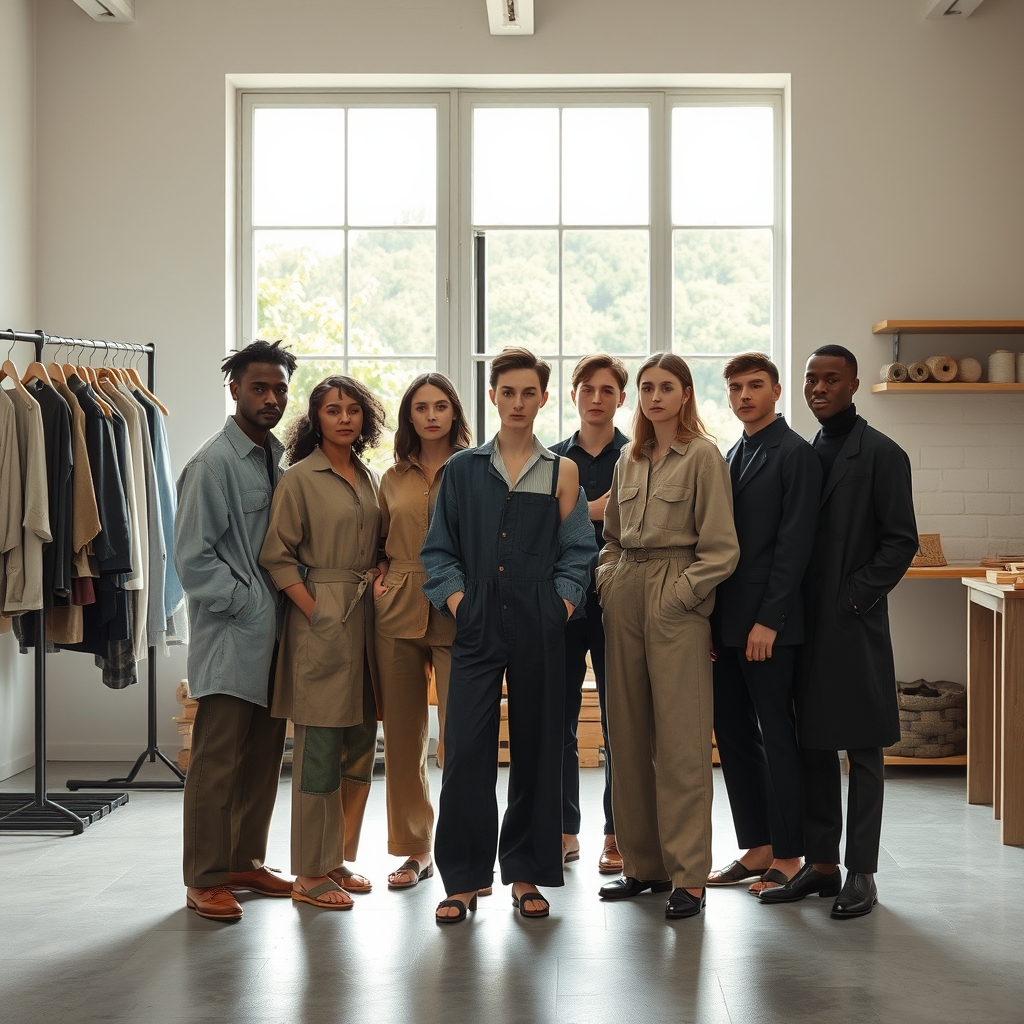
This shift isn’t merely aesthetic. It’s a dismantling of the fast-fashion machine, which thrives on segmentation—pink for her, blue for him, and a relentless churn of trends that leave little room for individuality. Gender-neutral fashion, by its very nature, slows things down. It invites us to consider not just who we are, but how we want to move through the world. A well-made jumpsuit, a tailored blazer without a gendered cut, a pair of trousers that fit not because they were designed for a specific body type but because they were designed for *any* body—these are the garments that ask us to pause, to reflect, to choose with intention.
The Alchemy of Upcycling: When Waste Becomes Wonder
There’s a particular magic in upcycled garments, one that feels almost alchemical. I remember visiting a small studio in Lisbon where a designer was turning old denim into patchwork jackets, each one unique, each one telling a story. The seams were visible, the stitches imperfect, and that was the point. These weren’t garments meant to be flawless; they were meant to be *honest*. The denim had lived before—perhaps as a pair of jeans worn thin by years of use, or a skirt discarded after a single season. Now, it was being given a new life, its history preserved in the frayed edges and mismatched patches.
Upcycling challenges the very notion of waste. In a world where 92 million tons of textile waste are generated each year, the idea that a garment’s life doesn’t end when we’re done with it is revolutionary. It’s not just about reducing landfill; it’s about redefining value. A dress made from deadstock fabric isn’t just eco-friendly—it’s a testament to the beauty of resourcefulness. It whispers of a world where nothing is disposable, where everything has the potential to be transformed.
The Quiet Luxury of Enough
We live in an era of noise—loud logos, fleeting trends, the constant hum of consumption. But there’s a growing counter-movement, one that finds beauty in the understated. Quiet luxury isn’t about price tags or exclusivity; it’s about the way a garment makes you *feel*. It’s the weight of a perfectly balanced wool coat, the way it settles on your shoulders like a promise. It’s the simplicity of a white cotton shirt, so well-made that it becomes a staple not out of necessity, but out of desire. This is the essence of slow fashion: the understanding that true luxury isn’t in having more, but in having *enough*.
I once met a woman in Kyoto who owned just seven kimonos, each one passed down through generations. She spoke of them not as possessions, but as heirlooms, each one carrying the memories of the women who wore them before her. There was no rush to replace them, no need to chase the next big thing. They were enough. In a world obsessed with newness, this kind of contentment feels radical. It’s a reminder that fashion, at its core, isn’t about trends—it’s about connection. Connection to the people who made our clothes, to the earth that provided the materials, to the versions of ourselves we become when we wear them.
The Future Woven in Smart Textiles
If the past of fashion is rooted in tradition, its future is being written in code. Smart textiles—fabrics embedded with technology—are blurring the line between clothing and innovation. I’ve seen jackets that adjust their temperature based on the weather, dresses that change color with a tap on a smartphone, even shoes that generate energy with every step. These aren’t just gimmicks; they’re a glimpse into a world where fashion is functional, responsive, and deeply personal.
Yet even here, in this high-tech frontier, the principles of sustainability remain. The most exciting developments in smart textiles aren’t just about what they can *do*, but about what they can *undo*. Fabrics that biodegrade at the end of their life cycle, dyes made from algae that don’t pollute waterways, sensors that help reduce waste by tracking a garment’s usage—these are the innovations that marry progress with responsibility. They remind us that technology, when wielded with care, can be a tool for healing rather than exploitation.
The Art of Wearing Your Values
Fashion has always been a form of self-expression, but what if it could also be a form of activism? When we choose ethically made clothing, when we opt for upcycled over new, when we embrace gender-neutral designs, we’re not just making a style statement—we’re making a political one. Every purchase is a vote, and every garment is a manifesto. The beauty of this movement is that it doesn’t demand perfection. It doesn’t ask us to overhaul our wardrobes overnight or to reject the things we love. It simply invites us to ask questions: *Who made this? What is it made of? What will happen to it when I’m done?*
I still think about that recycled ocean plastic shirt. It’s hanging in my closet now, slightly worn at the elbows, a little softer with each wash. It’s not the most expensive thing I own, nor is it the most fashionable. But it’s my favorite. Because when I wear it, I’m not just wearing a shirt. I’m wearing a story—a story of redemption, of possibility, of a world where fashion doesn’t cost the earth. And perhaps, in some small way, that’s the most luxurious thing of all.