
The Invisible Seam: Where Artisanal Craftsmanship Meets the Future of Fashion
The first time I held a hand-stitched leather wallet in my palms, I felt the weight of something far greater than the sum of its parts. The edges were burnished to a soft sheen, not by machine, but by the patient repetition of a craftsman’s hand. Each stitch was a tiny testament to time—time measured not in seconds, but in the quiet rhythm of dedication. That moment became a threshold, a doorway into a world where fashion is not merely worn, but felt, understood, and revered. It was my introduction to the invisible seam that binds artisanal craftsmanship to the future of what we wear.
The Hands That Shape the Thread
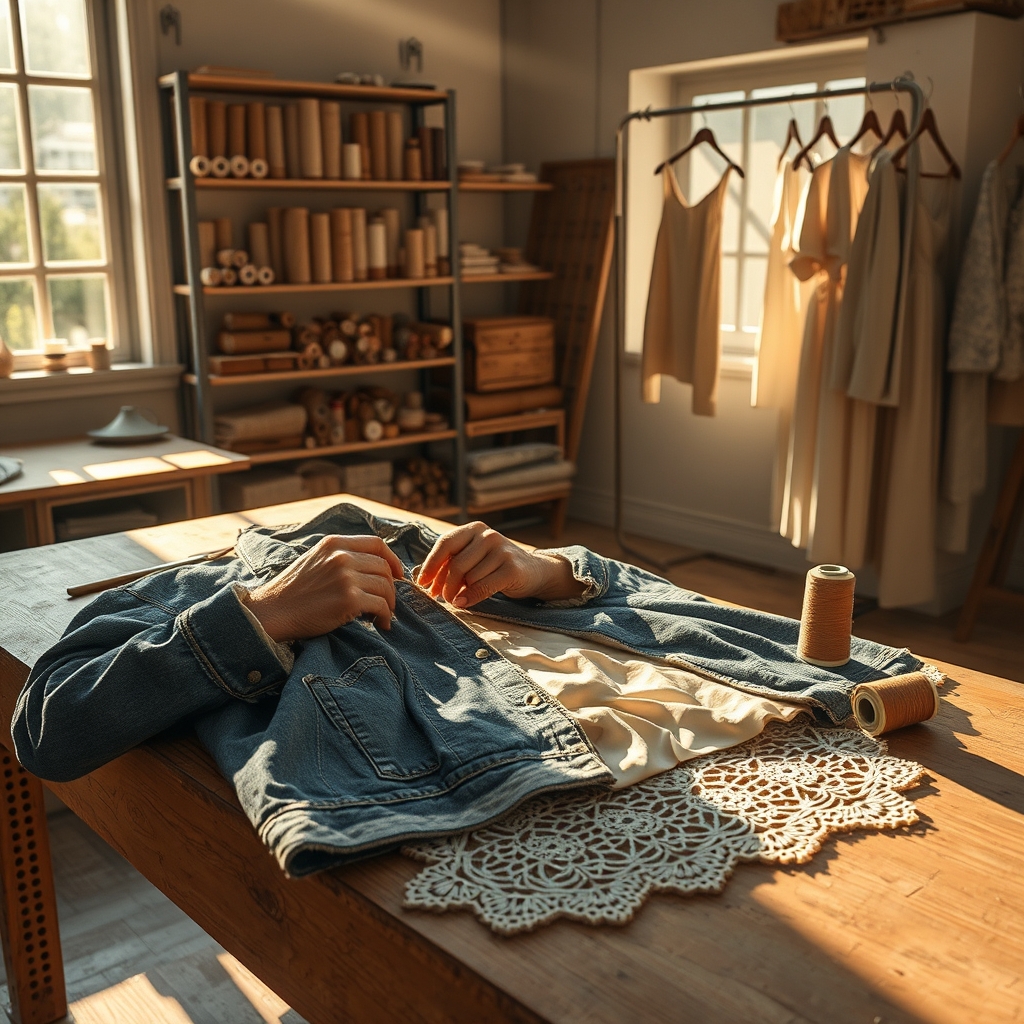
In an era where fast fashion churns out garments at the speed of thought, the hands of artisans move with deliberate slowness. They are the guardians of techniques passed down through generations, where a single piece of clothing can take days, even weeks, to complete. There is no rush here, no assembly line humming in the background. Instead, there is the whisper of scissors through fabric, the gentle pull of a needle, the careful alignment of pattern pieces like pieces of a puzzle meant to tell a story. These hands do not merely create; they converse with the material, listening to its texture, its drape, its willingness to be transformed.
Take, for instance, the age-old art of sashiko, a Japanese embroidery technique that was originally used to reinforce and mend worn fabric. Today, it has been reimagined as a form of decorative stitching, a celebration of imperfection and durability. Each stitch is a meditation, a small act of resistance against the disposable nature of modern clothing. When you wear a garment adorned with sashiko, you are not just wearing a piece of cloth; you are wearing a fragment of history, a quiet rebellion against the ephemeral.
The Alchemy of Upcycled Garments
If artisanal craftsmanship is the soul of sustainable fashion, then upcycling is its alchemy. There is something almost magical in the way a discarded pair of jeans can be reborn as a patchwork jacket, or how a vintage silk scarf can be transformed into the lining of a modern blazer. Upcycling is not just about giving old materials a new life; it is about reimagining their potential, seeing beauty in what others might dismiss as waste. It is a practice that demands creativity, resourcefulness, and a deep respect for the past.
I remember walking into a small atelier in Lisbon, where a designer was meticulously deconstructing a pile of old military uniforms. The room smelled of aged cotton and dye, and the walls were lined with spools of thread in every conceivable shade. She told me that each uniform carried the stories of the people who had worn them—stories of service, of sacrifice, of lives lived in moments both ordinary and extraordinary. By upcycling these garments, she was not just creating new clothing; she was weaving those stories into something new, something that would carry their essence forward. In that moment, I understood that upcycling is not just an act of sustainability; it is an act of preservation, a way of honoring the narratives embedded in the fabric of our lives.
The Quiet Revolution of Gender-Neutral Clothing
Fashion has long been a language of identity, a way of signaling who we are to the world. Yet, for much of history, that language has been constrained by rigid binaries, dictating what was appropriate for men and women to wear. Today, a quiet revolution is underway, one that seeks to dismantle those binaries and redefine the very notion of gender in fashion. Gender-neutral clothing is not just about creating pieces that can be worn by anyone; it is about challenging the assumptions that have long dictated how we dress, how we present ourselves, and how we are perceived.
Consider the rise of brands that eschew traditional gendered collections in favor of designs that prioritize form, function, and individual expression. These garments are often characterized by clean lines, versatile silhouettes, and a focus on comfort and practicality. They are not about making a statement through bold colors or exaggerated shapes, but rather through their very neutrality—a blank canvas upon which the wearer can project their own identity. In this way, gender-neutral clothing becomes a form of liberation, a way of reclaiming the power to define oneself outside the confines of societal expectations.
The Intersection of Tradition and Technology
As much as fashion is rooted in tradition, it is also a field that thrives on innovation. The future of sustainable fashion lies not just in the hands of artisans, but in the minds of scientists, engineers, and designers who are pushing the boundaries of what is possible. Smart textiles, for instance, are revolutionizing the way we think about clothing. Imagine a jacket that can regulate your body temperature, or a dress that changes color in response to environmental conditions. These are not fantasies; they are the realities being shaped in labs and studios around the world.
Yet, even as technology advances, there is a growing recognition of the need to preserve the human touch. The most exciting developments in fashion today are those that marry cutting-edge technology with artisanal craftsmanship. Take, for example, the use of 3D printing to create intricate lace patterns, or the integration of biodegradable sensors into handwoven fabrics. These innovations do not replace traditional techniques; they enhance them, creating a synergy that is greater than the sum of its parts. In this way, fashion becomes a bridge between the past and the future, a testament to our ability to honor tradition while embracing progress.
The Circular Economy: A New Way of Seeing
The concept of a circular economy is simple in theory but profound in its implications. It is a system in which nothing is wasted, where every material is given a second, third, or even fourth life. In the context of fashion, this means moving away from the linear model of “take, make, dispose” and toward a system where garments are designed to be reused, repaired, and recycled. It is a radical shift in perspective, one that requires us to see clothing not as disposable commodities, but as valuable resources to be cherished and preserved.
One of the most inspiring examples of this shift is the rise of clothing rental services and resale platforms. These models challenge the notion that we must own everything we wear, offering instead a way to enjoy fashion without contributing to the cycle of overconsumption. They also create a sense of community, connecting people through a shared appreciation for quality, craftsmanship, and sustainability. When you rent a dress for a special occasion or purchase a pre-loved coat, you are not just making a transaction; you are participating in a movement, one that values experiences over possessions and longevity over trends.
There is a certain poetry in the way a well-made garment can outlive its original owner, passing from one person to another like a cherished heirloom. It carries with it the memories of those who wore it before, the hands that stitched it, the moments it witnessed. In this way, fashion becomes more than just a reflection of who we are; it becomes a thread that connects us to each other, to the past, and to the future. The invisible seam that runs through every stitch, every upcycled patch, every gender-neutral silhouette, is a reminder that what we wear is not just about how we look, but about how we choose to live.