
The Quiet Revolution of Skin: How Anthropometric Design and Adaptive Clothing Are Rewriting the Body’s Story
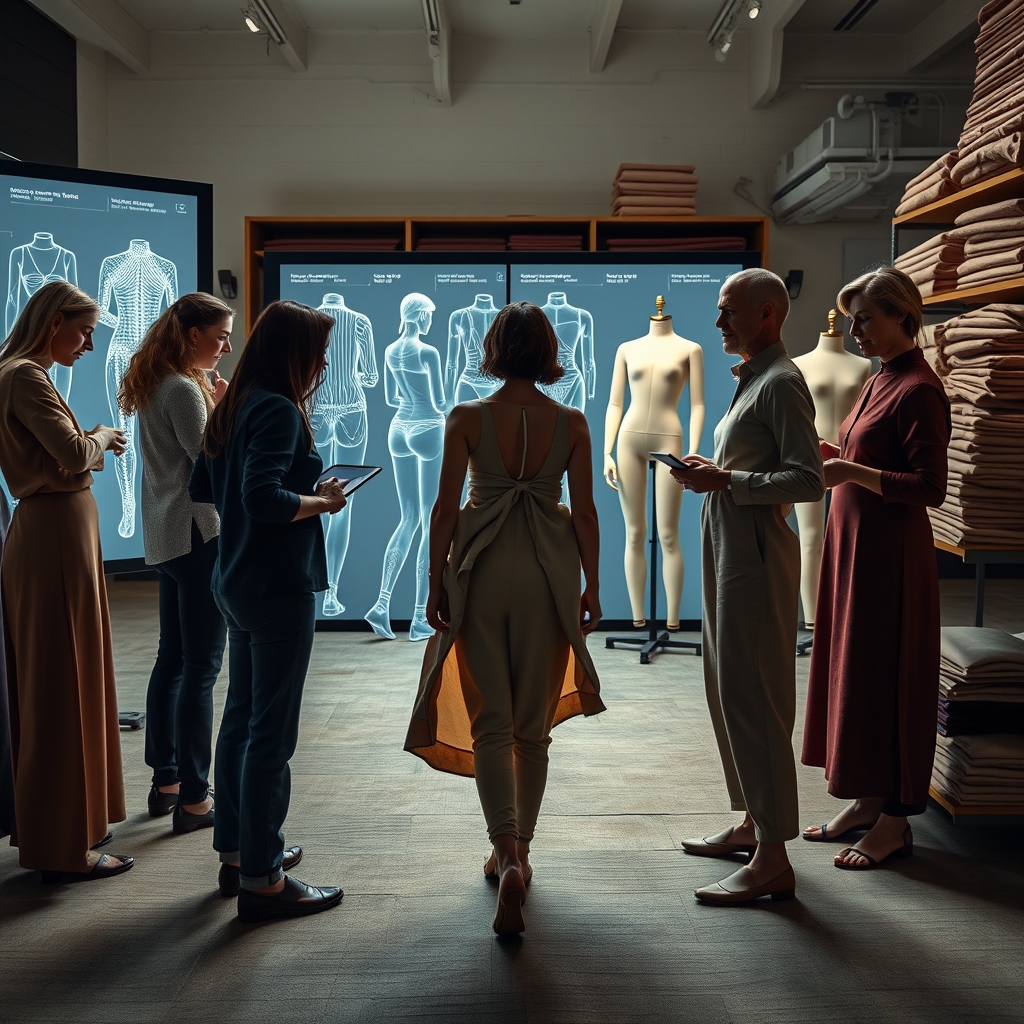
The body has always been a landscape of stories—some told in bold strokes, others whispered in the folds of fabric. Yet for too long, fashion has spoken over it, imposing rigid silhouettes that fit only the myth of a universal form. What if, instead, clothing began to listen? What if each seam, each dart, each carefully placed stitch became a dialogue with the body’s unique topography, a collaboration between maker and wearer, between intention and intuition?
The Geometry of the Self
Anthropometric design optimization is not merely a technical process; it is an act of translation. It takes the language of bones, the curve of a shoulder, the slight asymmetry of hips, and renders them into patterns that honor rather than erase. Digital pattern development has made this translation more precise than ever, turning measurements into algorithms and algorithms into garments that move with the body, not against it. The result is not just a better fit—it is a kind of recognition, a silent acknowledgment that the body is not a problem to be solved but a presence to be celebrated.
Zero-waste pattern cutting pushes this philosophy further, treating fabric as a finite resource where every scrap is a potential verse in the poem of a garment. The process is meditative, almost sacred—like solving a puzzle where the solution is not just efficiency but beauty. The patterns unfold like origami, each cut a deliberate gesture, each seam a line in a story that refuses to waste a single thread. In this way, sustainability becomes more than a practice; it becomes a form of reverence.
The Body as Co-Creator
Interactive clothing design and virtual try-on technology have turned the act of dressing into a conversation. No longer passive recipients of trends, wearers now step into a space where their preferences, movements, and even emotions shape the final form of what they wear. A garment designed through these methods is not static; it is alive, adapting to the body’s rhythms, learning from its habits. It is as if the clothing begins to remember the wearer, molding itself to their posture, their gait, their way of holding the world.
This shift toward user-centric apparel development is not just about personalization—it is about agency. It asks us to consider: What does it mean to wear something that was made for no one else but you? What does it feel like to move through the world in a garment that was not mass-produced but co-authored, a piece of art that carries the imprint of your own body’s narrative?
The Alchemy of Adaptation
Adaptive clothing solutions and modular clothing systems take this idea of collaboration even further, designing garments that evolve alongside the body. A jacket that transforms with the seasons, a dress that adjusts to the changing contours of pregnancy, a shirt that accommodates the nuances of disability—these are not just functional innovations. They are acts of empathy, garments that refuse to see the body as fixed or flawed but as a living, breathing entity in constant dialogue with the world.
Tech-integrated pattern making makes this fluidity possible, blending traditional craftsmanship with digital precision. Sensors woven into fabric, magnetic closures that replace buttons, fabrics that respond to temperature—these are not gimmicks but tools of liberation. They allow clothing to become an extension of the self, a second skin that adapts, supports, and even anticipates the body’s needs. In this way, fashion ceases to be a constraint and becomes a form of care.
The Ethics of the Intimate
At the heart of these innovations lies a question: What does it mean to dress ethically? It is not just about the materials we choose or the conditions under which our clothes are made, though these are vital. It is also about how we treat the body itself—whether we see it as a canvas for trends or a sacred vessel deserving of respect. Sustainable fabric selection, ethical manufacturing processes, and precision fit analysis are all part of this reckoning, but they are only the beginning.
The true revolution lies in the quiet moments—the way a well-fitted sleeve brushes against the wrist, the way a dress moves with the body like water, the way a garment designed for disability becomes a statement of pride rather than compromise. These are the details that rewrite the narrative of fashion, shifting it from one of consumption to one of connection. The body is not a mannequin to be dressed; it is a storyteller, and clothing is its most intimate language.
Perhaps the future of fashion is not in the grand gestures or the bold statements but in the subtle, almost imperceptible ways it begins to listen. The way a seam curves to follow the spine, the way a fabric stretches just enough to allow for breath, the way a garment remembers the shape of the person who wears it—these are the quiet revolutions that will redefine what it means to be clothed. In a world that often demands we fit into its molds, these innovations offer something far more radical: the freedom to be exactly as we are, unapologetically, beautifully, uniquely ourselves.