
The Soft Rebellion: How Gender-Neutral Clothing and Smart Textiles Are Redrawing the Boundaries of Identity
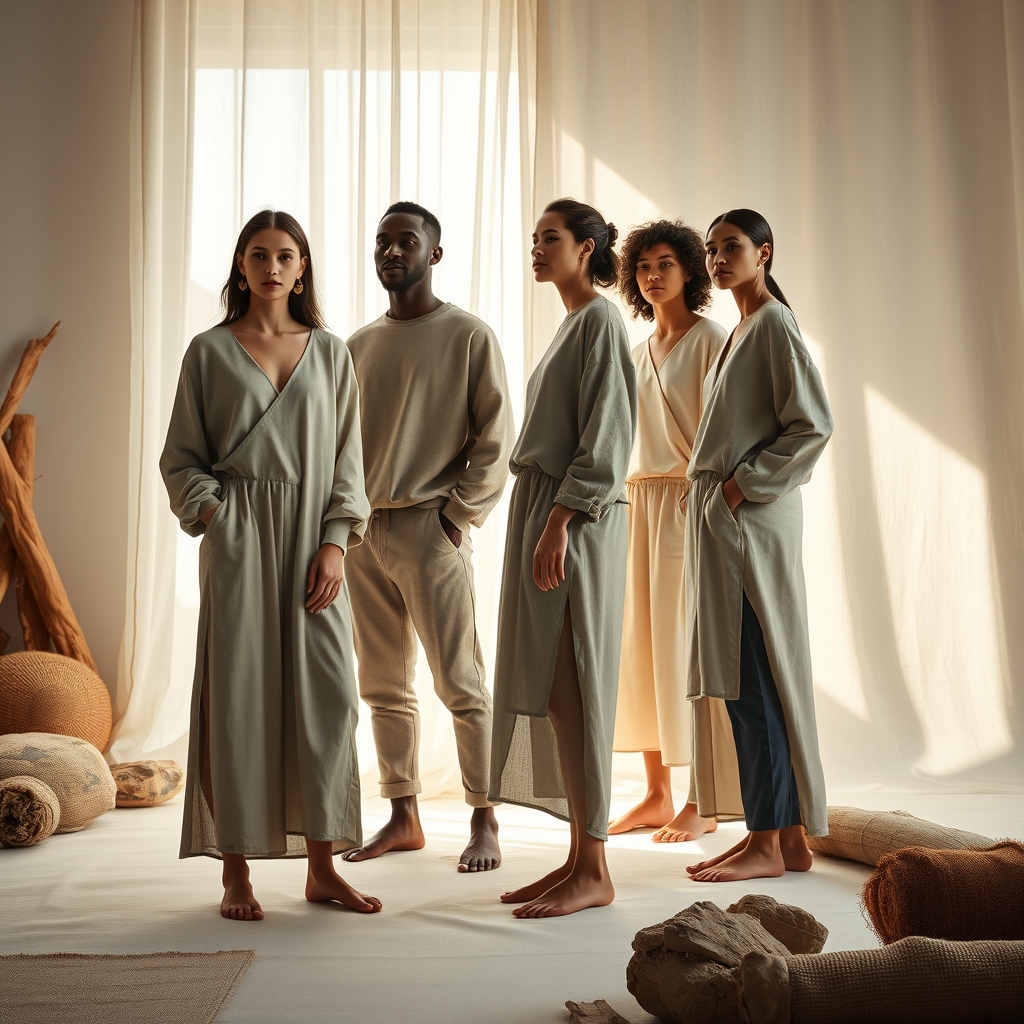
The first time I slipped into a garment that didn’t whisper *man* or *woman* but simply *person*, I felt the weight of centuries lift like a mist from my shoulders. It was a linen shirt, unassuming in its cut, yet radical in its refusal to conform. The fabric, woven from organic hemp and embedded with microfibers that adjusted to my body’s temperature, seemed to breathe with me, as if it, too, had been waiting for this moment of quiet defiance. That shirt was more than cloth; it was a conversation between past and future, a dialogue stitched in threads that dared to imagine a world unbound by binary seams.
The Unraveling of Old Threads
Fashion has always been a language, a way of signaling who we are—or who we wish to be—without uttering a word. For generations, that language was rigid, its grammar dictated by the sharp lines of gendered expectations. Skirts for softness, suits for strength; pink for innocence, blue for resolve. But what happens when the words we’ve been given no longer fit the stories we long to tell? What happens when the fabric of identity begins to fray at the edges, revealing something far more fluid beneath?
Gender-neutral clothing is not a trend; it is an unraveling. It is the slow, deliberate pulling of threads that have long constrained us, revealing the intricate tapestry of human expression beneath. Designers like Harris Reed and brands such as Telfar and Phlemuns are not just creating clothes; they are crafting new vocabularies, ones that speak in silhouettes rather than stereotypes. A draped tunic, a tailored jumpsuit, a coat that billows like a cloud—these are not garments for *him* or *her* but for *them*, for *us*, for anyone who has ever felt caught between the seams of what they were told to wear and what they truly are.
The Intelligence of Fabric
If gender-neutral clothing is the language of liberation, then smart textiles are its poetry. These are fabrics that do not merely adorn but adapt, that respond to the body’s needs as if they, too, are alive. Imagine a jacket that warms you when the air grows cold, a dress that cools you when the sun beats down, or a scarf that monitors your breath, its fibers pulsing gently with each inhale and exhale. This is not the stuff of science fiction; it is the reality of materials like graphene, phase-change polymers, and bioengineered yarns that blur the line between garment and second skin.
Smart textiles are not just about function; they are about intimacy. They remind us that clothing is not a barrier between us and the world but a bridge, one that can be as responsive and dynamic as we are. When a fabric adjusts to your body’s temperature, it is not just regulating heat—it is listening. It is acknowledging your presence in a way that feels almost sacred, as if the very act of dressing has become a collaboration between wearer and worn.
The Alchemy of Identity
There is something profoundly alchemical about the way gender-neutral clothing and smart textiles intersect. One dissolves the rigid categories that have long defined us, while the other imbues the act of dressing with a kind of sentience, a responsiveness that feels almost magical. Together, they create a space where identity is not fixed but fluid, not dictated but discovered. This is fashion as self-inquiry, a daily practice of asking: *Who am I today? Who do I want to be?*
Consider the way a child plays with clothes, draping themselves in scarves and hats without a thought to what they *should* mean. There is a purity in that unselfconsciousness, a freedom that most of us lose as we grow older, as we learn to police our bodies and our desires. Gender-neutral clothing and smart textiles invite us to reclaim that freedom, not by rejecting the past but by reimagining it. They ask us to see clothing not as a cage but as a canvas, one where the only limit is the breadth of our own imagination.
The Quiet Revolution of Everyday Choices
This revolution is not happening on runways or in glossy magazines, though they have their role to play. It is happening in the quiet moments of our lives: in the way a parent dresses their child in clothes that don’t scream *boy* or *girl* but simply *child*, in the way a teenager experiments with layers and textures to find a look that feels like home, in the way an adult slips into a garment that finally feels like *them*. It is happening in the way we shop, in the questions we ask of the brands we support, in the stories we tell with what we wear.
Smart textiles add another layer to this narrative. They remind us that fashion is not just about aesthetics but about ethics—about how we treat our bodies, our communities, and our planet. A garment that adjusts to your needs is one that lasts longer, that reduces waste, that challenges the fast-fashion cycle of consumption and disposal. It is a small but powerful act of resistance against a world that tells us we are never enough, that we must always want more, buy more, be more.
The Future Worn Lightly
Perhaps the most radical thing about gender-neutral clothing and smart textiles is their lightness. They do not demand attention; they do not scream for validation. They simply exist, offering themselves as tools for self-discovery, as companions in the journey of becoming. In a world that often feels heavy with expectation, with the weight of history and the pressure to conform, there is something profoundly liberating about a garment that says, *You are enough. Just as you are.*
I think back to that linen shirt, to the way it moved with me, to the way it seemed to understand my body better than I did. It was not just a piece of clothing; it was a promise. A promise that the future of fashion is not about more, but about *better*—better materials, better ethics, better ways of being in the world. It was a promise that the clothes we wear can be more than armor or adornment; they can be a kind of magic, a way of weaving ourselves into the fabric of something greater. And in that magic, in that quiet rebellion, we find not just style, but soul.