The Living Blueprint: How Digital Pattern Development and Anthropometric Design Are Breathing Life into Fabric
There is a quiet magic in the way a piece of cloth comes to life—not merely draped over a body, but shaped by it, as if the fabric itself remembers the curves of a shoulder, the dip of a waist, the subtle asymmetry of a collarbone. For centuries, this alchemy was the domain of master tailors, their hands guided by intuition and years of practice, translating the human form into two-dimensional patterns that would, with needle and thread, rise again in three. But today, the conversation between body and garment is being rewritten in the language of data, algorithms, and light. The tools have changed, yet the essence remains: clothing is not just something we wear, but something that learns us.
The Body as a Living Canvas
Anthropometric design optimization is not merely about measurements—it is about listening. Every body carries its own narrative: the way a spine curves after years of carrying the weight of the world, the slight rotation of a hip from an old injury, the way one shoulder sits higher than the other from a habit of holding tension. Traditional sizing charts flatten these stories into rigid categories, forcing bodies to conform rather than celebrating their uniqueness. But digital pattern development has begun to honor the body’s complexity, treating it not as a static template but as a dynamic, breathing entity.
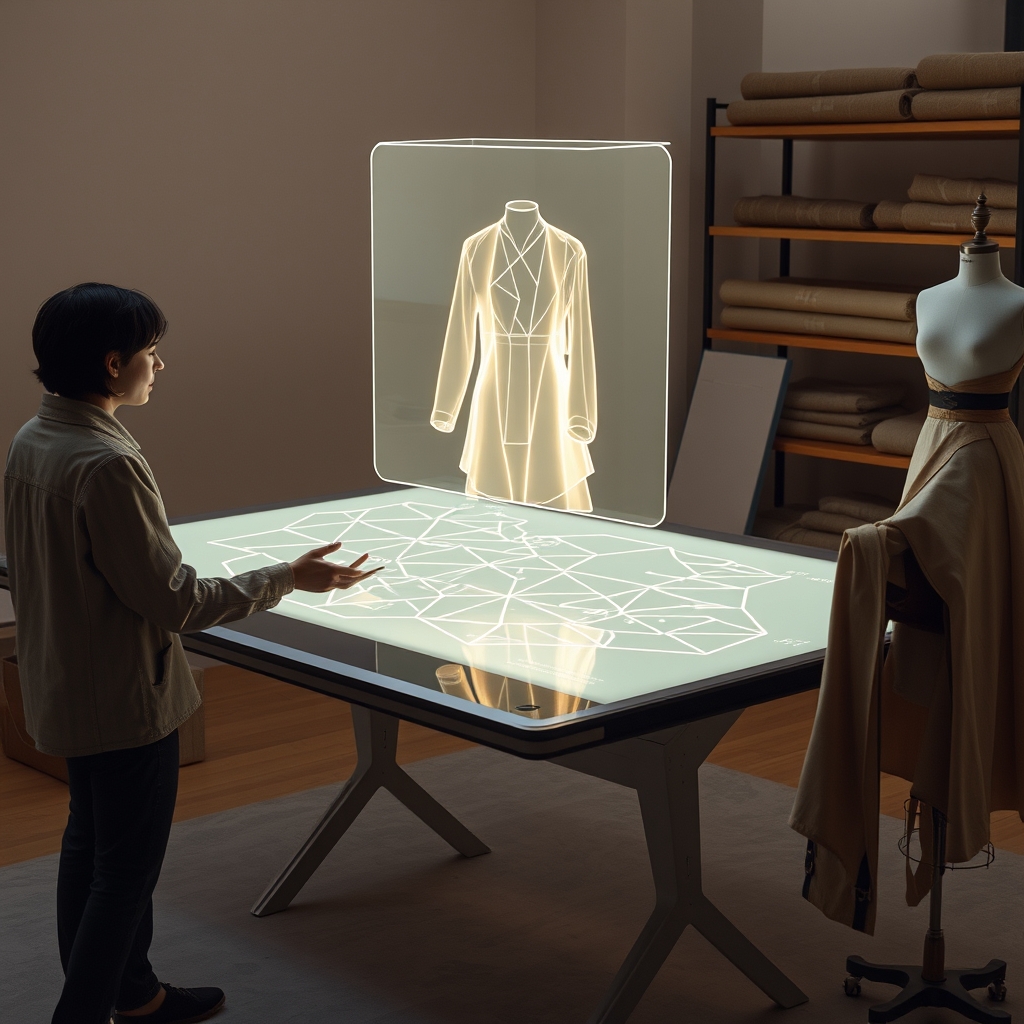
3D garment simulation has become the bridge between the abstract and the intimate. With a few clicks, a designer can drape virtual fabric over a digital avatar, watching in real time as the material clings, sags, or flows in response to movement. This is not just efficiency—it is empathy in action. The technology does not replace the human touch; it amplifies it, allowing for a deeper understanding of how fabric interacts with flesh, how seams stretch and compress, how a hem sways with the rhythm of a step. It is as if the garment is being born anew with each iteration, its DNA woven from both code and corporeality.
The Poetry of Precision
Zero-waste pattern cutting is where mathematics meets artistry. The traditional approach to pattern making often treats fabric as an expendable resource, with scraps discarded like afterthoughts. But what if every inch of cloth could be accounted for, every curve and angle designed to interlock like the pieces of a puzzle? This is the promise of sustainable garment construction—a philosophy that views waste not as an inevitability, but as a failure of imagination.
Digital tools have made this vision tangible. Algorithms can now generate patterns that nest together with geometric precision, ensuring that what is cut from the bolt leaves no trace behind. The result is clothing that is not only environmentally responsible but also imbued with a quiet elegance, its seams and shapes dictated by the logic of efficiency rather than the whims of convention. There is a beauty in this restraint, a kind of minimalism that speaks not of deprivation, but of reverence—for the fabric, for the hands that wove it, for the earth that provided its fibers.
The Dialogue Between Maker and Wearer
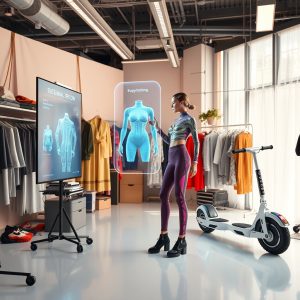
Interactive clothing design is redefining the relationship between creator and consumer. No longer is fashion a one-way transmission from designer to wearer; it is becoming a conversation. Virtual try-on technology allows a customer to step into a digital mirror, seeing how a garment moves with their body before a single stitch is sewn. Collaborative fashion prototyping takes this further, inviting wearers into the design process itself, their feedback shaping the final product in real time.
This shift is profound. It transforms clothing from a static object into a living, evolving entity. A dress is no longer just a dress—it is a collaboration between the designer’s vision and the wearer’s lived experience. It is a record of adjustments and refinements, a testament to the idea that the perfect fit is not a destination, but a journey. And in this journey, the boundaries between creator and consumer blur, giving rise to something far more intimate: a shared creation, a garment that is as much a reflection of the wearer as it is of the maker.
The Future Woven in Thread and Light
Modular clothing systems and adaptive clothing solutions are pushing this dialogue even further, offering garments that can evolve alongside their wearers. A jacket with detachable sleeves, a dress with adjustable hemlines, a shirt that transforms with the seasons—these are not just functional innovations, but a reimagining of what clothing can be. They acknowledge that bodies change, that lives shift, that the static nature of traditional fashion is at odds with the fluidity of human existence.
Tech-integrated pattern making is the invisible hand guiding this evolution. Sensors embedded in fabric, responsive textiles that adjust to temperature or movement, garments that can be reconfigured with a simple tug or twist—these are the building blocks of a new language of dress, one that speaks not just of style, but of adaptability, of resilience, of the quiet strength of a piece of clothing that grows with you. It is a future where fashion is not discarded, but reimagined, where every thread tells a story of transformation.
The most profound shift, however, may not be in the technology itself, but in the way it invites us to reconsider our relationship with what we wear. Clothing has always been more than mere covering—it is armor, it is expression, it is memory. But in a world where algorithms can draft patterns with the precision of a poet and fabric can respond to the body like a second skin, we are reminded that the true magic of fashion lies not in its ability to conceal, but in its power to reveal. To reveal the body in all its imperfect glory. To reveal the hands that crafted it, the earth that nurtured its fibers, the future it is helping to shape. And perhaps, in the quiet moments between the stitches, to reveal something of ourselves—our stories, our struggles, our silent, unspoken dreams—woven into the very fabric of what we wear.