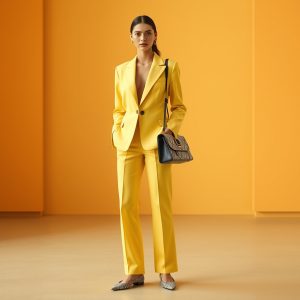
The New Guardians of Movement: How Recreation Dressing and Romantic Fabrics Are Redefining the Syntax of Glamoratti in the Post-Jazz Age
The fashion landscape has always been a battleground of ideologies, where the rigid structures of utility clash with the fluid fantasies of romance. Yet, in this era of Slow Living and Recreation Dressing, a new syntax is emerging—one that doesn’t merely reconcile these opposites but elevates them into a cohesive language of modern elegance. At the heart of this transformation lies the unexpected marriage of Romantic Fabrics and the unapologetic pragmatism of Mode Sportif, a union that is redefining the very essence of Glamoratti for the post-Jazz Age.
The Paradox of Modern Movement
The Jazz Age was defined by its frenetic energy, a celebration of liberation that manifested in dropped waists, fringe, and the relentless rhythm of the Charleston. Today, however, the revival of that era is not about replication but reinterpretation. The modern Mode Sportif is less about the sweat of the dance floor and more about the poetry of motion—how clothing moves with the body, not against it. This is where Recreation Dressing steps in, a philosophy that borrows from the athleticism of the past while infusing it with the languid grace of Slow Living.
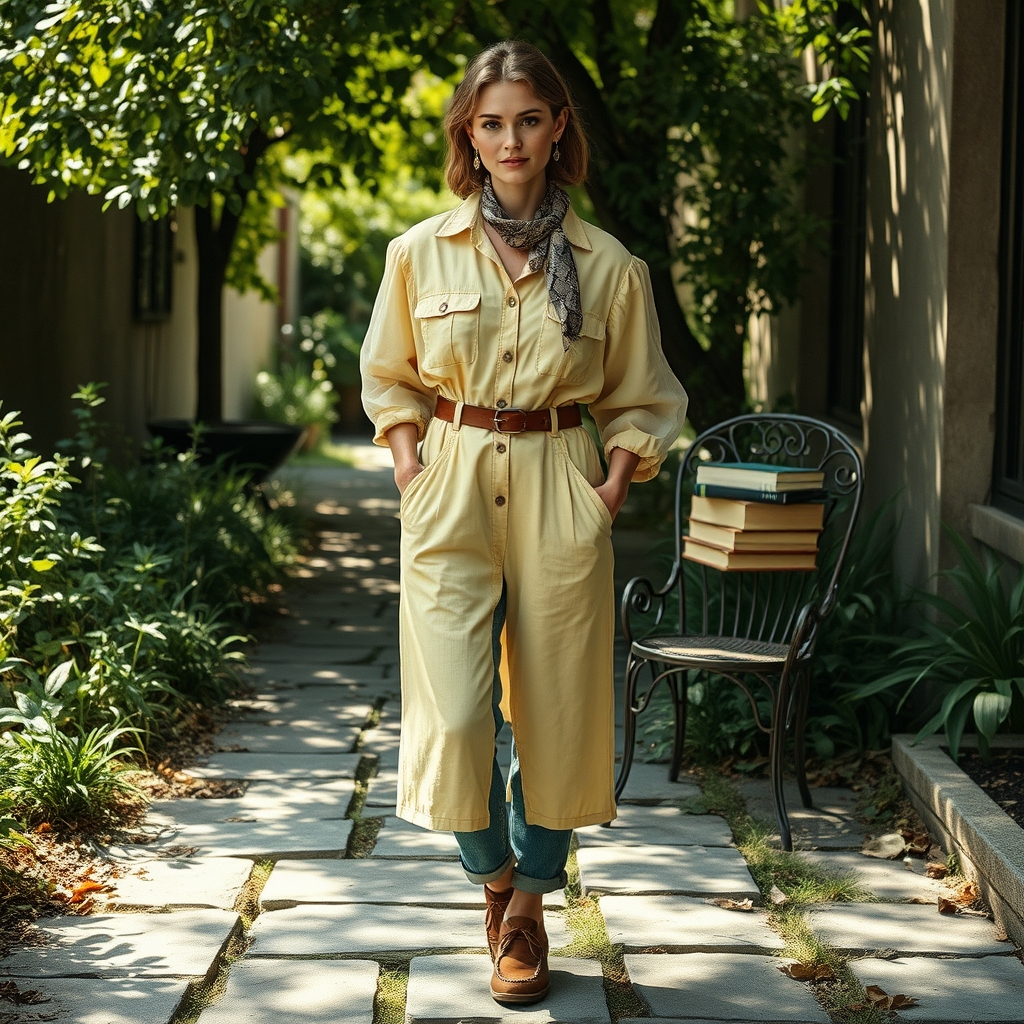
Enter Romantic Fabrics: chiffon, silk, and lace, materials that whisper rather than shout. These textiles, once relegated to the realm of evening wear or bridal fantasies, are now being reimagined as the building blocks of daytime elegance. The key lies in their juxtaposition with the utilitarian. A Utility Dress in creamy yellow, cinched at the waist with a belt of raw leather, its sleeves billowing in delicate organza, becomes a statement of effortless sophistication. It’s a look that says, “I am both here and elsewhere,” a duality that defines the modern Glamoratti aesthetic.
The Alchemy of Texture and Tone
Color plays a pivotal role in this new syntax. Butter Yellow and Creamy Yellow are no longer mere accents but foundational hues, evoking the warmth of sunlight filtered through vintage lace. These shades, soft yet insistent, serve as the perfect backdrop for the drama of texture. Brut Denim, with its raw, unwashed edges, grounds the ethereality of romantic fabrics, creating a tension that is as visually compelling as it is tactile. Imagine a pair of high-waisted denim trousers paired with a blouse of sheer, embroidered silk—practicality and fantasy coexisting in a single ensemble.
The inclusion of Animal Prints, particularly Snake Print, adds another layer to this dialogue. Far from being a fleeting trend, snake print has evolved into a symbol of quiet rebellion, a nod to the untamed that lurks beneath the polished surface of modern dressing. When rendered in muted tones or scaled down to a subtle pattern, it becomes a textural element rather than a statement, blending seamlessly with the romantic and the utilitarian. A snake-print scarf draped over the shoulders of a Utility Dress in creamy yellow is not just an accessory; it’s a punctuation mark in the language of Glamoratti.
The Footwear Revolution: From Ballet Flats to Moccasins
No discussion of modern movement would be complete without addressing the role of footwear. The Ballet Flat, once a symbol of demure femininity, has been reclaimed as an icon of modern pragmatism. Its low heel and supple leather make it the perfect companion for the Recreation Dressing ethos—effortless, adaptable, and endlessly versatile. Yet, it’s the Moccasin that truly embodies the spirit of the post-Jazz Age revival. With its roots in both indigenous craftsmanship and the louche glamour of 1920s speakeasies, the moccasin bridges the gap between heritage and modernity, comfort and style.
When paired with a Romantic Fabric dress or a Brut Denim jumpsuit, these shoes don’t just complete an outfit—they redefine it. They whisper of lazy afternoons spent in sun-dappled gardens or impromptu city escapes, where the line between leisure and intention blurs. This is the essence of Slow Living: the art of savoring the journey as much as the destination.
The Unseen Architecture of Modern Dressing
What makes this new syntax so compelling is its refusal to be pinned down. It is neither wholly romantic nor entirely utilitarian, neither nostalgic nor futuristic. Instead, it exists in the liminal spaces between these binaries, crafting a language that is as fluid as it is precise. The Guardian Design of this era is not about rigid structures but about the interplay of elements—how a Snake Print scarf can transform a Utility Dress into a work of art, or how a pair of Ballet Flats can elevate a Romantic Fabric gown from ethereal to effortlessly chic.
This is fashion as a form of quiet resistance, a rejection of the disposable in favor of the deliberate. It’s a celebration of the handmade, the imperfect, and the deeply personal. In a world that moves at breakneck speed, the Glamoratti of today is defined not by how much it can accumulate but by how thoughtfully it can curate. The result is a wardrobe that is as much a reflection of the wearer’s inner world as it is a response to the external one—a harmonious blend of movement and stillness, romance and reality, the past and the present.
The post-Jazz Age is not about looking back but about moving forward with intention. It’s about recognizing that true elegance lies not in the extremes but in the balance, in the way a Creamy Yellow dress sways with the breeze or how a Moccasin scuffs against the pavement, leaving behind a trail of stories waiting to be told. This is the new grammar of style, where every stitch, every hue, and every step is a sentence in a much larger narrative—one that is still being written, one outfit at a time.