The Fabric of Tomorrow: How Anthropometric Whispers and Digital Threads Are Stitching a New Language of Belonging
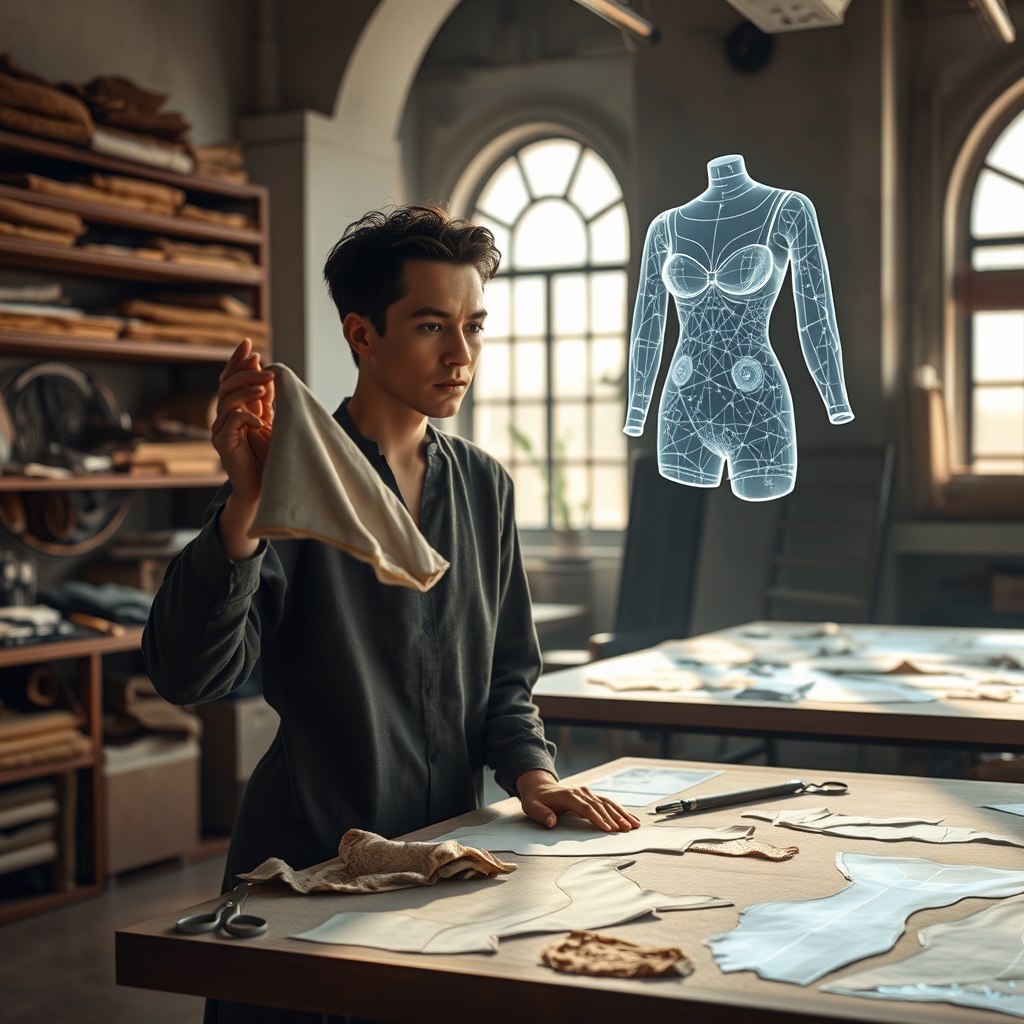
The first time I held a piece of fabric cut from a zero-waste pattern, it felt like unfolding a secret. Not the kind scribbled in ink and hidden in a drawer, but something older—something woven into the very geometry of existence. The edges aligned with an almost sacred precision, as if the cloth itself had been listening to the body it was meant to embrace. There were no scraps, no remnants of excess, only a quiet dialogue between form and function, a conversation that had been waiting centuries to be heard.
The Body as a Living Blueprint
Anthropometric design is not merely about measurements; it is about translation. It is the art of converting the silent poetry of the human form—its curves, its asymmetries, its subtle rhythms—into a language that fabric can understand. When I first encountered a 3D garment simulation, I watched as a digital avatar twisted and turned, its virtual skin stretching and folding in response to an invisible wind. The patterns adjusted in real time, not just to fit, but to move with the body, as if the cloth had been imbued with a kind of sentience. It was then I realized: we are no longer designing for bodies. We are designing with them.
This shift is profound. For generations, fashion has imposed its will upon the body—corsets cinching waists into submission, shoulder pads sculpting silhouettes into rigid ideals. But anthropometric optimization is different. It does not demand conformity; it invites collaboration. It listens to the way a spine curves when someone leans forward, the way a shoulder blade shifts when arms reach upward. It acknowledges that a body is not a static mannequin but a living, breathing entity, and that clothing should be its ally, not its adversary.
The Alchemy of Absence: Zero-Waste as a Philosophy
Zero-waste pattern cutting is often framed as a technical challenge—a puzzle to be solved with scissors and ingenuity. But it is so much more than that. It is a meditation on absence, a practice in seeing the negative space as sacred. When I first attempted to draft a zero-waste garment, I found myself staring at a length of fabric, tracing its edges with my fingertips, searching for the hidden shapes within. It was like reading a map where the land and the water were indistinguishable, where every cut was both a beginning and an end.
The process forced me to confront the wastefulness of my own habits. How many times had I mindlessly trimmed away excess, discarding it without a second thought? How many garments had I made that were beautiful in theory but burdensome in practice—too stiff, too tight, too much? Zero-waste design does not tolerate such carelessness. It demands intention, a deep respect for the material and the hands that shaped it. It is a reminder that every thread has a story, and that to waste it is to silence that story before it can be told.
The Digital Embrace: When Fabric Learns to Listen
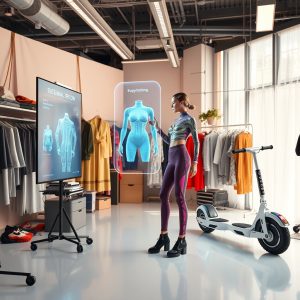
There is something almost magical about watching a digital pattern unfold on a screen, its lines shifting and adapting in response to a body that exists only as data. Virtual try-on technology has blurred the boundaries between the physical and the digital, allowing us to step into garments before they are even stitched. But more than that, it has given us a new way of seeing ourselves. When I first used a virtual fitting room, I was struck by how intimate the experience felt. The avatar on the screen was not just a representation of my body; it was a mirror, reflecting not just my measurements, but the way I moved, the way I carried myself.
This technology is not without its complexities. There are questions of accessibility, of privacy, of the ethical implications of reducing the human form to a series of algorithms. But at its best, it offers something rare: a chance to design clothing that is not just worn, but experienced. It allows us to create garments that adapt to our bodies, rather than forcing our bodies to adapt to them. It is a step toward a future where clothing is not just functional, but alive—responsive, intuitive, and deeply personal.
The Collaborative Tapestry: Stitching Together the Future
Fashion has always been a solitary pursuit, a dialogue between designer and fabric, with the body often reduced to a passive participant. But collaborative prototyping is changing that. When I first worked on a project where the wearer’s feedback was integrated into every stage of the design process, it felt like a revelation. There were no assumptions, no guesswork—just a continuous loop of listening, adjusting, and refining. The garment that emerged was not just a product of my vision, but a shared creation, a tapestry woven from multiple voices.
This approach is not without its challenges. It requires humility, a willingness to set aside ego and embrace the idea that the best designs are not dictated, but discovered. It demands patience, a recognition that the process of creation is as important as the final product. But the rewards are immense. When a garment is co-created, it carries with it the stories of everyone who touched it—the designer, the wearer, the hands that stitched it together. It becomes more than just an object; it becomes a living testament to the power of collaboration.
The Thread That Binds
There is a moment, just before the final stitch is made, when a garment exists in a state of potential. It is neither here nor there, neither fabric nor form, but something in between—a promise waiting to be fulfilled. In that moment, it is easy to believe that clothing is more than just cloth and thread. It is a language, a way of communicating who we are without saying a word. It is a bridge between the seen and the unseen, the tangible and the intangible.
As we stand on the cusp of this new era—where digital threads intertwine with anthropometric whispers, where zero-waste philosophies challenge our notions of excess, where collaboration replaces isolation—it is worth remembering that fashion has always been about more than just what we wear. It is about how we see ourselves, how we connect with one another, and how we choose to move through the world. The garments of tomorrow will not just clothe our bodies; they will speak to our souls, stitching together a future where belonging is not just a destination, but a way of being.