The Invisible Handshake: How Digital Pattern Development and User-Centric Apparel Are Negotiating the Future of Fit

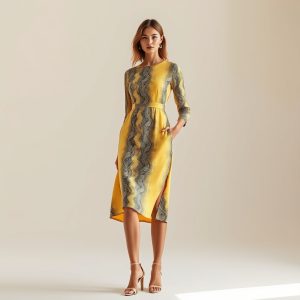
The first time I slipped into a garment that had been crafted not just for my body, but for the way I move, the way I breathe, the way my shoulders slope when I’m tired—it felt like a conversation. Not the kind you have with words, but the kind that hums beneath the skin, a silent negotiation between fabric and flesh. There was no pinching at the seams, no tugging at the hem, no quiet resentment of a sleeve that refused to bend with my elbow. It was as if the cloth had been listening to me long before I ever put it on.
The Body as a Living Blueprint
We have spent centuries dressing ourselves in approximations. The small, medium, large—these are not measurements, but guesses, broad strokes that attempt to capture the infinite variations of the human form. Yet, what if clothing could be more than a compromise? What if it could be a collaboration, a dialogue between the body’s geometry and the designer’s vision? Digital pattern development has begun to make this possible, transforming the way we think about fit from a static ideal into a dynamic, living exchange.
Anthropometric design optimization is not merely about taking measurements; it is about understanding the body as a landscape of movement, pressure, and breath. A shoulder is not just a point on a grid—it is a joint that rotates, a muscle that tenses, a curve that shifts when we reach for something just out of grasp. When we design with this depth of awareness, clothing ceases to be a shell and becomes an extension of the self, a second skin that remembers how we live.
The Alchemy of Zero-Waste and the Poetry of Precision
There is a quiet rebellion in the way zero-waste pattern cutting unfolds. It is not just about reducing fabric waste—though that alone is a radical act in an industry that discards enough textile to circle the planet four times over. It is about reimagining the very act of creation. Every cut, every seam, every fold is intentional, a meditation on efficiency and elegance. The fabric is no longer a passive canvas but an active participant in the design, its edges dictating the shape of the garment as much as the designer’s hand.
When combined with precision fit analysis, zero-waste techniques become a form of alchemy. The designer is no longer fighting against the limitations of standard patterns but working in harmony with the fabric’s natural grain, the body’s unique contours, and the rhythms of sustainable production. The result is clothing that feels inevitable, as if it could not have been any other way. This is the poetry of precision: the idea that beauty and function are not opposing forces, but two sides of the same thread.
The Virtual Fitting Room and the Intimacy of Data
Virtual try-on technology has the potential to dissolve the distance between desire and reality. No more standing in front of a mirror, twisting to catch a glimpse of how a dress falls against your back, only to be met with the frustration of a fit that is almost, but not quite, right. Instead, the screen becomes a mirror that does not lie—a space where your body is rendered in three dimensions, where fabric drapes in real time, where you can see how a garment moves with you before it ever touches your skin.
Yet, there is something deeply intimate about this exchange of data. The measurements, the posture, the way your weight shifts from one foot to the other—these are not just numbers, but fragments of your story. When a designer uses this information to craft a garment that fits not just your body, but your life, it becomes a form of trust. The screen is no longer a barrier, but a bridge, connecting the digital and the physical in a way that feels almost sacred.
The Future Woven in Threads of Collaboration
Collaborative fashion prototyping is where the magic truly begins. Imagine a world where the wearer is not just a passive recipient of design, but an active participant in the creation process. Where feedback loops between designer and user are not just welcomed, but essential. Where a garment evolves over time, adapting to the body’s changes, the wearer’s needs, the shifting tides of personal style.
This is not just about customization—it is about co-creation. It is about recognizing that the body is not a static object, but a living, breathing entity that grows, shifts, and transforms. When we design with this in mind, clothing becomes more than something we wear. It becomes a companion, a witness to our lives, a silent partner in the dance of existence.
The Ethics of the Invisible Stitch
There is a responsibility that comes with this level of intimacy. When we design clothing that fits the body so precisely, that adapts so seamlessly to the wearer’s life, we are not just creating garments—we are shaping experiences. And with that power comes the need for ethical consideration. Sustainable fabric selection is not just about choosing materials that are kind to the planet, but about selecting fibers that respect the body, that move with it, that age gracefully alongside it.
Ethical manufacturing processes are not just about fair wages and safe working conditions, though these are non-negotiable. They are about creating systems that honor the craft, that allow for the time and care required to produce clothing that is not just beautiful, but meaningful. When we slow down, when we pay attention, when we design with intention, we create garments that do not just cover the body, but celebrate it.
The first time I wore that perfectly fitted garment, it was not just the absence of discomfort that struck me, but the presence of something deeper—a sense of belonging. Not to a trend, not to a size, not to an ideal, but to myself. Clothing, when done right, is not just about how we look. It is about how we feel. It is about the way fabric can cradle us, the way a seam can align with our spine like a second shadow, the way a garment can move with us as if it were part of our very skin. This is the future of fit: not a destination, but a conversation, an ongoing negotiation between body and cloth, designer and wearer, the seen and the unseen. And in that space, in that quiet handshake between what we are and what we wear, we find something rare and beautiful—a sense of being truly, fully, at home in our own skin.