The Dance of Data and Dress: How Virtual Try-On and Anthropometric Design Are Choreographing the Future of Fit
There is a quiet magic in the way a garment settles against the skin—not just as fabric, but as an extension of movement, breath, and intention. For centuries, this alchemy was the domain of tailors and seamstresses, their hands guided by intuition, experience, and the subtle language of the body. But now, in the glow of screens and the hum of algorithms, a new kind of craftsmanship is emerging, one that marries the precision of data with the poetry of fit. This is the dance of virtual try-on technology and anthropometric design, a duet where mathematics and materiality intertwine to reimagine how we clothe ourselves.
The Body as a Living Blueprint
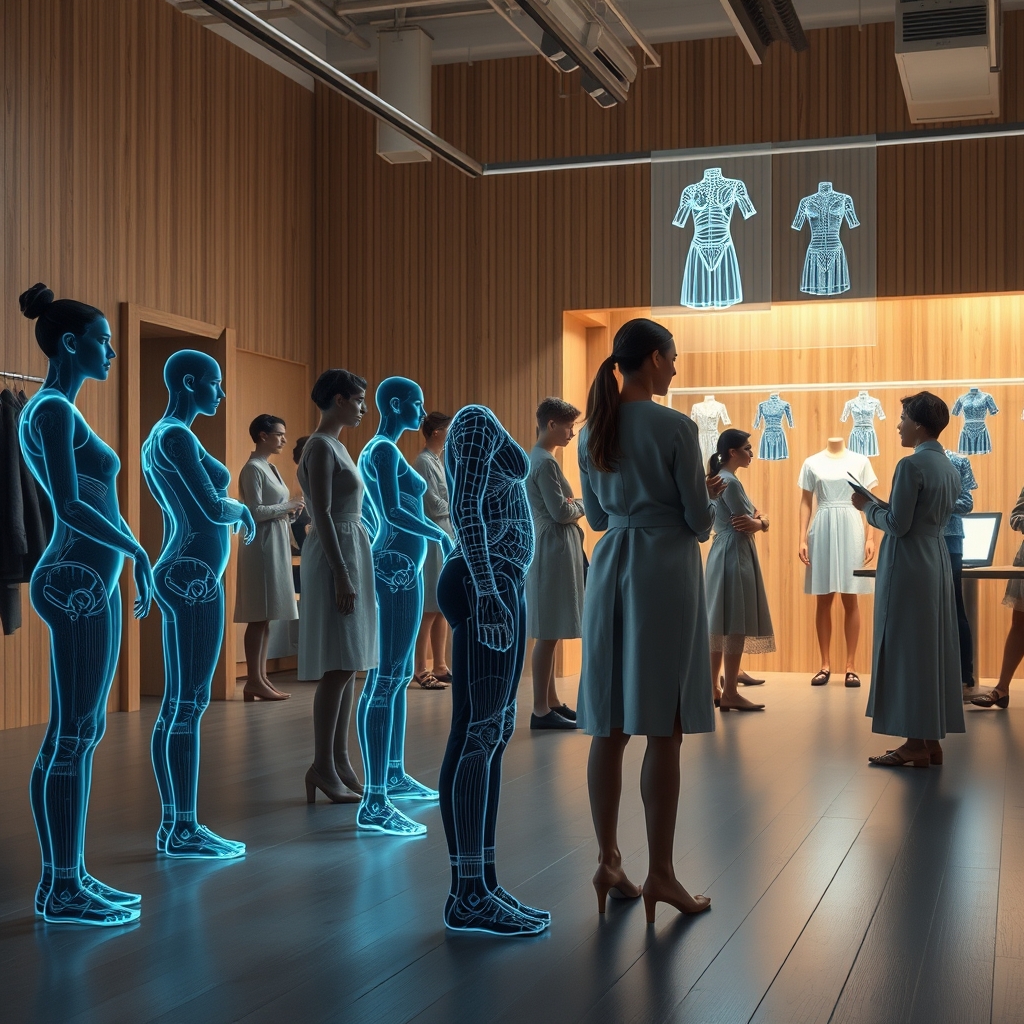
The human form is not a static thing. It bends, it breathes, it shifts with the rhythm of life. Yet for too long, the fashion industry has treated it as such, forcing bodies into standardized molds that fit no one perfectly and everyone imperfectly. Anthropometric design optimization seeks to change that. By mapping the body in three dimensions—capturing not just measurements, but the way flesh yields to pressure, how posture alters proportions, how movement stretches and compresses—designers can now draft patterns that respond to the body’s living geometry. This is not just about size; it is about shape, about the way a shoulder slopes or a waist curves, about the silent dialogue between cloth and skin.
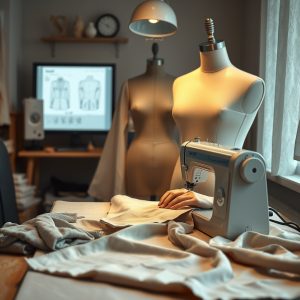
Digital pattern development has become the bridge between this intimate knowledge of the body and the garments we wear. Where once a tailor would spend hours draping muslin, now software can simulate the drape of fabric in real time, adjusting seams and darts with a precision that human hands could never achieve alone. But this is not a replacement of craft—it is an evolution. The computer does not replace the tailor’s eye; it sharpens it, allowing for a level of customization that was once the privilege of the elite to become accessible to all. The result? Clothing that moves with you, not against you, that feels like a second skin rather than a constraint.
The Illusion of the Mirror
How many times have you stood before a dressing room mirror, turning this way and that, trying to imagine how a garment might look in motion, in different light, on a different day? Virtual try-on technology dissolves that uncertainty. With a few clicks, the screen becomes a mirror not just of reflection, but of possibility. You can see how a dress sways as you walk, how a jacket hugs your shoulders when you reach for something, how the color of a shirt plays against your skin in sunlight versus lamplight. This is more than convenience; it is a shift in how we relate to clothing.
For the first time, the act of shopping becomes an experience rather than a transaction. The garment is no longer a static object on a hanger but a dynamic extension of the self. And for designers, this technology offers something even more profound: the ability to iterate endlessly without waste. A pattern can be adjusted, a fabric swapped, a silhouette refined—all before a single scrap of cloth is cut. In an industry notorious for its environmental toll, this is a quiet revolution. Zero-waste pattern cutting, once a niche practice, is now within reach for mass production, as digital tools allow for the optimization of every inch of fabric, ensuring that nothing is discarded in the name of fit.
The Ethics of Intimacy
But with this new intimacy between body and machine comes a question: What does it mean to be measured so precisely? Anthropometric data is deeply personal—it is, in many ways, a digital fingerprint of the self. The way we move, the way we stand, the way our bodies occupy space are all encoded in these datasets. And as this technology becomes more widespread, the responsibility to handle this data with care grows ever more urgent. Who owns this information? How is it stored, shared, or protected? The fashion industry has not always been a steward of trust, but if virtual try-on and digital pattern development are to fulfill their promise, they must be built on a foundation of transparency and respect.
There is also the matter of accessibility. While these technologies have the potential to democratize bespoke fit, they also risk creating new divides. Not everyone has access to the devices or the digital literacy required to engage with virtual try-on platforms. And not every body is represented in the datasets that power these tools. If the future of fashion is to be truly inclusive, it must account for the vast diversity of human forms—not just in size, but in ability, age, and cultural context. Adaptive clothing solutions, which modify garments to accommodate different physical needs, must be woven into the fabric of this new era, ensuring that no one is left behind in the pursuit of the perfect fit.
The Collaborative Canvas
Perhaps the most exciting frontier in this evolution is the rise of collaborative fashion prototyping. No longer is design a solitary act, confined to the studio of a single creator. Now, through digital platforms, designers, wearers, and even algorithms can co-create garments in real time. A user might adjust a sleeve length with a swipe, while an AI suggests fabric choices based on climate data. A designer might release a modular clothing system, allowing wearers to mix and match components to suit their mood or needs. This is fashion as a living, breathing entity, shaped by the collective rather than dictated by the few.
This shift also challenges the traditional lifecycle of a garment. In a world where clothing can be endlessly modified and repurposed, the idea of obsolescence begins to fade. A dress is no longer something you outgrow or tire of; it becomes a canvas for reinvention. Sustainable fabric selection plays a crucial role here, as designers prioritize materials that can withstand this cycle of adaptation—fabrics that are durable, recyclable, and kind to the planet. The result is a wardrobe that evolves with you, rather than one that you must constantly replace.
The Unseen Threads of Tomorrow
As we stand on the precipice of this new era, it is worth pausing to consider what we are leaving behind—and what we are embracing. The fashion industry has long been built on the idea of disposability: trends that come and go, garments that are worn a handful of times before being discarded. But the technologies emerging today suggest a different future, one where clothing is not just a product, but a relationship. A relationship between the wearer and the garment, between the body and the data that describes it, between the past and the future of craftsmanship.
There is a certain poetry in the way these tools allow us to see ourselves more clearly. In the glow of a virtual try-on, we are not just trying on clothes; we are trying on versions of ourselves. And in the precision of anthropometric design, we are not just being measured; we are being understood. The future of fit is not just about how clothes look on us, but how they make us feel—how they move with us, how they adapt to us, how they become a part of us. It is a future where the line between the body and the garment blurs, where the act of getting dressed becomes an act of self-discovery, and where the clothes we wear tell a story not just of fashion, but of who we are.