The Invisible Architecture: How Digital Pattern Development and Anthropometric Design Are Sculpting the Future of Clothing
There is a quiet magic in the way a garment settles against the skin—not just as fabric, but as a second architecture, a silent dialogue between body and cloth. It is a conversation written in stitches and seams, in the subtle give of a well-placed dart, in the way a sleeve falls just so, as if it has always known the curve of an arm. This is the art of pattern drafting, not as a technical exercise, but as an intimate act of translation, where the body’s language of movement, breath, and posture is rendered into something tangible, something wearable. And now, with the rise of digital pattern development and anthropometric design, this conversation is evolving, deepening, into something more precise, more personal, and more profound than ever before.
The Body as Blueprint
For centuries, the craft of pattern making was a dance between intuition and experience. A tailor would measure, drape, and adjust, relying on a keen eye and a steady hand to coax fabric into harmony with the body. But the body is not a static thing—it is a living, breathing entity, shifting with every step, every gesture, every breath. Traditional methods, while masterful, could only approximate this fluidity. They captured a moment in time, a snapshot of dimensions, but not the full spectrum of how a person moves through the world.
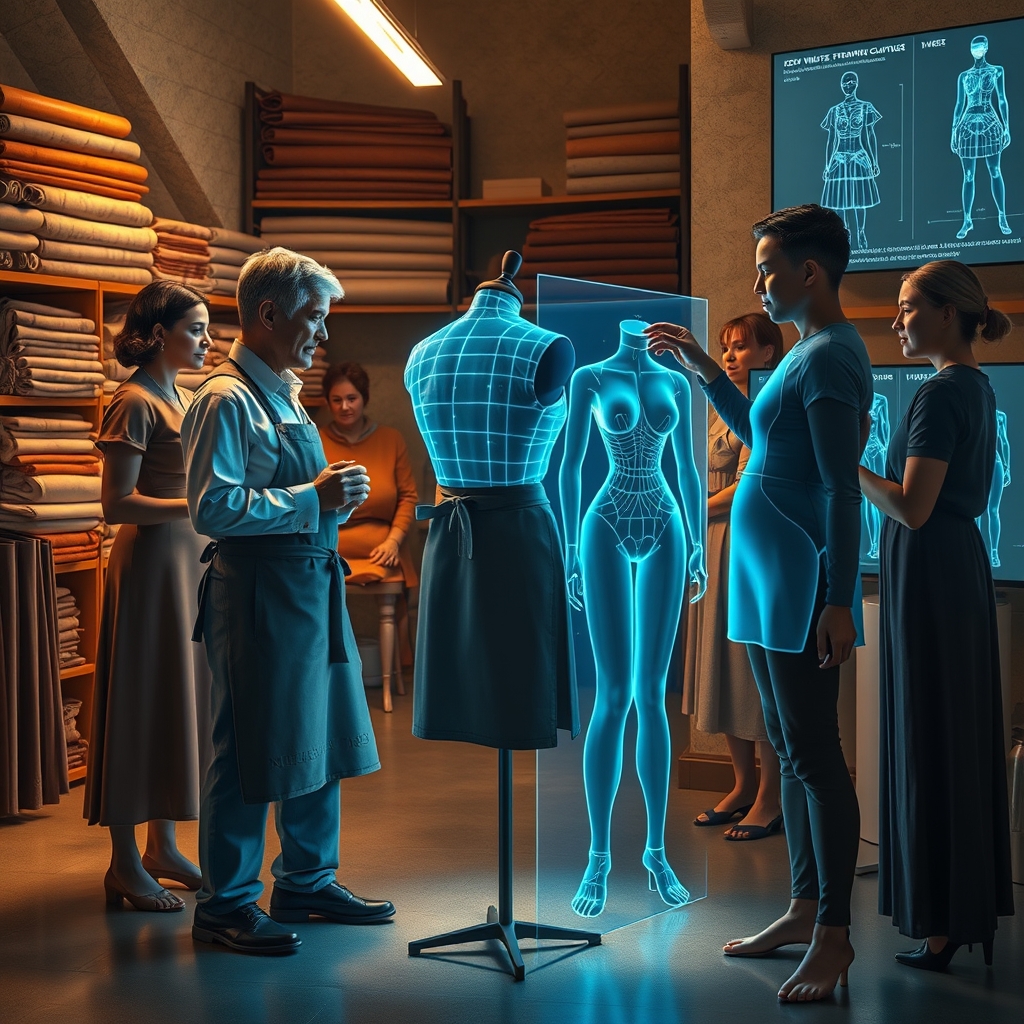
Enter anthropometric design, a discipline that treats the body not as a series of measurements, but as a dynamic system. By leveraging 3D scanning and motion capture, designers can now map the body in its entirety, capturing not just its proportions, but its rhythms. The way a shoulder blade shifts when reaching for a high shelf. The subtle rotation of a hip when stepping onto a curb. The expansion of a ribcage with each inhale. These are the invisible nuances that transform a garment from something that merely fits to something that lives with the wearer. It is the difference between a house built to code and a home that feels like an extension of oneself.
The Digital Loom: Weaving Precision into Fabric
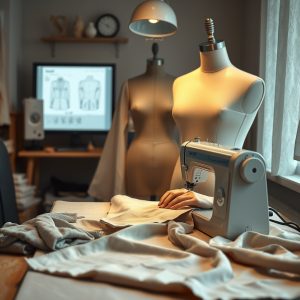
If anthropometry provides the blueprint, digital pattern development is the loom on which this new language of fit is woven. Gone are the days of paper patterns pinned to cutting tables, their edges frayed from use, their lines smudged with the ghosts of past adjustments. In their place, digital tools allow designers to draft, manipulate, and refine patterns with a level of precision that was once unimaginable. A curve can be adjusted by a millimeter. A seam can be shifted with the click of a mouse. And perhaps most transformatively, these patterns can be tested and iterated in a virtual space before a single scrap of fabric is cut.
This is where 3D garment simulation comes into play, a technology that allows designers to drape digital fabric over digital bodies, watching in real time how it falls, stretches, and moves. It is a process of trial and error without waste, of experimentation without consequence. A designer can tweak a pattern, simulate its behavior, and refine it again, all within the span of an afternoon. The result is not just a more accurate fit, but a more sustainable one. Zero-waste pattern cutting, once a niche practice, is now within reach for mainstream designers, as digital tools make it easier to nest patterns efficiently, minimizing offcuts and maximizing the potential of every yard of fabric.
The Human Touch in a Digital World
Yet, for all its precision, digital pattern development is not a cold, mechanical process. It is, at its heart, deeply human. The data it relies on—the scans, the measurements, the motion captures—are all derived from real bodies, each with their own stories, their own quirks, their own ways of moving through the world. A digital pattern is not a one-size-fits-all solution, but a starting point, a foundation upon which the unique contours of an individual can be built. It is a collaboration between technology and craftsmanship, between the objective and the subjective, between the measurable and the felt.
This is perhaps most evident in the rise of interactive clothing design, where the wearer becomes an active participant in the creation of their garment. Imagine a future where a customer steps into a virtual fitting room, their body scanned in real time, and watches as a garment is drafted and adjusted before their eyes. They can tweak the fit, change the fabric, experiment with silhouettes—all without a single piece of physical fabric being touched. It is a process that democratizes bespoke tailoring, making it accessible to anyone with a screen and an internet connection. But more than that, it is a process that honors the wearer’s agency, their preferences, their sense of self. It is clothing as a conversation, not a monologue.
The Ethics of Fit: Sustainability and the Soul of Clothing
There is an ethical dimension to this evolution as well, one that extends beyond the technical and into the philosophical. In a world drowning in fast fashion, where garments are churned out at breakneck speed and discarded just as quickly, the idea of clothing that is made to fit—not just the body, but the life of the wearer—feels like a radical act. It is a rejection of disposability, a return to the idea that clothing should be cherished, cared for, and worn for years, if not decades. When a garment fits perfectly, it becomes more than just an item in a wardrobe. It becomes a companion, a second skin, something that moves with you, grows with you, and tells your story.
This is where sustainable fabric selection and ethical manufacturing processes intersect with digital pattern development. A garment that is designed to fit perfectly is a garment that is less likely to be discarded. A pattern that is drafted with zero-waste principles in mind is one that respects the resources that went into its creation. And when a designer can simulate and refine a garment before it is ever produced, they can ensure that every piece that comes off the production line is one that will be loved, worn, and kept. It is a shift from quantity to quality, from excess to intention, from the fleeting to the lasting.
The Future of Fit: A Living, Breathing Dialogue
What does the future hold for this invisible architecture of fit? Perhaps it lies in modular clothing systems, where garments are designed to adapt and evolve alongside the wearer. A dress that can be shortened or lengthened with a few simple adjustments. A jacket that can be transformed from a cropped silhouette to an oversized one with the addition of a panel. These are not just fantasies, but real possibilities, made tangible by the precision of digital pattern development and the flexibility of anthropometric design. They represent a future where clothing is not static, but dynamic, not a finished product, but a living, breathing entity that grows and changes with the person who wears it.
Or perhaps the future lies in the realm of experiential design workflows, where the process of creating a garment becomes as meaningful as the garment itself. Imagine a world where a customer doesn’t just buy a dress, but participates in its creation, selecting fabrics, adjusting fits, and seeing their choices come to life in real time. It is a process that transforms clothing from a commodity into an experience, from something that is consumed to something that is co-created. It is a future where the line between designer and wearer blurs, where the act of getting dressed becomes an act of self-expression, of storytelling, of connection.
In the end, the evolution of pattern drafting is not just about technology, or precision, or sustainability. It is about something far more fundamental: the relationship between body and cloth, between self and world. It is about the quiet magic of a garment that fits just right, not because it was made to a standard, but because it was made for you. It is about the way clothing can shape not just our appearance, but our sense of self, our confidence, our comfort in our own skin. And in a world that often feels fragmented and impersonal, that is a kind of magic worth holding onto.