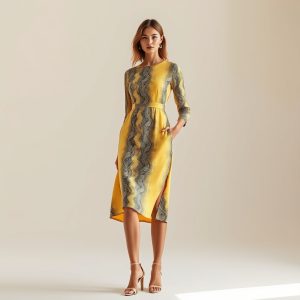
The Holographic Mirror: How Digital Pattern Development and Adaptive Clothing Are Reflecting the Future of Identity
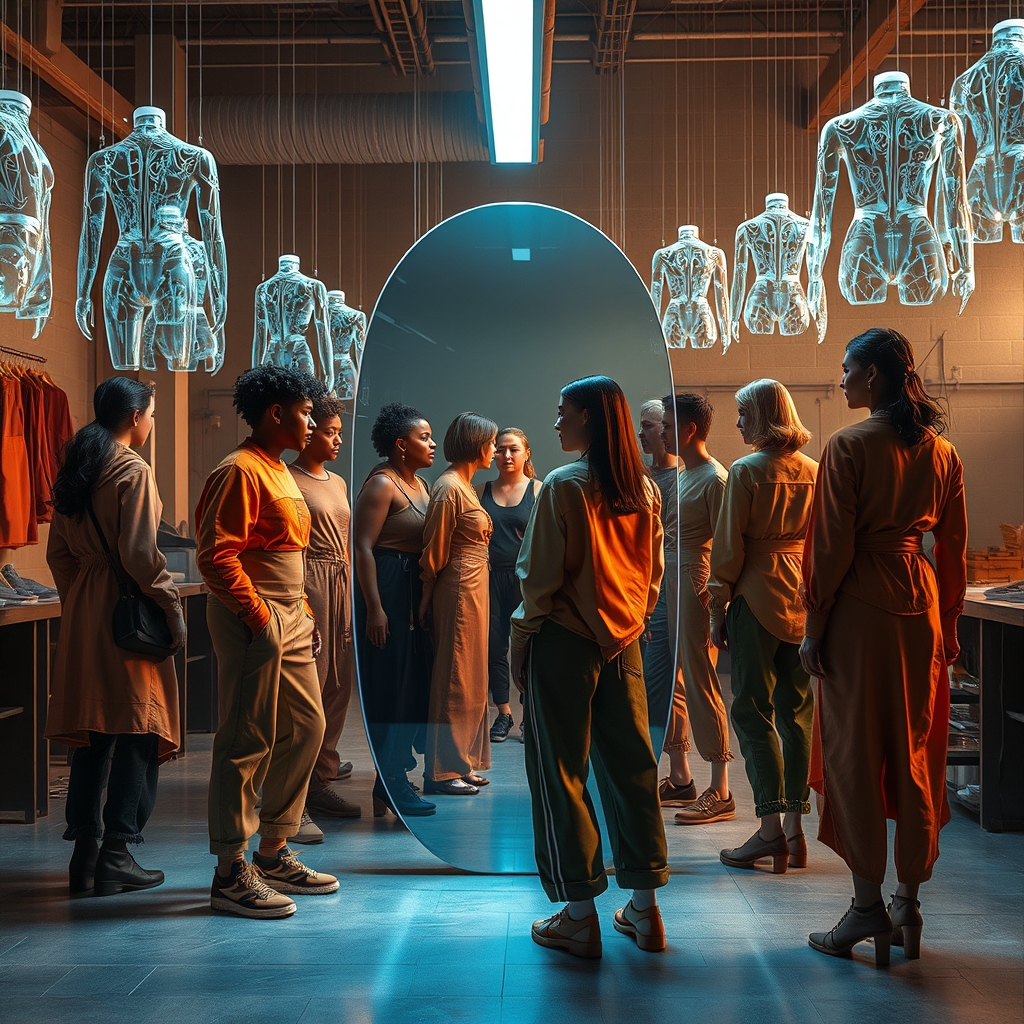
The first time I slipped into a garment that had been drafted not from measurements alone, but from the quiet poetry of my movements, I felt the strange sensation of being both seen and imagined. It was as if the fabric had learned the language of my body before I had even spoken it—each seam a whisper of where I bend, where I stretch, where I hold still. This was not the rigid geometry of mass-produced clothing, but something far more intimate: a dialogue between skin and thread, mediated by the silent algorithms of digital pattern development. The experience left me wondering: when did we begin to treat our clothes as mere coverings, rather than extensions of our very selves?
The Alchemy of Adaptation
There is a quiet revolution unfolding in the way we conceive of clothing, one that begins not with fabric, but with data. Anthropometric design optimization has transformed the body from a static silhouette into a living dataset—one that breathes, shifts, and evolves. The old methods of pattern drafting, with their flat, two-dimensional templates, could never capture the fluidity of human form. But now, with 3D garment simulation and precision fit analysis, we are learning to draft patterns that adapt as we do, like a second skin that remembers the way we move. This is not just about fit; it is about resonance. A well-drafted garment should not just cling to the body—it should listen to it.
Consider the possibilities of modular clothing systems, where each piece is engineered to interlock, shift, and reconfigure based on the wearer’s needs. A jacket that transforms into a vest with a single adjustment, a dress that elongates or cinches with the pull of a hidden cord—these are not just novelties, but a reimagining of what clothing can be. They are garments that grow with us, that respond to our moods, our environments, our very identities. In a world where fast fashion has taught us to consume and discard, adaptive clothing offers a radical alternative: the promise of permanence through change.
The Ethics of the Invisible Stitch
Yet, for all its technological marvels, the future of fashion must also be rooted in something deeper than innovation—it must be rooted in ethics. Zero-waste pattern cutting is not just a technique; it is a philosophy, a refusal to accept the wastefulness that has long defined the industry. Every scrap of fabric left on the cutting room floor is a silent testament to a system that values speed over sustainability, profit over planet. But what if we could draft patterns that left no trace, no excess? What if every inch of fabric served a purpose, not just in the garment itself, but in the larger ecosystem of creation?
Sustainable fabric selection plays an equally vital role in this shift. The textiles we choose are not neutral; they carry the weight of their origins, the hands that wove them, the land that nurtured them. When we opt for materials that are regenerative, biodegradable, or upcycled, we are not just making a choice about aesthetics—we are making a choice about the kind of world we want to inhabit. The most beautiful garments are not those that dazzle the eye, but those that nourish the earth even as they adorn the body.
The Body as Collaborator
Perhaps the most profound shift in modern garment construction is the move toward collaborative fashion prototyping. No longer is the designer the sole author of a piece; instead, the wearer becomes an active participant in the creative process. Virtual try-on technology allows us to step into a garment before it even exists, to see how it moves with us, how it catches the light, how it feels against the skin. This is not just convenience—it is a democratization of design, a way of ensuring that clothing is not imposed upon the body, but co-created with it.
Imagine a world where every garment is a conversation, where the body speaks through movement and the fabric responds in kind. This is the promise of experiential design workflows, where the act of wearing becomes an act of creation. The line between designer and wearer blurs, and in that blurring, something new emerges: a fashion that is not just worn, but lived. It is a shift from passive consumption to active participation, from uniformity to uniqueness, from silence to song.
The Unfinished Symphony
There is a certain magic in the idea that a garment might never truly be finished—that it might continue to evolve, to adapt, to grow alongside the person who wears it. This is the essence of bespoke pattern engineering: the understanding that no two bodies are alike, and no single design can ever be complete. The best clothing is not static; it is a living, breathing entity, shaped by the hands that make it and the bodies that inhabit it. In this way, fashion becomes less about the final product and more about the journey—the quiet, ongoing dialogue between form and function, between self and world.
When we drape ourselves in garments that have been crafted with this level of intention, we are not just covering our bodies—we are revealing them. We are saying, This is who I am. This is how I move. This is the shape of my soul. And in that revelation, we find something far more precious than mere clothing. We find ourselves.