The New Lexicon of Leisure: How Recreation Dressing and Moccasins Are Redefining the Intersection of Jazz Age Nostalgia and Slow Living

The contemporary fashion landscape is a palimpsest, where the indelible marks of the past are not erased but rather recontextualized, reimagined, and repurposed. At the heart of this sartorial evolution lies the interplay between Recreation Dressing and the quiet rebellion of Slow Living, two philosophies that, at first glance, appear antithetical. Yet, their convergence has given rise to a new lexicon of leisure—one that borrows from the exuberance of the Jazz Age while embracing the deliberate pace of modern minimalism. This is not nostalgia for nostalgia’s sake; it is a calculated reclamation of elegance, a rejection of the ephemeral in favor of the enduring.
The Jazz Age Revisited: A Study in Contrasts
The Jazz Age was an era of excess—of fringe, feathers, and the unapologetic celebration of hedonism. Its sartorial legacy is one of boldness, of silhouettes that demanded attention and fabrics that shimmered under the glow of speakeasy lights. Yet, the modern reinterpretation of this aesthetic is not a carbon copy. Instead, it is a distillation, a refinement that strips away the ostentation while preserving the spirit of liberation. Recreation Dressing, in this context, is not about dressing for the sake of performance but about dressing as an act of self-expression, a nod to the past that feels inherently contemporary.
Consider the resurgence of moccasins, a footwear staple that bridges the gap between the utilitarian and the elegant. In the 1920s, they were a symbol of leisure, worn by those who could afford to eschew the rigid formalities of urban life in favor of the relaxed rhythms of country estates. Today, they serve a similar purpose, albeit in a world where the boundaries between work and leisure have blurred. The modern moccasin is not just a shoe; it is a statement—a declaration of intent that one values comfort without compromising on style, that one understands the language of subtlety in an age of overstatement.
The Slow Living Manifesto: Fashion as a Form of Resistance
If the Jazz Age was about speed, Slow Living is about deliberation. It is a counter-movement to the relentless pace of modern life, a reminder that beauty often lies in the unhurried, the considered, the carefully crafted. In fashion, this philosophy manifests in the rejection of fast trends in favor of timeless pieces, in the preference for quality over quantity, and in the embrace of garments that tell a story. Recreation Dressing aligns perfectly with this ethos, as it prioritizes versatility and longevity over fleeting novelty.
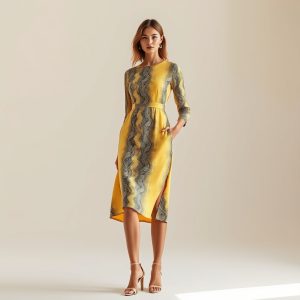
The utility dress, for instance, has evolved from its functional origins into a symbol of understated sophistication. Its clean lines and practical details—pockets, adjustable waistbands, durable fabrics—make it a staple of the Slow Living wardrobe. Yet, when paired with a pair of moccasins and a touch of butter yellow or creamy neutrals, it transcends its utilitarian roots, becoming a canvas for personal expression. This is the essence of Recreation Dressing: the ability to transform the mundane into the extraordinary through thoughtful styling and an appreciation for the past.
The Aesthetic of Intentionality: Where Nostalgia Meets Modernity
The most compelling aspect of this sartorial shift is its intentionality. It is not enough to simply borrow from the Jazz Age; one must reinterpret it through the lens of contemporary values. This is where Guardian Design—a term that encapsulates the idea of fashion as a form of protection, both physical and psychological—comes into play. The modern wardrobe is not just a collection of garments but a curated arsenal, designed to shield the wearer from the chaos of the external world while allowing them to move through it with grace and confidence.
Ballet flats, for example, are a perfect embodiment of this duality. They offer the ease of slippers with the polish of formal footwear, making them ideal for the woman who refuses to choose between comfort and elegance. When paired with snake print or animal motifs, they take on an edge, a hint of the wild that tempers their inherent femininity. This juxtaposition is at the heart of Recreation Dressing: the ability to balance opposing forces—softness and strength, nostalgia and modernity, function and fantasy—without sacrificing coherence.
The Role of Color: Butter Yellow and Creamy Neutrals as Anchors
Color plays a pivotal role in this new lexicon of leisure. Butter yellow and creamy neutrals are not merely hues; they are anchors, grounding the exuberance of Jazz Age influences in a palette that feels both timeless and modern. These colors evoke warmth, optimism, and a sense of calm—qualities that are essential in an era defined by uncertainty. They are versatile enough to be dressed up or down, to complement both prints galore and the stark simplicity of brut denim.
In the context of Recreation Dressing, these colors serve as a bridge between the past and the present. A butter yellow blazer, for instance, can be paired with high-waisted trousers and moccasins for a look that channels the effortless elegance of the 1920s, while its modern cut and fabric ensure it feels fresh and relevant. Similarly, a creamy neutral utility dress can be accessorized with snake print scarves or ballet flats to create a look that is both practical and poetic.
The fusion of Recreation Dressing and Slow Living is not a fleeting trend but a fundamental shift in how we perceive and engage with fashion. It is a rejection of the disposable in favor of the deliberate, a celebration of the past that is firmly rooted in the present. The Jazz Age may have been about living in the moment, but its modern incarnation is about living with intention—about choosing pieces that resonate on a deeper level, that tell a story, and that endure long after the trends have faded. In this new lexicon of leisure, fashion is not just about what you wear; it is about how you choose to move through the world, and the legacy you leave behind.