The Intimate Cartography: How Custom Fit Pattern Drafting and Anthropometric Whispers Are Mapping the Body’s Hidden Dialogue
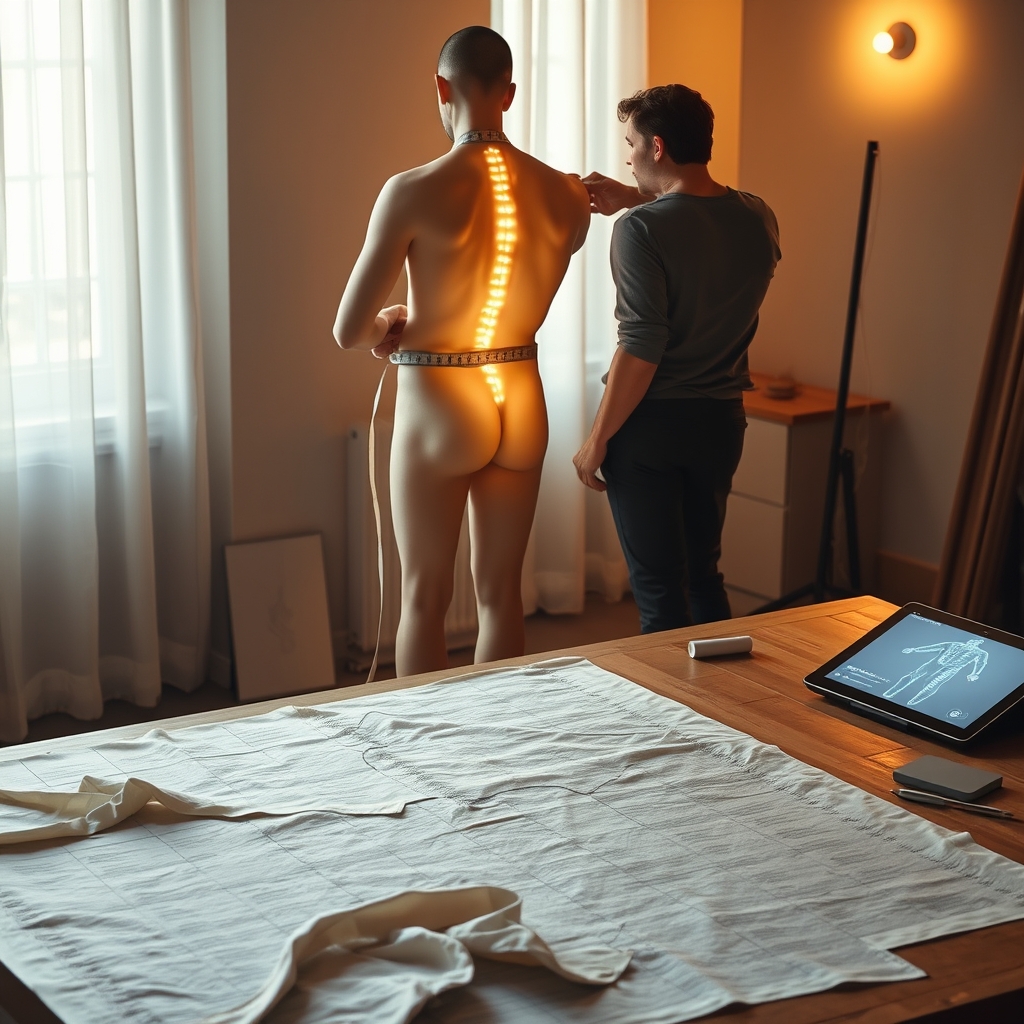
The first time I held a tape measure against my own skin, I felt the weight of something ancient and unspoken. It was not just the cool metallic glide of the tool, but the quiet revelation that my body—this ever-shifting landscape of curves, hollows, and asymmetries—was being measured not as a static form, but as a living, breathing entity. Custom fit pattern drafting is not merely a technical process; it is an act of translation, a way of converting the body’s silent language into something tangible, something that can be draped, stitched, and worn like a second skin.
The Body as a Living Manuscript
Every body carries its own narrative, a story written in the slope of shoulders, the arc of a spine, the slight asymmetry of hips. Traditional pattern making often flattens these nuances, forcing the body into standardized molds that prioritize efficiency over individuality. But anthropometric design—rooted in the precise study of human measurements—invites us to listen more closely. It treats the body not as a problem to be solved, but as a manuscript to be read, line by line, contour by contour.
When I first experimented with digital pattern development, I was struck by how the software seemed to breathe with the body’s data. The curves of a digital draft were not rigid lines but fluid responses, adjusting in real-time to the slightest variation in measurement. It was as if the fabric itself was learning the body’s shape, memorizing its rhythms. This is the poetry of precision: the understanding that fit is not a destination but a conversation, an ongoing dialogue between cloth and skin.
The Alchemy of Zero-Waste: When Every Scrap Tells a Story
There is a moment in the zero-waste pattern cutting process that feels almost sacred—the instant when the last scrap of fabric is accounted for, when the pattern pieces interlock like the pieces of a puzzle, leaving no room for waste. It is a practice that demands both creativity and reverence, a way of honoring the material as much as the body it will clothe. The Japanese concept of mottainai, a term that conveys regret over waste, comes to mind. In a world drowning in discarded textiles, zero-waste design is not just a technique; it is a moral imperative, a way of stitching ethics into the very seams of our garments.
I remember the first time I successfully drafted a zero-waste pattern. The satisfaction was not just in the absence of leftover fabric, but in the way the garment seemed to emerge from the cloth, as if it had always been there, waiting to be revealed. It was a reminder that sustainability is not a constraint but a catalyst for innovation, a way of seeing the potential in every thread.
The Digital Mirror: When Technology Becomes an Extension of the Self
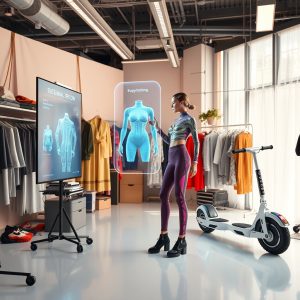
Virtual try-on technology has blurred the boundaries between the physical and the digital, offering a glimpse into a future where clothing is not just worn but experienced. The first time I saw my reflection in a 3D garment simulation, I was struck by how the digital fabric seemed to move with me, responding to my gestures as if it were alive. It was not just a preview of fit; it was a preview of being, a way of stepping into a version of myself that had not yet been stitched into existence.
This technology is more than a convenience; it is a form of self-discovery. It allows us to experiment with identity, to try on different versions of ourselves without the weight of physical constraints. In a world where our bodies are often reduced to data points, virtual try-on offers a way to reclaim agency, to see ourselves not as static forms but as dynamic, ever-evolving beings.
The Collaborative Tapestry: When Design Becomes a Shared Language
Fashion has long been a solitary pursuit, a dialogue between designer and fabric, with the wearer often relegated to the role of passive observer. But collaborative fashion prototyping is changing that dynamic, turning design into a shared language, a conversation between creator and wearer. When I first participated in a co-design session, I was struck by how the process felt less like creation and more like unfolding—as if the garment was revealing itself through our collective input, stitch by stitch.
This approach democratizes fashion, transforming it from a top-down industry into a collaborative art form. It acknowledges that the wearer is not just the end user but an active participant in the creative process, a co-author of their own story. In this way, clothing becomes more than a product; it becomes a shared experience, a tapestry woven from the threads of many hands.
The Unseen Threads: Where Technology and Tradition Meet
There is a quiet magic in the way technology and tradition intersect in modern pattern making. The hum of a 3D printer, the glow of a digital screen, the whisper of scissors through fabric—these are not opposing forces but complementary ones, each enhancing the other’s potential. Tech-integrated pattern making does not erase the past; it reimagines it, weaving the precision of digital tools with the intuition of handcrafted artistry.
I often think of the first time I held a digitally drafted pattern in my hands, its edges crisp and precise, yet still bearing the faint imprint of my own measurements. It was a reminder that technology, at its best, does not distance us from the human experience but deepens it, allowing us to engage with the world—and with ourselves—in ways we never thought possible.
The body is not a static form but a living archive, a record of every breath, every movement, every moment of joy or sorrow. Custom fit pattern drafting is not just about creating clothing; it is about honoring that archive, about listening to the body’s silent whispers and translating them into something that can be worn, cherished, and lived in. In a world that often seeks to standardize, to flatten, to erase the nuances that make us human, this act of listening—this intimate cartography—is nothing short of revolutionary. It is a way of saying: I see you. I hear you. And I will dress you accordingly.