
The Hushed Conversation Between Body and Byte: How Digital Pattern Drafting and Anthropometric Whispers Are Teaching Fabric to Speak
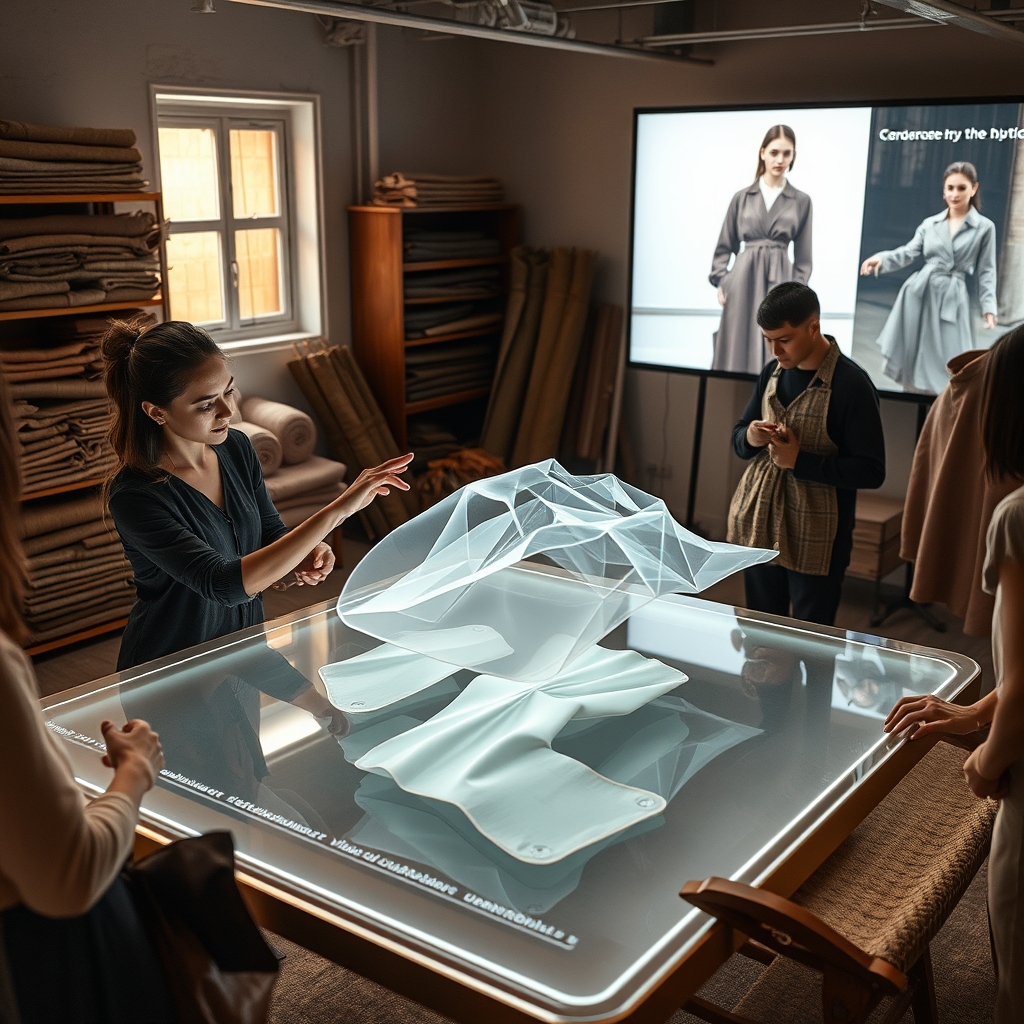
There is a quiet dialogue unfolding in the space between the curve of a shoulder and the cold precision of a digital algorithm—a conversation so subtle it might be mistaken for silence. It is the language of cloth learning to listen, of measurements whispering secrets to software, of fabric bending not just to the will of the wearer, but to the nuanced poetry of their movement. This is the realm where custom fit pattern drafting and anthropometric design optimization cease to be mere technical terms and become the syntax of a new intimacy between body and garment.
The Body as a Living Archive
Every body carries within it an archive of gestures, postures, and unspoken preferences. The way a wrist tilts when holding a coffee cup, the slight hunch of shoulders after hours at a desk, the unconscious shift of weight from one hip to another—these are not flaws to be corrected, but narratives to be honored. Traditional pattern-making, with its standardized sizing and rigid grids, has long treated these nuances as anomalies. But what if, instead of forcing the body to conform, we allowed the cloth to adapt? What if the fabric itself became a student of the body’s silent eloquence?
Digital pattern development has made this possible. By translating the body’s three-dimensional complexity into data points, it creates a bridge between the organic and the algorithmic. Scanners capture not just measurements, but the way a body occupies space—the slope of a collarbone, the gentle swell of a stomach, the asymmetry of a smile. These are not mere dimensions; they are the topography of a life lived. When a pattern is drafted from this data, it is not just a template for cutting cloth; it is a love letter written in stitches, a garment that remembers how you move before you even do.
The Alchemy of Zero-Waste Whispers
Yet, for all its precision, digital pattern-making risks becoming another form of excess if it does not listen to the earth as closely as it listens to the body. This is where zero-waste pattern cutting enters the conversation, not as a constraint, but as a form of reverence. The old way of drafting patterns was a dialogue of waste—a negotiation between what was needed and what was discarded, with scraps left to haunt the cutting room floor like forgotten ghosts. But zero-waste design reframes this relationship. It treats every inch of fabric as a participant in the conversation, a collaborator in the creation of something whole.
Imagine a pattern that unfolds like origami, where negative space is not an absence but an invitation. Seams curve and twist not out of necessity, but out of a desire to honor the cloth’s inherent grain, its drape, its breath. This is not just sustainable garment construction; it is a form of sacred geometry, where the act of making becomes an act of devotion to both the wearer and the world. The body’s measurements and the fabric’s dimensions engage in a dance, each step calculated to leave no trace behind, only beauty.
The Mirror That Learns
But what happens when the conversation between body and byte extends beyond the drafting table? Virtual try-on technology and 3D garment simulation are turning mirrors into oracles, surfaces that do not just reflect, but predict. A screen becomes a threshold, a place where the body can step into a garment before it even exists. The technology does not just show how a dress will fit; it shows how it will live—how it will sway when you walk, how it will catch the light when you turn, how it will settle into the unique rhythm of your breath.
This is not vanity; it is a form of collaborative fashion prototyping, where the wearer is no longer a passive recipient of design, but an active participant in its evolution. The mirror learns your preferences, remembers your hesitations, and refines its suggestions with each iteration. It is as if the garment itself is reaching out, asking, Does this feel like you? And in that question, there is a shift—away from mass production, away from the tyranny of trends, toward something far more personal: a garment that is not just worn, but known.
The Modular Soul of Clothing
Yet even the most perfectly fitted garment is only a snapshot of a moment. Bodies change. Moods shift. The dress that feels like a second skin in summer may become a cage in winter. This is where modular clothing systems offer a different kind of conversation—one that is not bound by the finality of a seam. A jacket with detachable sleeves, a skirt that transforms into a cape, a dress that can be worn three ways: these are not just clever designs, but garments that listen to the body’s evolving story.
Modularity is a form of adaptive clothing solutions, yes, but it is also a philosophy. It acknowledges that identity is not static, that the way we present ourselves to the world is a fluid, ongoing negotiation. A modular garment does not demand that you fit into it; it offers itself as a partner in your becoming. It is a conversation that does not end when the last stitch is sewn, but continues with every snap, button, and fold—a dialogue that grows with you, like a language you are still learning to speak.
The Unseen Hands Guiding the Thread
Behind every line of code, every curve of a pattern, every simulated drape, there are hands—some human, some digital—that guide the process. Collaborative fashion prototyping is not just about technology; it is about the alchemy that happens when artisans, engineers, and wearers come together in a shared act of creation. The tailor’s eye meets the programmer’s logic, the wearer’s intuition meets the algorithm’s precision, and in that meeting, something new is born.
This is the future of bespoke pattern engineering: not a solitary genius hunched over a drafting table, but a chorus of voices—some speaking in measurements, others in emotions, all contributing to a garment that is as much a product of collaboration as it is of craft. The result is not just a better fit, but a deeper understanding of what fit means. It is no longer about hiding or correcting, but about celebrating the body in all its imperfect, breathing, changing glory.
And so the conversation continues, a quiet exchange of whispers between body and byte, cloth and code. It is a dialogue that does not seek to dominate, but to harmonize; not to impose, but to invite. In this space, fashion is no longer about consumption, but about connection—a thread that stitches together not just fabric, but the very essence of how we choose to move through the world. The garments we wear become more than just coverings; they become witnesses to our lives, silent partners in the dance of being. And in that partnership, there is a kind of magic—not the kind that disappears when the spell is broken, but the kind that lingers, like the echo of a voice that has finally learned to speak your name.