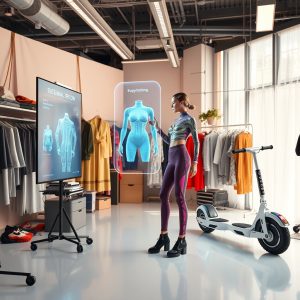
The Hushed Cartography of Cloth: How Digital Pattern Development and Anthropometric Whispers Are Mapping the Body’s Unwritten Poem
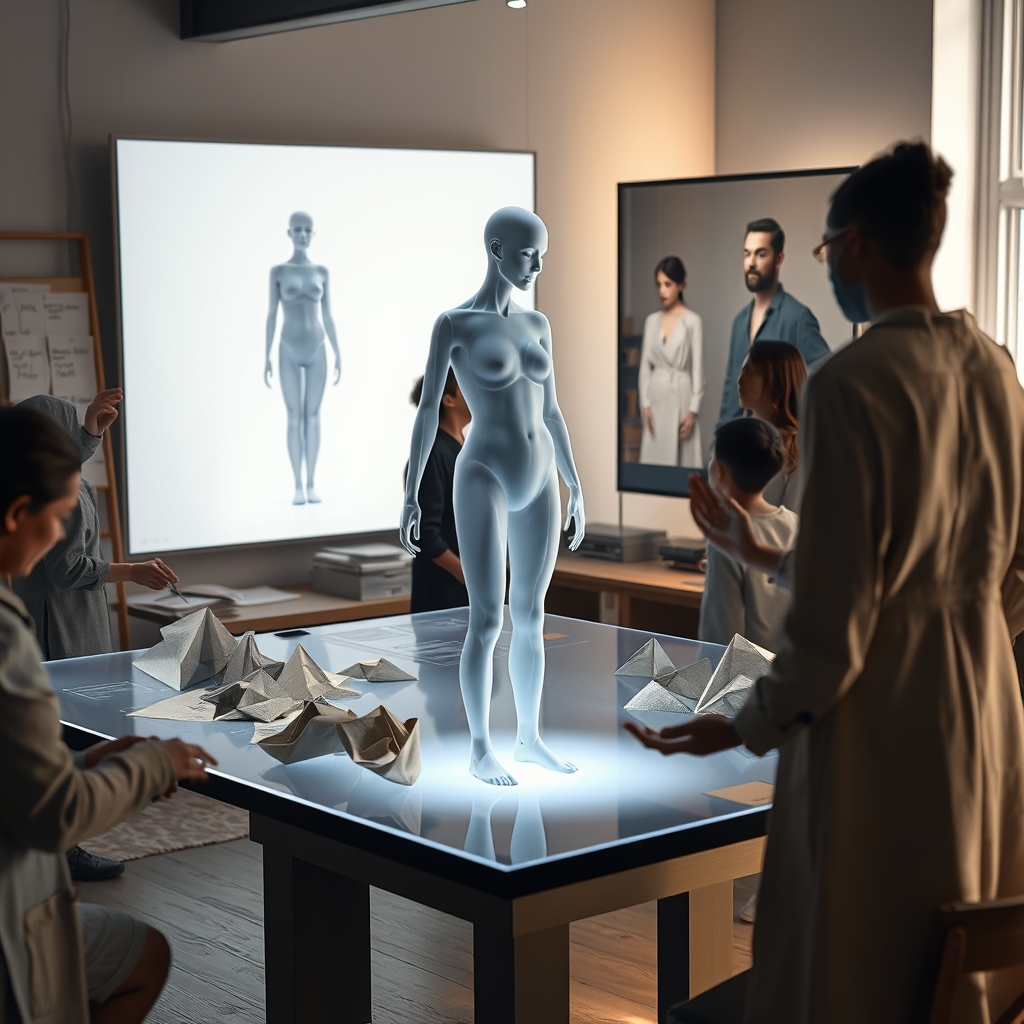
There is a quiet conversation happening between fabric and flesh, one that unfolds in the space where measurements dissolve into meaning. It is not the loud dialogue of trends or the clamor of mass production, but something far more intimate—a whisper of geometry and grace, a dance of data and desire. This is the realm where digital pattern development and anthropometric design converge, where the body is not merely clothed but understood, where every stitch is a word in an unwritten poem of belonging.
The Body as a Living Manuscript
We have spent centuries dressing the body as if it were a static form, a mannequin to be draped rather than a breathing, shifting landscape. But the body is not a still life—it is a living manuscript, its contours written in the language of movement, posture, and breath. Anthropometric design optimization is the art of reading this manuscript, of translating its curves and asymmetries into a pattern that does not just fit but listens. It is the difference between a garment that constricts and one that converses, between cloth that covers and cloth that knows.
Consider the way a tailor’s hands move over a client’s shoulders, the way their eyes trace the slope of a spine. There is a hushed reverence in that act, a recognition that fit is not merely a matter of inches but of intuition. Now, imagine that intuition amplified by data, refined by algorithms that do not erase the human touch but deepen it. 3D garment simulation allows us to see the body in ways the naked eye cannot—to watch how fabric flows over a hip in motion, how a seam stretches with a breath, how light plays across a curve. It is not a replacement for the tailor’s art but an extension of it, a way to hear the body’s whispers more clearly.
The Alchemy of Zero-Waste Silence
There is a violence in waste, a quiet brutality in the way fabric is discarded like an afterthought, as if the earth’s resources were infinite and the hands that wove them expendable. Zero-waste pattern cutting is a rebellion against that silence, a way of listening to the fabric itself, of letting its dimensions dictate the design rather than forcing it into submission. It is a practice of restraint, of seeing the negative space as sacred as the stitch.
When a pattern is drafted with zero waste in mind, every scrap becomes a clue, every leftover a potential revelation. The process is not unlike solving a puzzle where the pieces are not given but discovered, where the solution lies in the way the fabric wants to be cut. It is a dialogue between maker and material, a negotiation where nothing is wasted because nothing is taken for granted. In this way, sustainability is not a constraint but a creative catalyst, a way of making that is as much about what is left behind as what is created.
The Virtual Mirror and the Future of Fit
What if you could step into a mirror and see not just your reflection but your possibilities? Virtual try-on technology is that mirror, a portal where the body is not just measured but explored. It is a space where fit is not a fixed destination but a journey, where a garment can be adjusted in real time, where the line between designer and wearer blurs into collaboration.
This technology does not diminish the magic of clothing; it deepens it. There is something profoundly human in the way we use our bodies to tell stories, in the way a well-fitted jacket can make us stand taller, a flowing dress can make us feel freer. Virtual try-on is not about replacing the tactile joy of fabric against skin but about expanding the ways we can experience that joy. It is a tool for user-centric apparel development, a way of ensuring that the clothes we wear are not just beautiful but ours.
The Collaborative Tapestry
Fashion has long been a solitary act—the designer sketching in isolation, the tailor working in silence, the wearer choosing in private. But what if creation were a conversation instead of a monologue? Collaborative fashion prototyping is that conversation, a way of making that is as much about listening as it is about designing. It is the difference between a garment that is imposed and one that is co-created.
Imagine a designer and a wearer sitting together, not just to take measurements but to share stories—to discuss how a sleeve should move with a gesture, how a hem should fall with a step. Imagine a world where modular clothing systems allow the wearer to adapt their garments as their body or their mood changes, where a dress is not a fixed object but a living, evolving entity. This is the future of fashion: not a product to be consumed but a relationship to be nurtured.
The Unseen Threads of Tomorrow
We are standing at the edge of a new cartography, one where the body is not just measured but understood, where fabric is not just cut but conversed with, where clothing is not just worn but lived. The tools we have today—digital patterns, 3D simulations, virtual try-ons—are not just innovations but invitations, a way of asking the body what it needs, what it desires, what it dreams. They are the threads of a tapestry we are only beginning to weave, a future where every garment is a love letter to the skin it adorns.
The hush of this revolution is not the silence of absence but the quiet of deep listening. It is the sound of fabric settling into place, of a seam aligning with a breath, of a body finally feeling seen. This is not just the future of fashion—it is the future of how we belong to ourselves and to each other, one stitch at a time.