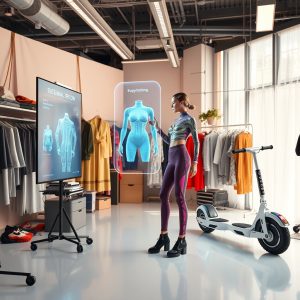
The Invisible Stitch: How Digital Fashion and Upcycled Garments Are Mending the Fabric of Tomorrow
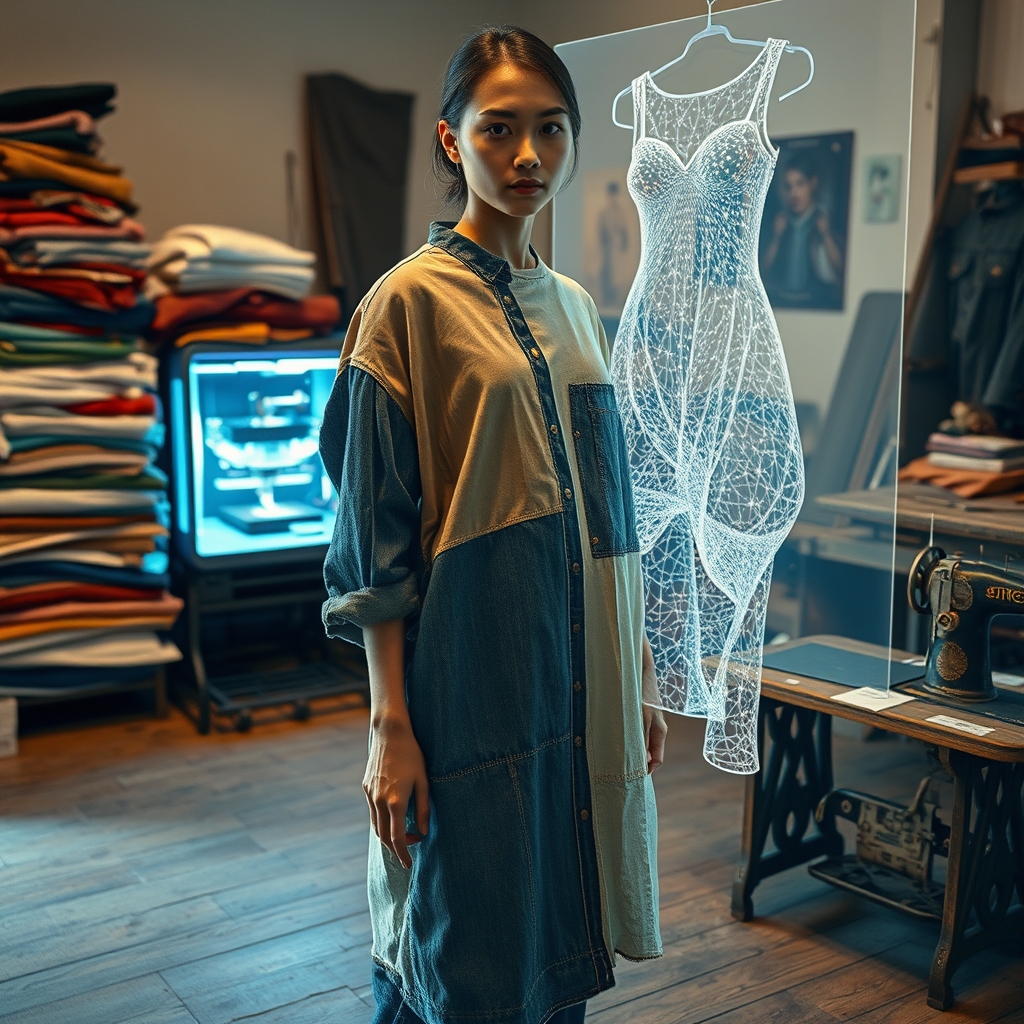
The first time I slipped into a garment that had been digitally rendered before it ever touched fabric, I felt the strange dissonance of wearing something that existed only as light and code. It was a dress woven from algorithms, a phantom of pixels that clung to my skin like a second shadow. There was no seamstress’s sigh over a misaligned stitch, no dye bleeding into water, no hands calloused from cutting patterns. Just silence—the quiet hum of a server somewhere, holding the weight of a garment that had never been made, only imagined. And yet, it fit. Not just my body, but the shape of a question I had been carrying for years: What does it mean to wear the future?
The Ghost in the Machine
Digital fashion is not just about avatars or virtual runways; it is the first true test of fashion’s soul in the age of excess. When a garment exists only in the digital realm, it asks us to confront the absurdity of our consumption. Why own a thousand dresses when you can wear a thousand ideas? The rise of platforms like DressX and The Fabricant has turned clothing into ephemeral art, a fleeting expression of identity that leaves no footprint on the earth. It is fashion stripped of its physical sins—no sweatshops, no landfills, no rivers choked with synthetic dyes. Just the pure, unblemished dream of what clothing could be if we let go of its material chains.
But dreams, of course, are not enough. The body still craves the tactile—the whisper of linen against skin, the weight of wool in winter, the way a well-worn leather jacket molds to the shape of its wearer. Digital fashion may be the ultimate act of detachment, but it is also a mirror. It forces us to ask: How much of what we wear is truly necessary, and how much is just noise?
The Alchemy of the Discarded
On the other end of the spectrum lies the quiet rebellion of upcycled garments. Here, the past is not erased but reimagined. A pair of jeans, once destined for a landfill, becomes a patchwork masterpiece; a vintage curtain, salvaged from a thrift store, is transformed into a gown that carries the scent of another era. Upcycling is not just about sustainability—it is about memory. Every stitch tells a story, every frayed edge a life half-lived. To wear upcycled is to drape yourself in the fragments of other people’s histories, to let their discarded moments brush against your own.
I once met a designer in Lisbon who worked exclusively with deadstock fabrics. Her studio smelled of old paper and lavender, the walls lined with bolts of silk and wool rescued from factories that had gone bankrupt or simply forgotten them. She spoke of her work as a kind of archaeology, unearthing beauty from the detritus of industry. “The most sustainable fabric,” she told me, “is the one that already exists.” There was no romance in her words, just the quiet pragmatism of someone who had seen too much waste to believe in newness for its own sake.
The Seam Between Worlds
What happens when these two futures—digital and upcycled—collide? One is weightless, the other heavy with history. One exists in the realm of the possible, the other in the tangible. Yet both are responses to the same crisis: a fashion industry that has long prioritized speed over substance, novelty over meaning. Digital fashion asks us to rethink ownership; upcycling asks us to rethink value. Together, they form a new kind of wardrobe—one that is as much about ideas as it is about cloth.
Perhaps the most radical act of all is to wear both. To slip into a digital gown for a night of virtual celebration, then step into a pair of upcycled trousers for the morning’s errands. To move between the ephemeral and the enduring, the futuristic and the timeless, without choosing one over the other. This is not about rejecting the physical world but expanding it, stitching the digital and the discarded into a single, seamless narrative.
The Hands That Hold the Threads
Behind every upcycled garment is a pair of hands—calloused, steady, patient. The hands of the tailor who unpicks a seam, the dyer who coaxes color from natural pigments, the weaver who turns flax into linen. These are the hands that digital fashion will never know, the ones that ground us in the reality of what it means to create. And yet, even here, technology is creeping in. AI can now generate patterns, 3D printers can spin yarn into shapes once thought impossible, and smart textiles can adjust to our bodies like a second skin. The line between the handmade and the machine-made is blurring, and with it, our definitions of craftsmanship.
But perhaps that is the point. The future of fashion is not a choice between the old and the new, the digital and the analog, the sustainable and the wasteful. It is a conversation, a dialogue between what has been and what could be. The invisible stitch that binds them is not made of thread, but of intention—the quiet, persistent belief that fashion can be more than just what we wear. It can be a story, a protest, a prayer. It can be the thing that mends us, even as it mends itself.
I still think about that digital dress sometimes, the way it shimmered against my skin like a mirage. It was beautiful, but it was not real. And yet, in its unreality, it taught me something true: that the most revolutionary act in fashion is not to create something new, but to see the potential in what already exists. To take the discarded, the forgotten, the overlooked—and to stitch them into something that feels like a future worth wearing.