
The Luminous Thread: How Vintage Revival and Artisanal Craftsmanship Are Illuminating the Path to Slow Fashion
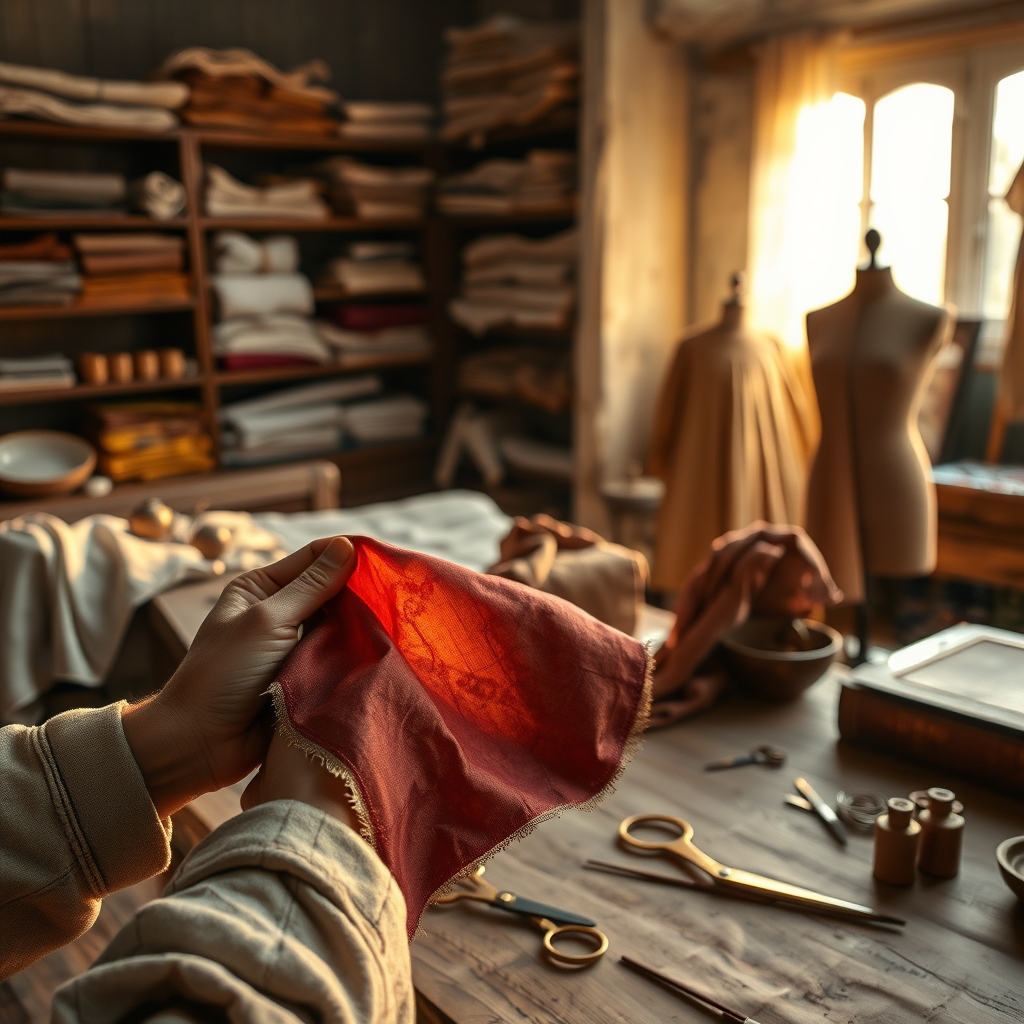
The first time I held a piece of vintage silk in my hands, I felt the weight of time itself woven into its fibers. It was not just fabric; it was a whisper from another era, a story stitched into every frayed edge and faded hue. The way the light caught its surface was different—softer, more deliberate—like the glow of a candle compared to the harsh fluorescence of modern synthetics. That moment became a quiet revelation: fashion is not merely about what we wear, but how we choose to carry the past into the future.
The Alchemy of Time and Thread
Vintage revival is more than a trend; it is an act of resistance against the relentless churn of fast fashion. Each garment rescued from oblivion is a small rebellion, a refusal to let beauty be discarded in the name of novelty. There is something profoundly human in the way these pieces bear the marks of their previous lives—tiny stains, loose threads, the faint scent of lavender or mothballs—each imperfection a testament to their journey. They remind us that clothing is not disposable, but enduring, capable of holding memories long after the hands that first wore them have stilled.
Artisanal craftsmanship, too, carries this weight of intention. When a garment is made by hand, it is not just constructed; it is *loved* into existence. The slow, deliberate movements of a weaver’s hands, the careful selection of dyes, the way a seamstress might pause to adjust a stitch—these are acts of devotion. In a world where speed is often mistaken for progress, these pieces ask us to slow down, to recognize the value in things that cannot be rushed. They are not just clothes; they are heirlooms in the making, meant to be passed down like stories.
The Poetry of Worn-In Beauty
There is a particular kind of elegance in the worn-in, the slightly imperfect. A leather jacket that has molded itself to the shape of its wearer, a linen shirt that has softened with each wash, a pair of boots that bear the scuffs of a thousand steps—these are not flaws, but badges of honor. They tell us that beauty is not static, but evolving, deepening with time like the patina on an old book’s cover. In a culture obsessed with the new, vintage revival invites us to find value in the lived-in, the well-loved, the enduring.
This philosophy extends beyond individual pieces to the very way we approach our wardrobes. A capsule wardrobe built around vintage and artisanal pieces is not just a collection of clothes, but a curation of meaning. Each item is chosen not for its fleeting appeal, but for its ability to resonate, to harmonize with the others like notes in a song. There is a quiet luxury in this simplicity—a recognition that true style is not about excess, but about intention.
The Hands That Shape Our Clothes
Behind every artisanal garment is a person—or many people—whose skill and care have breathed life into it. The weaver who knows the exact tension of the loom, the dyer who understands the alchemy of natural pigments, the tailor who can transform a flat piece of fabric into something that drapes like a second skin. These are not just jobs; they are crafts, passed down through generations, refined by time and patience. When we choose ethically made, artisanal clothing, we are not just buying a product; we are supporting a way of life, a tradition that values quality over quantity, people over profit.
This connection to the hands that make our clothes is what sets slow fashion apart. It is a relationship, not a transaction. When we wear something handmade, we carry with us the knowledge that someone, somewhere, took the time to create it with care. There is a humility in this, a recognition that fashion is not just about self-expression, but about community—about the invisible threads that bind us to the people who make our clothes, and to the people who wore them before us.
The Future Woven from the Past
Vintage revival and artisanal craftsmanship are not about romanticizing the past, but about reclaiming what has been lost in the rush toward the future. They remind us that fashion is not just a commodity, but a form of art, a language of identity, a way of connecting with the world and with each other. In a time when the fashion industry is one of the largest polluters on the planet, these practices offer a path forward—one that is rooted in respect for the earth, for the people who work within it, and for the stories that clothes can tell.
Perhaps the most radical act we can take in fashion today is to slow down. To choose pieces that have been made with care, that have stood the test of time, that carry with them the echoes of the past. To wear them not as costumes, but as extensions of ourselves, imbued with meaning and memory. In doing so, we do not just dress our bodies; we clothe our souls in the luminous thread of history, craftsmanship, and intention, weaving a future that is as rich and enduring as the past from which it springs.