
The New Guardians of Texture: How Romantic Fabrics and Brut Denim Are Redefining the Poetics of Recreation Dressing in the Jazz Age Revival
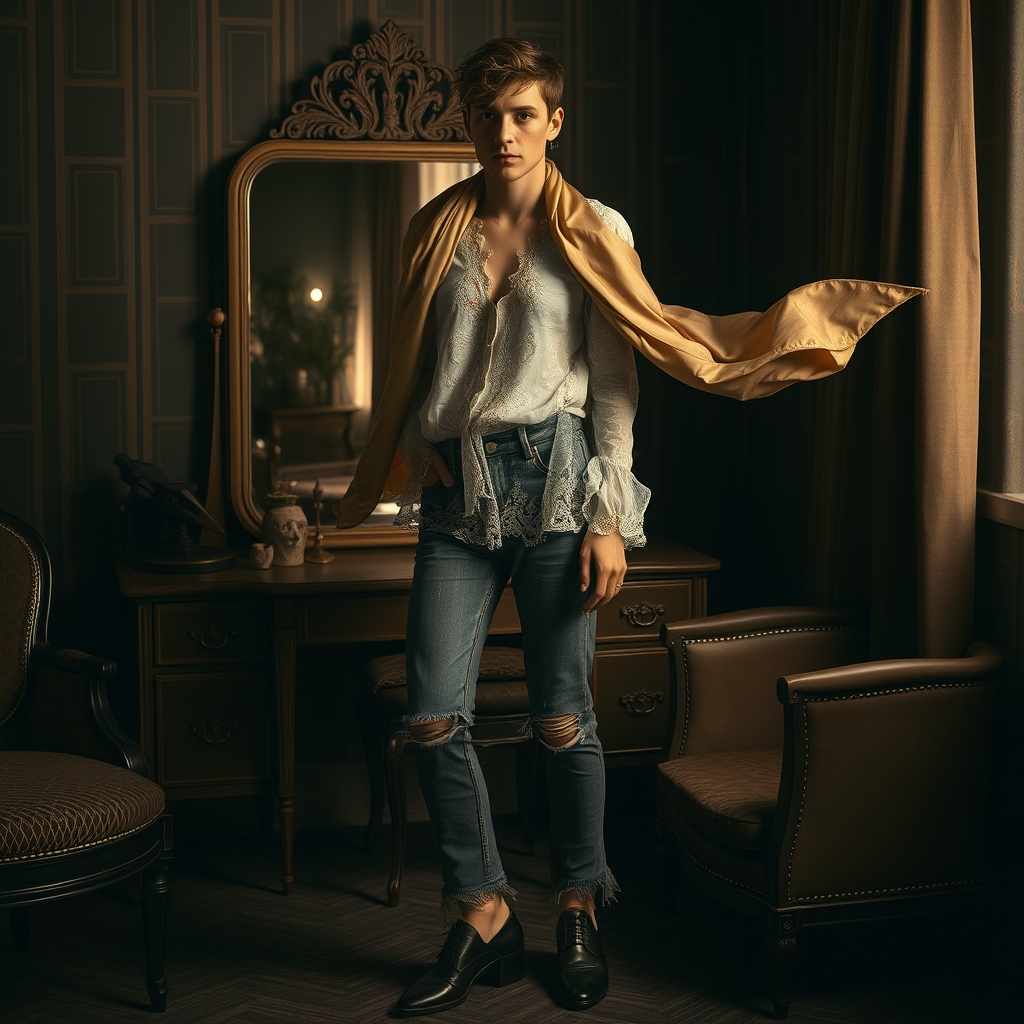
The modern wardrobe is no longer a battlefield of opposing aesthetics but a carefully curated dialogue between the tactile and the transcendent. At the heart of this conversation lies the tension between romantic fabrics—silks, lace, and chiffons that whisper of bygone eras—and the unyielding pragmatism of brut denim, a material that carries the weight of rebellion and utility in equal measure. This juxtaposition is not merely a trend but a philosophical shift, one that redefines recreation dressing as an act of both defiance and devotion.
The Jazz Age Revival: A Canvas for Contradiction
The Jazz Age was an era of excess, where fashion was as much about performance as it was about identity. Today’s revival of its spirit is not a nostalgic retreat but a reclamation—a way to infuse modern dressing with the same audacity and fluidity that defined the 1920s. Yet, where the original Jazz Age leaned into opulence, the contemporary iteration embraces contradiction. Romantic fabrics drape the body in a language of softness, while brut denim grounds it in a raw, unfiltered reality. The result is a sartorial syntax that speaks to the duality of modern life: the desire for beauty without fragility, for elegance without pretense.
The Alchemy of Texture
Texture has always been the unsung hero of fashion, the silent force that elevates a garment from mere clothing to a statement. In the current landscape, the interplay between romantic fabrics and brut denim is where the magic happens. A lace-trimmed blouse paired with raw-hemmed jeans is not just an outfit; it is a manifesto. It declares that femininity need not be delicate, that strength can be soft, and that utility can coexist with allure. This alchemy is particularly potent in recreation dressing, where the boundaries between leisure and luxury blur. The modern woman—or man—no longer dresses for a single role but for a spectrum of identities, and texture becomes the tool that allows for seamless transitions.
The Poetics of Imperfection
There is a quiet rebellion in the way brut denim refuses to conform. Its frayed edges, uneven washes, and unapologetic weight are a direct challenge to the polished perfection that has long dominated fashion. Yet, when paired with the ethereal quality of romantic fabrics, it creates a harmony that is anything but discordant. This is the poetics of imperfection—a celebration of the unfinished, the unrefined, the real. It is a rejection of the idea that beauty must be flawless, and an embrace of the notion that true elegance lies in the tension between control and chaos.
The New Guardians of Recreation Dressing
Recreation dressing has evolved from a fleeting trend into a cultural movement, one that champions the idea of clothing as an extension of self rather than a costume. The modern guardian of this movement is not a single designer or brand but a collective consciousness that values authenticity over artifice. Romantic fabrics and brut denim are its most vocal advocates, offering a blueprint for dressing that is both aspirational and attainable. They prove that fashion need not be a binary choice between comfort and glamour, between practicality and fantasy. Instead, it can be a fluid, ever-evolving expression of who we are and who we aspire to be.
The Jazz Age’s Modern Heirs
The Jazz Age was defined by its audacity, its willingness to break rules and redefine norms. Today’s fashion landscape is no different, though the rules it breaks are its own. The modern heir to the Jazz Age spirit is not content with mere revival; it seeks reinvention. Romantic fabrics and brut denim are the tools of this reinvention, allowing for a language of dressing that is at once nostalgic and forward-thinking. They are the bridge between the past and the future, between the dreamy and the grounded, between the poetic and the pragmatic.
The modern wardrobe is a tapestry woven from threads of contradiction, where the softness of lace meets the ruggedness of denim, and the elegance of silk is tempered by the raw honesty of unwashed cotton. This is not a compromise but a celebration—a recognition that true style is not about choosing one aesthetic over another but about embracing the tension between them. In this space, recreation dressing finds its truest expression, not as a fleeting trend but as a lasting philosophy, one that honors the past while daring to imagine the future. The Jazz Age revival is not a return to what was but a reimagining of what could be, and in this reimagining, fashion finds its most powerful voice.