The Breathing Draft: How Custom Fit Pattern Drafting and 3D Simulation Are Animating the Silence Between Stitches
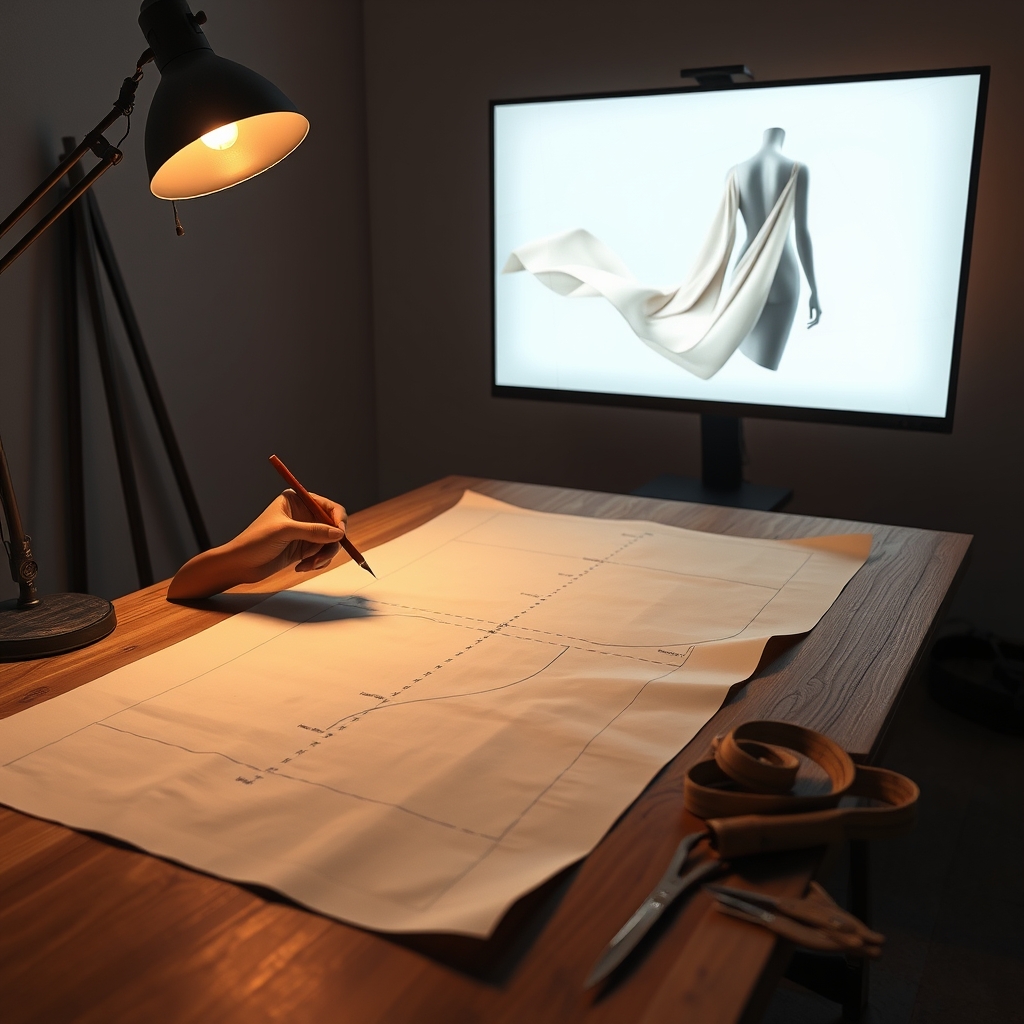
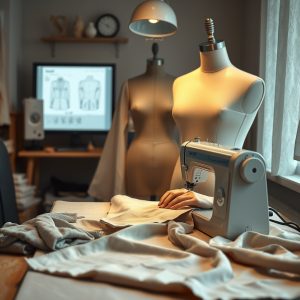
The first time I held a freshly drafted pattern in my hands, I felt the weight of something invisible yet undeniable—like holding a conversation paused mid-sentence. The paper was crisp, the lines precise, but beneath the geometry lay the quiet promise of movement, of breath, of a body not yet present but already imagined. Custom fit pattern drafting is not merely a technical act; it is an act of translation, a way of listening to the body’s unspoken language and rendering it in lines and curves that will one day become a second skin.
The Alchemy of Stillness and Motion
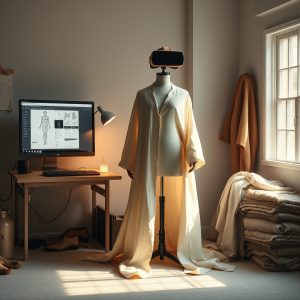
There is a paradox at the heart of pattern drafting: the stillness of the paper belies the motion it will one day contain. A well-drafted pattern is like a musical score—silent on the page, yet brimming with the potential for rhythm, for crescendo, for the quiet hum of fabric against skin. When I first began experimenting with 3D garment simulation, I was struck by how the digital realm could breathe life into these static blueprints. The software didn’t just replicate the body; it animated it, allowing me to see how a sleeve would drape as an arm lifted, how a seam would stretch as a torso twisted. It was as if the pattern had been holding its breath all along, waiting for this moment to exhale.
This interplay between stillness and motion is where the magic of custom fit drafting reveals itself. Traditional methods rely on measurements and experience, but 3D simulation adds a layer of intimacy—it allows the designer to witness the garment’s behavior before a single stitch is sewn. The body is no longer an abstract concept but a living, moving entity, and the pattern must adapt not just to its dimensions but to its gestures, its posture, its very essence. It is a dance of precision and intuition, where every adjustment is a whispered negotiation between form and function.
The Body as a Living Archive
Every body carries its own history—scars, asymmetries, the subtle shifts of posture that tell a story without words. Custom fit pattern drafting is, in many ways, an act of archiving these stories. When I draft a pattern for a client, I am not just recording measurements; I am documenting the way they stand, the way their shoulders slope, the way their spine curves when they relax. These are the details that mass-produced clothing ignores, the nuances that make a garment feel like an extension of the self rather than a temporary covering.
Anthropometric design optimization takes this archiving a step further. By integrating data from body scans and movement studies, patterns can be refined to accommodate not just static measurements but dynamic realities. A dress drafted for someone who walks with a slight limp will behave differently than one made for someone with a straight, confident stride. The fabric will flow differently, the seams will align differently, and in those differences lies the quiet revolution of truly personalized clothing. It is a reminder that fit is not just about size but about synchronicity—the way a garment moves with you, not against you.
The Unseen Dialogue of Zero-Waste Cutting
There is a meditative quality to zero-waste pattern cutting, a practice that feels less like drafting and more like solving a puzzle where every piece must find its place. The first time I attempted it, I was struck by how it forced me to think differently about fabric—not as a resource to be consumed but as a finite plane to be respected. Every scrap, every curve, every negative space became part of the design. It was no longer about imposing a shape onto the cloth but about listening to what the cloth wanted to become.
This approach transforms the act of pattern drafting into a dialogue. The fabric speaks in its own language—its grain, its drape, its resistance—and the designer must respond with equal parts creativity and restraint. The result is not just a garment but a testament to harmony, where waste is not an afterthought but an impossibility. It is a practice that demands patience, humility, and a deep reverence for the material. In a world where fashion is often synonymous with excess, zero-waste cutting is a quiet rebellion, a way of saying that beauty and sustainability are not mutually exclusive.
The Future Worn Lightly
As technology continues to evolve, the boundaries between the physical and digital realms of pattern drafting are blurring. Virtual try-on technology allows clients to step into a garment before it exists, to see how it moves with them, to feel its weight and drape in a space that is neither here nor there but somewhere in between. It is a strange and wondrous thing to witness—a garment taking shape in the liminal space between imagination and reality.
Yet, for all its innovation, the heart of custom fit pattern drafting remains unchanged. It is still about the quiet conversation between body and cloth, about the way a well-drafted pattern can make someone stand a little taller, move a little freer, feel a little more like themselves. The tools may change, but the essence remains: a pattern is not just a set of instructions but an invitation—an invitation to step into a version of yourself that has been waiting, all along, in the silence between the stitches.
The most beautiful garments are not the ones that shout the loudest but the ones that listen. They listen to the body’s rhythms, to the fabric’s whispers, to the unspoken desires of the wearer. They are the ones that move with you, not against you, that feel like a second skin not because they are tight but because they understand. And in that understanding, there is a kind of grace—a grace that comes not from perfection but from presence, from the quiet acknowledgment that the body is not a problem to be solved but a story to be honored.