The Silent Dialogue: How Bespoke Pattern Engineering and Modular Clothing Systems Are Speaking to the Body

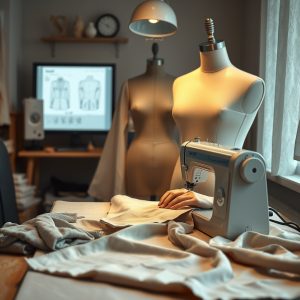
There is a conversation happening between cloth and skin, one that unfolds in the quiet spaces where fabric meets form. It is not a language of words, but of whispers—of tension, drape, and the subtle give of a seam that yields just enough to remember the body it was made for. This dialogue has always existed, but now, more than ever, it is being refined, reimagined, and redefined through the alchemy of bespoke pattern engineering and the fluidity of modular clothing systems. What was once the domain of tailors and dressmakers, of patient hands and measuring tapes, has evolved into something both ancient and futuristic—a dance between tradition and technology, where every stitch is a question and every fold an answer.
The Body as a Living Blueprint
To draft a pattern is to engage in an act of translation. The body speaks in curves, asymmetries, and unique proportions, and the pattern maker must listen—not just with the eyes, but with an understanding that borders on intimacy. Anthropometric design optimization has elevated this practice from guesswork to precision, using data to map the body’s topography with the same care a cartographer might devote to uncharted land. Yet, for all its scientific rigor, the process remains deeply human. A measurement is not just a number; it is a story. The slight forward tilt of a shoulder, the way one hip sits higher than the other, the quiet insistence of a spine that refuses to stand perfectly straight—these are the nuances that turn a garment from something worn into something felt.
Digital tools have not replaced this intimacy; they have deepened it. 3D garment simulation allows designers to drape fabric over a virtual body, watching in real time as it cascades, clings, or billows. The screen becomes a mirror, not of vanity, but of possibility. What if the sleeve were just a centimeter longer? What if the waist seam curved differently? These are not just technical adjustments—they are the quiet negotiations between cloth and self, between what is and what could be.
The Poetry of Modularity
Clothing, at its core, is about transformation. We dress to become—to step into a version of ourselves that is bolder, softer, more confident, or more at ease. Modular clothing systems take this idea and stretch it into something almost magical, allowing a single garment to shift and adapt like a chameleon. A dress that becomes a top, a jacket that unfolds into a cape, a skirt that detaches into a scarf—these are not just clever designs, but invitations to play, to reinvent, to refuse the idea that identity is fixed.
This modularity is not merely a trend; it is a rebellion against the disposable. In a world where fast fashion churns out garments meant to be worn a handful of times before being discarded, modular systems whisper a different promise: What if your clothes could grow with you? What if they could adapt to the seasons of your life—literal and metaphorical—as seamlessly as they adapt to the weather? The result is a wardrobe that is not just sustainable, but alive, evolving alongside the wearer in a way that feels almost sacred.
The Alchemy of Zero-Waste
Every scrap of fabric left on the cutting room floor is a silent testament to waste—a reminder of how much we take without thinking. Zero-waste pattern cutting seeks to change that narrative, treating fabric not as a resource to be consumed, but as a canvas to be revered. The process is equal parts puzzle and poetry, where every curve and corner of a pattern piece must fit together like the pieces of a jigsaw, leaving no room for excess.
This approach is not just about sustainability; it is about respect. Respect for the hands that wove the cloth, for the earth that grew the fibers, for the body that will wear the finished garment. When a designer sits down to draft a zero-waste pattern, they are not just solving a technical challenge—they are engaging in an act of devotion, ensuring that nothing is lost, nothing is wasted, and every thread has a purpose.
The Future Worn on the Skin
We are standing at the threshold of a new era in fashion, one where technology and tradition intertwine like the warp and weft of a loom. Virtual try-on technology is blurring the line between the digital and the physical, allowing us to step into garments before they even exist. Collaborative fashion prototyping is turning design into a conversation, where the wearer is no longer a passive recipient, but an active participant in the creation of their own clothing. And adaptive clothing solutions are ensuring that fashion is not just for some bodies, but for all bodies—celebrating the beauty of diversity in every stitch.
Yet, for all the innovation, the heart of fashion remains the same. It is still about the way a garment makes you feel when you slip it on—the way it moves with you, the way it remembers your shape, the way it tells the world, without words, who you are. The tools may have changed, but the conversation between cloth and skin endures, richer and more nuanced than ever. And perhaps that is the most beautiful thing of all: that in a world of algorithms and automation, the most human thing we can do is to listen—to the body, to the fabric, to the quiet voice that says, This is me. This is mine.