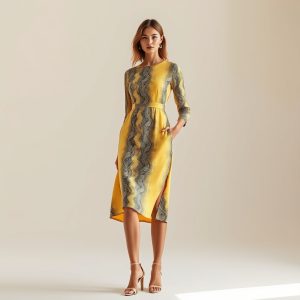
The Living Tapestry: How Zero-Waste Pattern Cutting and Anthropometric Design Are Weaving the Future of Belonging

There is a quiet magic in the way a piece of fabric yields to the body, how it folds and flows, clinging and releasing in a dance as old as time. Clothing is not merely something we wear; it is an extension of our skin, a second layer of identity stitched from memory, movement, and the silent conversations we have with ourselves. Yet, for all its intimacy, fashion has often been a one-sided dialogue—mass-produced, standardized, and indifferent to the unique contours of the human form. What if, instead, every garment was born from a collaboration between cloth and body, a symphony of precision and poetry?
The Alchemy of Absence
Zero-waste pattern cutting is not just a technique; it is a philosophy of reverence. It asks us to see fabric not as a commodity to be consumed, but as a living entity with its own integrity, its own story. Traditional pattern-making leaves behind scraps—remnants of a process that treats material as disposable. But zero-waste design refuses this wastefulness. It listens to the fabric, respects its boundaries, and weaves every inch into the final piece, as if the garment were already whole within the cloth, waiting to be coaxed into existence.
This approach is not new. Centuries ago, cultures around the world practiced forms of zero-waste garment construction, draping and folding fabric with such skill that not a single thread was discarded. The kimono, the sari, the hanbok—these are not just garments but masterclasses in efficiency and elegance. Yet somewhere along the way, we lost this wisdom, seduced by the speed and scale of industrialization. Now, as we stand at the precipice of ecological collapse, zero-waste pattern cutting is not just a return to tradition but a radical act of defiance—a refusal to participate in a system that values profit over planet.
The Body as Blueprint
But what good is sustainable construction if the garment does not fit? Here, anthropometric design steps in, not as a cold calculation of measurements, but as a deeply human endeavor. The body is not a static object; it is a living, breathing archive of experiences—each curve, each asymmetry, a testament to a life lived. Anthropometric design honors this complexity. It does not force the body into rigid categories but instead listens, adapts, and responds, creating garments that move with us, not against us.
Digital pattern development has become the bridge between this ancient wisdom and modern innovation. With 3D garment simulation, designers can now see how a piece will drape, stretch, and flow before a single cut is made. This is not just efficiency; it is empathy in action. It allows for a level of precision that was once unimaginable, where every seam, every dart, is placed with intention, ensuring that the garment not only fits the body but also respects its rhythms. The result is clothing that feels like a second skin—not because it is tight, but because it understands.
The Collaboration of Cloth and Creator
What emerges from this union of zero-waste cutting and anthropometric design is something greater than the sum of its parts: a garment that is not just worn, but experienced. This is the promise of collaborative fashion prototyping, where the wearer is no longer a passive recipient but an active participant in the creation of their clothing. Imagine a world where your wardrobe is not a collection of items bought off a rack, but a series of conversations—between you and the designer, between your body and the fabric, between your past and your future.
Modular clothing systems take this idea further, offering garments that can adapt and evolve alongside the wearer. A dress that transforms into a top, a coat that becomes a vest—these are not just clever designs but a rejection of the disposable mindset. They acknowledge that our bodies change, our lives shift, and our clothing should have the flexibility to keep pace. This is sustainability not as a trend, but as a way of being.
The Future Woven in Thread
Yet, for all its innovation, the heart of this movement remains deeply human. It is about more than just reducing waste or perfecting fit; it is about reclaiming the sacred relationship between body and cloth. In a world that often feels fragmented, where we are bombarded with images of perfection and uniformity, zero-waste pattern cutting and anthropometric design offer a different vision—one of belonging. Belonging to ourselves, to our communities, to the earth that provides the fibers we weave into our lives.
Perhaps this is the true revolution of sustainable garment construction: not just the garments it produces, but the way it changes how we see ourselves. When clothing is made with this level of care, it ceases to be a mere covering and becomes a testament to our worth. It tells us that we are not disposable, that our bodies are not flaws to be hidden, but landscapes to be celebrated. And in that celebration, we find something rare and precious—a sense of wholeness, stitched together one thread at a time.
The fabric of the future is not just sustainable; it is alive. It breathes with us, moves with us, and reminds us that we are part of something larger than ourselves. It is a tapestry woven from intention, innovation, and the quiet understanding that the way we dress the body is, in the end, the way we dress the soul.