The Hushed Geometry of Being: How Zero-Waste Pattern Cutting and Anthropometric Design Are Whispering to the Body’s Hidden Cartography
The first time I held a bolt of linen to the light, I saw not just fabric, but a conversation waiting to unfold. The warp and weft hummed with possibility, each thread a question, each yard a potential answer. What if clothing could be more than draped necessity? What if it could listen?
The Alchemy of Absence
Zero-waste pattern cutting begins with subtraction. The designer stands before paper like a sculptor before marble, knowing every scrap is a failure of imagination. The old way was profligate—yards of fabric discarded like forgotten dreams. But the new way is different. It treats cloth as sacred geometry, where negative space becomes as intentional as the garment itself. A sleeve curves not because tradition demands it, but because the body’s movement requires it. A seam disappears into a fold, not hidden, but celebrated as part of the design’s quiet intelligence.
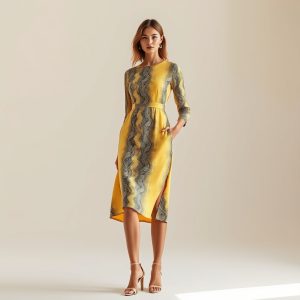
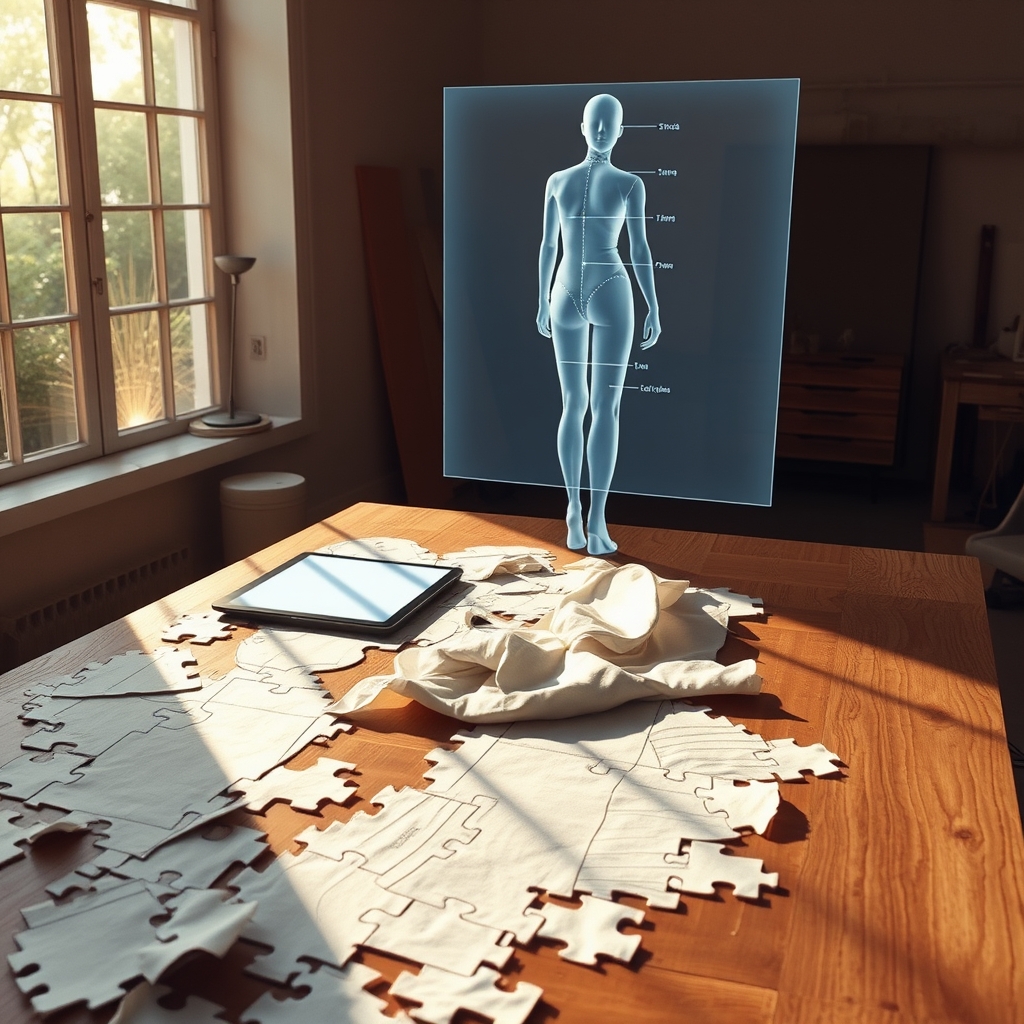
I remember the first zero-waste dress I made. The pattern pieces fit together like a puzzle, each edge speaking to another in silent collaboration. When I cut, there was no waste—only transformation. The excess didn’t vanish; it was never there to begin with. That dress taught me something profound: sustainability isn’t about doing less harm. It’s about reimagining what harm even means.
The Body as Compass
Anthropometric design is where science meets poetry. The body is not a static mannequin but a living topography—valleys of breath, ridges of posture, currents of movement. Traditional sizing charts flatten this complexity into rigid categories, but anthropometry refuses to simplify. It measures not just circumference, but the way a shoulder slopes when relaxed, how a spine curves in contemplation, the subtle asymmetry of a hip that carries a lifetime of stories.
I once worked with a dancer whose body defied every standard. Her shoulders were broader than her hips, her torso longer than the charts allowed. The first pattern I drafted for her felt like a betrayal—it clung where it should have flowed, restricted where it should have celebrated. But when I let her body guide the design, something magical happened. The fabric moved with her, not against her. It remembered her shape even when she forgot it. That’s when I understood: fit isn’t about conformity. It’s about conversation.
The Digital Loom
Digital pattern development is where the old world meets the new. There’s a romance to drafting by hand—the scratch of pencil on paper, the way a curve bends to the pressure of a ruler. But the digital realm offers something different: precision without rigidity, iteration without waste. A pattern can be adjusted a hundred times, each version preserved like a snapshot of thought. The computer doesn’t replace the designer’s intuition; it amplifies it, turning hunches into data and data into art.
I recall the first time I used 3D garment simulation. Watching fabric drape over a virtual body felt like witnessing a secret language. The way the cloth pooled at the ankles, the tension in the seams—it was all there, before a single stitch was sewn. That simulation didn’t just predict fit; it revealed the soul of the design. It showed me that clothing isn’t just worn. It’s performed.
The Unseen Dialogue
What if clothing could adapt? Not just in size, but in spirit? Modular systems and adaptive solutions are rewriting the rules of wear. A jacket that transforms with the seasons, a dress that adjusts to the body’s daily rhythms—these aren’t fantasies. They’re the future, and they’re already here. The most revolutionary designs don’t just fit the body; they listen to it. They respond to temperature, movement, even emotion. They don’t just cover. They communicate.
I think of the first time I saw a garment with embedded sensors. It wasn’t about technology for technology’s sake. It was about connection. The fabric knew when the wearer was tense, when they needed space, when they were ready to move. It wasn’t a garment. It was a partner.
The Quiet Revolution
Sustainable garment construction isn’t a trend. It’s a reckoning. The fashion industry has spent centuries treating cloth as disposable, bodies as uniform, and time as infinite. But the earth doesn’t have infinite resources, and bodies aren’t meant to be standardized. The future of fashion isn’t about producing more. It’s about designing differently—with intention, with respect, with reverence for the material and the wearer alike.
I’ve stood in factories where fabric is cut with lasers, where every millimeter is accounted for, where waste is not just minimized but eliminated. I’ve seen designers collaborate with mathematicians to create patterns that tessellate like honeycombs, where every piece has a purpose. This isn’t just efficiency. It’s ethics in action.
The most beautiful garments I’ve ever made weren’t the ones that followed the rules. They were the ones that broke them—gently, thoughtfully, with the body’s consent. They weren’t just worn. They were lived in. They didn’t just cover the skin. They spoke to the soul. And when I see someone move in a piece I’ve designed, when the fabric flows with them like water, when the fit feels like a second skin—not because it’s tight, but because it understands—I know I’ve done more than make clothing. I’ve woven a little more belonging into the world.
Perhaps that’s the true measure of a garment’s worth. Not how it looks on the hanger, but how it feels in motion. Not how many seams it has, but how many stories it holds. The future of fashion isn’t about what we wear. It’s about how we listen.