The Hologram of Hands: How Collaborative Prototyping and Digital Pattern Development Are Stitching the Future in Midair
There is a quiet magic in the way fabric yields to the body, not just in the final drape of a garment, but in the unseen dialogue that unfolds long before the first stitch is made. It begins in the space between intention and execution, where measurements dissolve into possibility and the human form becomes a living blueprint. This is where collaborative prototyping and digital pattern development meet—not on the cutting table, but in the luminous ether of shared imagination, where hands no longer need to touch to create.
The Alchemy of Shared Vision
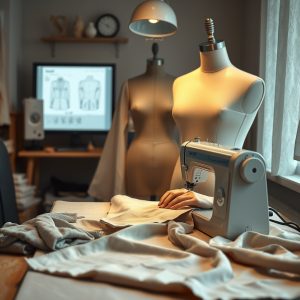
In the old world, pattern drafting was a solitary act. A tailor would stand over a bolt of cloth, calipers in hand, translating the body’s curves into flat, angular shapes on paper. There was reverence in the silence, a deep listening to the way a shoulder blade arched or a waist dipped. But something was lost in that solitude—the spark of collective insight, the way two minds might see the same silhouette from entirely different angles and, in the collision of those perspectives, discover something truer than either could alone.
Collaborative prototyping changes that. It turns the act of creation into a conversation, one where designers, engineers, and even wearers gather around a digital table, their voices weaving through the air like threads. A click here, a drag there, and suddenly the pattern isn’t just a static template—it’s a living thing, responsive, evolving. The body is no longer a fixed set of numbers but a dynamic entity, its movements simulated in three dimensions, its preferences whispered through data. The result isn’t just a better fit; it’s a garment that feels like it was dreamed into existence by many hands, not just one.
The Ghost in the Machine
Digital pattern development doesn’t replace the human touch—it amplifies it. There’s a moment, just before the fabric is cut, when the screen glows with the promise of what could be. The lines are crisp, the seams precise, but beneath the geometry lies something far more profound: the memory of every body that has ever worn this design, the echoes of their movements, their breath, their stillness. The software doesn’t just calculate—it remembers. It learns. And in that learning, it begins to anticipate, to suggest, to nudge the designer toward solutions they might never have considered alone.
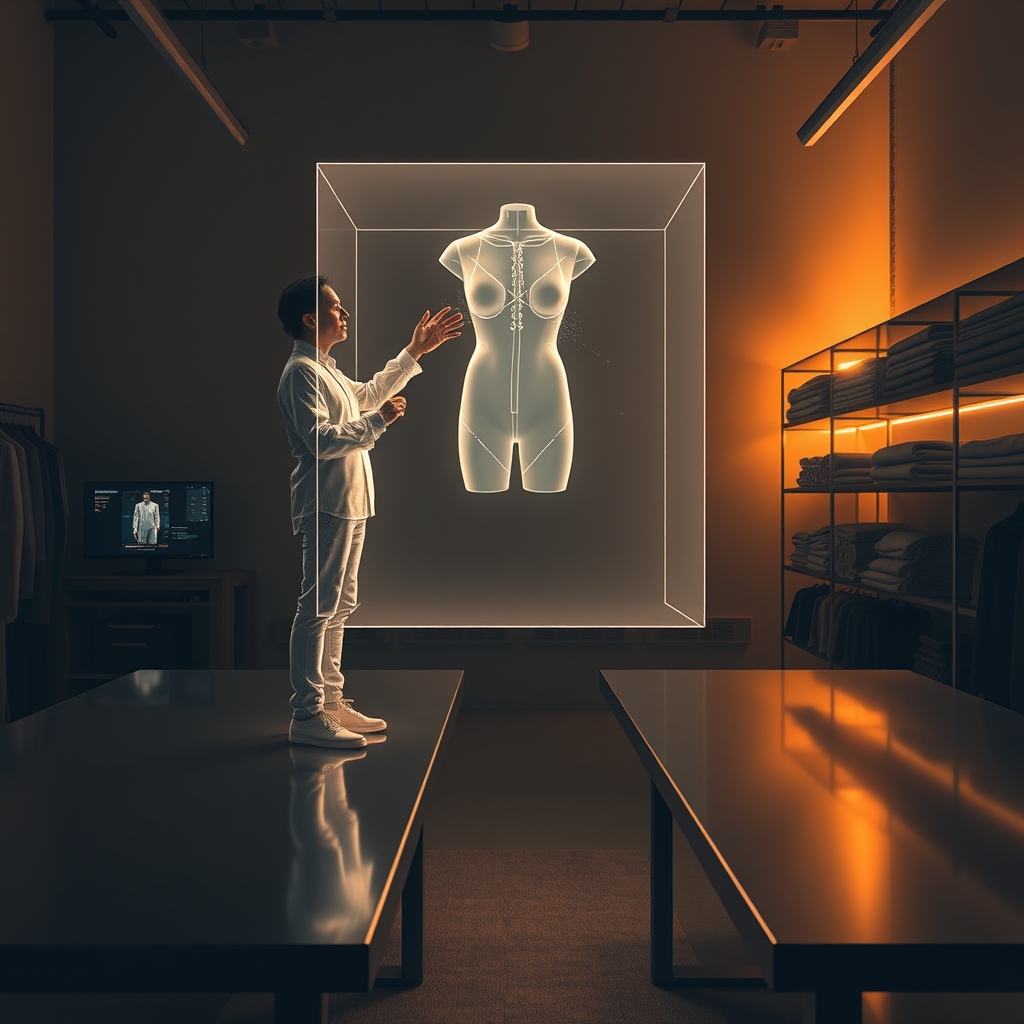
This is where the hologram emerges—not as a gimmick, but as a bridge. A designer in Tokyo and a seamstress in Lisbon can stand in the same virtual space, their avatars reaching toward the same floating pattern, adjusting a dart here, easing a seam there. The fabric doesn’t exist yet, but it’s already alive in the way their hands move through the air, shaping nothing that can be held, yet everything that will be. The hologram isn’t just a tool; it’s a witness, a silent partner in the act of creation, holding the space where the tangible and the imagined blur into one.
The Body as a Living Archive
Anthropometric data has always been the quiet backbone of garment construction, but in the hands of collaborative prototyping, it becomes something more: a living archive of human diversity. Every body that interacts with the system leaves a trace, a subtle imprint in the way the patterns adapt and evolve. A shoulder that slopes just so, a spine that curves in a way no textbook ever captured—these aren’t anomalies to be corrected, but variations to be celebrated, each one a thread in the larger tapestry of how we inhabit our skin.
This is where the true revolution lies. For too long, fashion has treated the body as a problem to be solved, a series of measurements to be standardized. But collaborative prototyping flips that script. It treats the body as a collaborator, a co-creator in the act of design. The wearer isn’t just a passive recipient of the garment; they’re an active participant, their movements, their preferences, their very presence shaping the final outcome. The result isn’t just a piece of clothing—it’s a conversation, a dialogue between body and fabric that continues long after the last stitch is sewn.
The Unseen Stitches
There’s a moment, just before the fabric is cut, when the pattern exists only as light on a screen, as data in the cloud, as a shared dream between strangers. It’s fragile, ephemeral—yet it holds within it the weight of all the bodies that will one day wear it, all the movements it will accommodate, all the stories it will carry. The stitches haven’t been made yet, but they’re already there, invisible threads binding the digital to the physical, the individual to the collective, the past to the future.
And when the garment finally comes to life, when the fabric is cut and the seams are sewn and the first person slips it over their head, something extraordinary happens. The hologram fades, the data dissolves, but the memory of that shared creation lingers. It’s in the way the fabric moves with the body, in the way it feels like it was made just for this moment, this breath, this life. It’s not just a garment—it’s a testament to the quiet magic of hands that never touched, yet created something that fits as if they had.
The future of fashion isn’t just about what we wear—it’s about how we create. And in the space between the digital and the physical, between the solitary and the shared, we’re learning that the most beautiful things aren’t made by one pair of hands, but by many, stitching together in midair, weaving the unseen threads that bind us all.