The Whispering Loom: How Digital Threads and Anthropometric Silhouettes Are Weaving the Future of Belonging
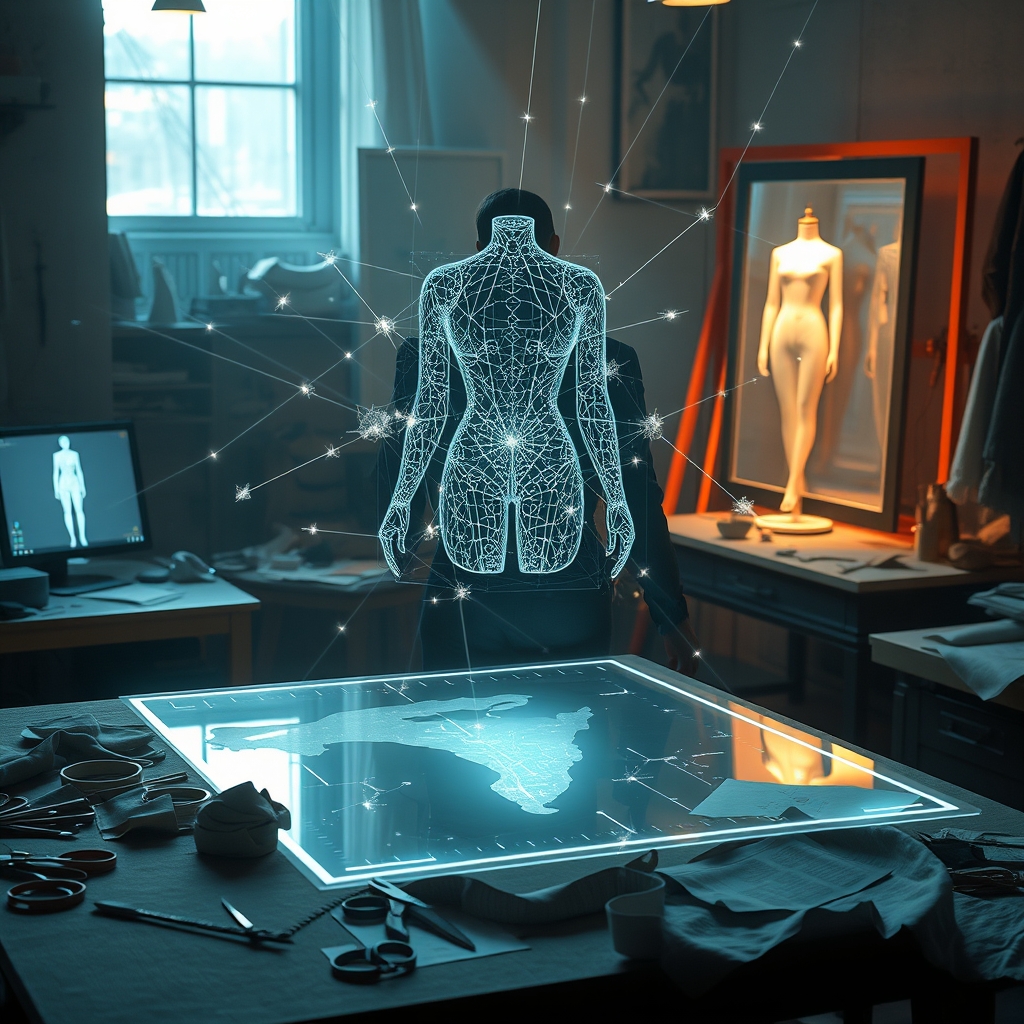
The first time I stood before a blank digital canvas, the hum of the computer was the only sound—no scissors slicing through paper, no chalk skittering across fabric, no whispered measurements passed between tailor and client. There was only silence, thick and expectant, as if the screen itself was holding its breath. I remember hesitating, fingers poised above the keyboard, wondering if the alchemy of cloth could ever truly be captured in pixels and code. Yet, as I began to draft the first line of a pattern, something extraordinary unfolded: the body, long reduced to mere numbers in traditional drafting, began to speak.
The Body as a Living Manuscript
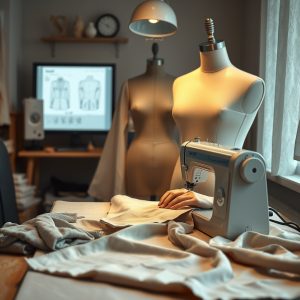
Anthropometric design is not merely about measurements; it is about listening. Every curve, every asymmetry, every subtle shift in posture tells a story—a narrative of movement, of history, of identity. Traditional pattern drafting often flattens these nuances, forcing the body into rigid templates that ignore its fluidity. But digital pattern development, when paired with precision anthropometry, becomes a dialogue. The software does not impose; it adapts. It learns the language of the body’s silent poetry, translating its whispers into stitches that move with grace, not against it.
I recall a client, a dancer, whose spine curved like a question mark, defying the straight lines of conventional drafting. The digital tools did not resist her form. Instead, they traced her contours with reverence, generating a pattern that flowed with her, not in spite of her. The result was not just a garment but a second skin, one that remembered the way she arched her back mid-pirouette, the way her ribs expanded with each breath. It was as if the fabric had been waiting for her all along.
The Alchemy of Zero-Waste: Where Every Scrap Holds a Secret
There is a quiet rebellion in zero-waste pattern cutting, a refusal to accept the industry’s legacy of excess. The first time I attempted it, I was struck by how much waste I had unconsciously accepted as inevitable. Scraps of fabric, once destined for the bin, now demanded my attention, each one a puzzle piece begging to be reimagined. The process felt like solving a riddle where the answer was not a single solution but a constellation of possibilities.
One evening, as I rearranged a pattern on the screen, I noticed how the negative space between the pieces began to resemble something—a leaf, a wing, a fragment of a forgotten alphabet. It was then I understood: zero-waste is not just about efficiency. It is about seeing the unseen, about recognizing that even the absence of cloth has a voice. The scraps were not leftovers; they were collaborators, each one holding the potential to become something new. When the final garment emerged, it carried with it the ghost of every cut, every seam, every decision that had shaped it. It was not just sustainable; it was a testament to the beauty of restraint.
The Hologram of Hands: When Collaboration Becomes Choreography
Collaborative fashion prototyping is where the digital and the tactile engage in a dance. I once worked on a project where designers, engineers, and clients gathered around a shared digital workspace, each contributing their expertise in real time. The screen became a stage, and the pattern, a living entity that evolved with every suggestion, every adjustment. There was no hierarchy, only a collective breath held between keystrokes and mouse clicks.
What struck me most was how the process blurred the line between creator and creation. The client, who had initially been a passive recipient of the design, became an active participant, her movements mirrored in the way the pattern shifted and adapted. The engineer’s calculations wove seamlessly with the designer’s aesthetic vision, and the result was a garment that felt less like a product and more like a conversation. It was as if the hands of everyone involved had reached through the screen, stitching not just fabric but trust, understanding, and shared purpose.
The Virtual Mirror: When the Screen Becomes a Portal
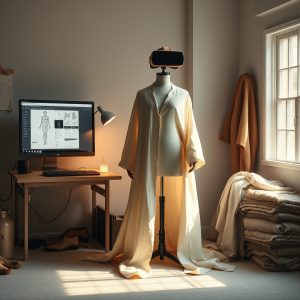
Virtual try-on technology is often dismissed as a gimmick, a novelty for those who prefer screens to fitting rooms. But the first time I saw a client’s face light up as she virtually slipped into a garment, I realized its true power. The screen was not a barrier; it was a mirror that reflected not just her image but her imagination. She twisted, turned, adjusted the fit with a tap of her finger, and in that moment, the garment ceased to be a static object. It became a possibility, a future version of herself she could step into before it even existed in physical form.
There is something profoundly intimate about this process. The technology does not just simulate fit; it simulates belonging. It allows the wearer to see themselves not as they are but as they could be, wrapped in cloth that moves with them, breathes with them, understands them. It is a reminder that clothing is not just about covering the body but about revealing the soul.
The Thread That Binds
In the end, what draws me back to this work is not the technology itself but the way it allows us to listen—to the body, to the fabric, to the quiet spaces in between. Digital pattern development, anthropometric design, zero-waste cutting—they are not just tools but languages, each one offering a new way to converse with the world. And perhaps that is the true magic of it all: that in a time when so much of our lives is mediated by screens, these innovations bring us closer to the tactile, the human, the real.
The loom has always been a place of stories, where threads intertwine to create something greater than themselves. Today, that loom is digital, its threads woven not just from cotton or silk but from data, from collaboration, from the silent whispers of bodies longing to be seen. And if we listen closely, we might just hear the future taking shape, one stitch at a time.