The Cartography of Comfort: How Anthropometric Design and Modular Clothing Are Mapping the Body’s Uncharted Terrain
There is a quiet magic in the way a garment settles against the skin—not just as fabric, but as a second topography, a living map of curves and hollows, of movement and stillness. It is a dialogue written in the language of tension and release, of seams that whisper where the body bends and folds that remember where it has been. For centuries, this conversation was one-sided, dictated by rigid patterns and standardized sizing that treated the body as a static thing, a mere vessel to be draped rather than a landscape to be explored. But what if clothing could do more than fit? What if it could listen?
The Body as a Living Atlas
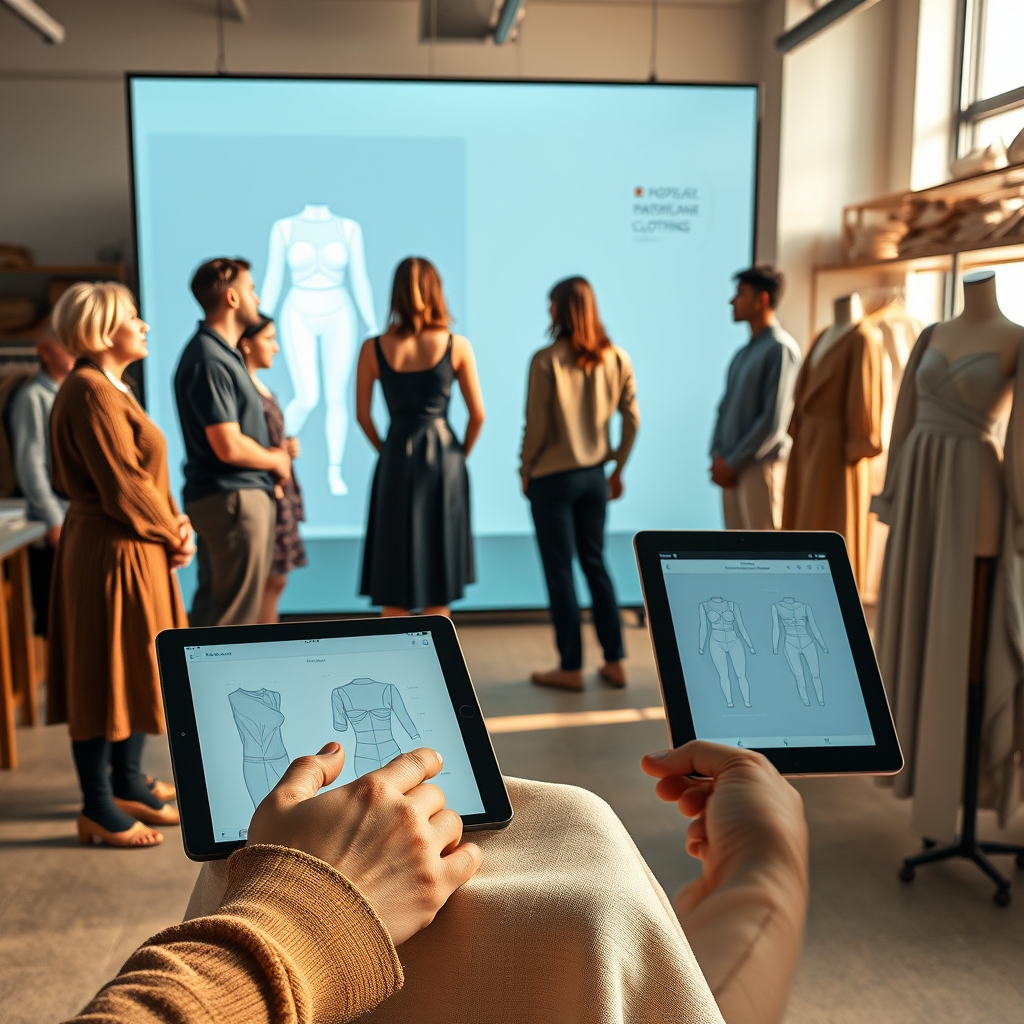
Anthropometric design does not begin with cloth. It begins with measurement, yes, but not the cold, clinical kind that reduces the body to numbers on a chart. Instead, it is a kind of cartography—one that charts the body’s unspoken contours, the way a shoulder slopes differently when tired, how the spine curves when reaching, or how the waist expands with breath. These are not flaws to be corrected but features to be celebrated, each one a unique coordinate in the atlas of an individual’s form. Digital pattern development has become the compass in this exploration, allowing designers to translate these coordinates into patterns that move with the body, rather than against it.
Consider the way a tailor’s hands once memorized the shape of a client, how their fingers would press into the small of a back or trace the line of a collarbone, committing the body’s geometry to muscle memory. Today, 3D garment simulation does something similar, but with the precision of algorithms and the patience of machines. It captures not just the static dimensions of a body, but its dynamism—the way it stretches, bends, and breathes. The result is not just a better fit, but a deeper understanding of what fit means.
The Modular Promise
If anthropometric design is the map, then modular clothing systems are the paths that crisscross it. They are the answer to a question we’ve only just begun to ask: What if our clothes could adapt as we do? Not just in size, but in function, in mood, in the shifting narratives of our lives. A modular system is a wardrobe in motion, a collection of pieces that can be reconfigured like sentences in a poem, each one capable of telling a different story. Snap here, adjust there, and suddenly a dress becomes a top, a jacket transforms into a vest, and a single garment takes on the weight of many.
This is not just about versatility. It is about respect—for the body’s complexity, for the environment’s fragility, and for the wearer’s autonomy. Zero-waste pattern cutting plays its part here, too, ensuring that every scrap of fabric is accounted for, that nothing is discarded in the pursuit of perfection. The result is clothing that is not just sustainable, but generous, offering more than it takes. It is a radical act of kindness, both to the planet and to the self.
The Alchemy of Adaptation
There is a moment, when slipping into a garment that has been designed with this level of intention, when the boundary between body and fabric begins to blur. It is not unlike the way a dancer and their partner move as one, or how a musician and their instrument seem to breathe in unison. The clothing ceases to be an object and becomes an extension of the self, a second skin that remembers, responds, and adapts. This is the promise of adaptive clothing solutions—garments that do not just accommodate the body, but collaborate with it.
Imagine a shirt that adjusts its sleeves as your arms swell with the day’s exertions, or a dress that cinches itself at the waist when you stand taller, not because it is programmed to do so, but because it has learned the rhythm of your movements. This is not science fiction; it is the logical evolution of a design philosophy that treats the body as a living, breathing entity rather than a mannequin to be dressed. Tech-integrated pattern making makes this possible, embedding sensors and responsive materials into the very structure of the garment, turning fabric into a canvas for interaction.
The Human Touch in a Digital Age
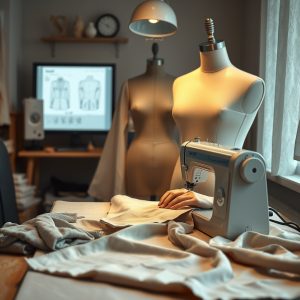
Yet, for all the wonders of digital pattern development and 3D simulation, there is something irreplaceable about the human touch. The way a seamstress’s needle glides through fabric, the way a tailor’s shears cut with the confidence of decades of practice—these are not just technical skills, but acts of devotion. They are the quiet counterpoint to the hum of machines, a reminder that clothing is not just about function, but about connection. Collaborative fashion prototyping bridges this gap, bringing together the precision of technology and the intuition of human craftsmanship. It is in this space that the most extraordinary garments are born—not as products, but as collaborations between designer, technology, and wearer.
Sustainable fabric selection plays its role here, too. The choice of material is not just a matter of aesthetics or durability, but of ethics. A garment made from organic cotton or recycled polyester is not just a statement about style, but about values. It is a declaration that the clothes we wear should nourish the earth as much as they adorn the body. When combined with anthropometric design and modular systems, these fabrics become more than just materials—they become the building blocks of a new kind of wardrobe, one that is as mindful as it is beautiful.
The body is not a static thing. It is a river, ever-changing, ever-flowing, and our clothes should be the same. They should bend with us, grow with us, and adapt to the shifting landscapes of our lives. In this way, clothing becomes more than just a covering—it becomes a companion, a witness, a silent partner in the dance of existence. And when we finally find that perfect fit, that garment that moves with us as if it were part of us, we realize that the true magic of fashion was never in the stitching or the seams, but in the way it makes us feel seen.