The Hushed Symphony of Stitches: How Precision Fit Analysis and Sustainable Fabric Selection Are Composing the Future of Clothing

There is a quiet magic in the way a garment comes to life—not in the grand gestures of design, but in the almost imperceptible moments where fabric meets form, where thread whispers against skin. It is a conversation held in the language of measurements, of tension and release, of the body’s silent demands and the cloth’s gentle response. This is the realm where precision fit analysis and sustainable fabric selection converge, not as mere techniques, but as acts of devotion to the body’s unspoken needs and the earth’s fragile breath.
The Body as a Living Manuscript
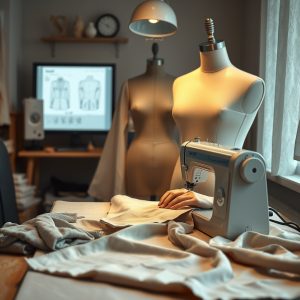
Every body is a manuscript, its curves and hollows written in a script only the most attentive hands can decipher. Precision fit analysis is the art of reading this script—not with the cold precision of a ruler, but with the empathy of a storyteller. It is the difference between a garment that merely covers and one that understands. The way a seam falls along the spine, the subtle drape of fabric over the shoulder, the way a hem brushes the ankle—these are not accidents, but deliberate acts of listening. The body speaks in the language of comfort, of ease, of the way a sleeve allows the arm to move without resistance, and precision fit analysis is the translator that turns these murmurs into stitches.
In the past, this dialogue was confined to the hands of master tailors, their fingers tracing the contours of a client’s form like a blind man reading Braille. Today, technology has extended this intimacy, allowing digital tools to capture the body’s geometry with a fidelity once reserved for the most skilled artisans. Yet, for all its precision, the soul of fit analysis remains rooted in the human touch—the intuition that knows when a millimeter matters, when a curve demands more than a straight line can offer.
The Fabric of Responsibility
But what is fit without fabric? The cloth we choose is not merely a medium; it is a partner in the conversation. Sustainable fabric selection is the act of choosing a voice that does not shout over the body’s whispers, but harmonizes with them. It is the recognition that every yard of fabric carries with it a story—not just of the hands that wove it, but of the land that nurtured it, the water that sustained it, the air that carried its scent. To select sustainably is to honor these stories, to weave them into the garment as carefully as the threads themselves.
The shift toward sustainable fabrics is not just a trend; it is a reckoning. It is the fashion industry’s slow, reluctant awakening to the fact that beauty cannot exist in isolation from responsibility. The softness of organic cotton, the resilience of hemp, the quiet luxury of recycled fibers—these are not just alternatives, but declarations. They say: We see you, earth. We hear your labored breath. We will not take without giving back. And in this giving, the garment becomes more than an object; it becomes a covenant, a promise between the wearer and the world.
The Alchemy of Zero-Waste
Yet, even the most sustainable fabric is only as virtuous as the hands that shape it. Zero-waste pattern cutting is the alchemy that transforms scraps into gold, that turns the remnants of one garment into the foundation of another. It is a practice born of necessity, but elevated to an art form—a dance of geometry and intuition, where every cut is a question and every seam a response. The body’s silhouette becomes a puzzle, and the designer, a solver of riddles, arranging pieces not to conquer the fabric, but to collaborate with it.
This is where precision fit analysis and sustainable fabric selection find their most poetic expression. The designer must not only listen to the body’s demands but also to the fabric’s limitations, its grain, its stretch, its willingness to bend. A zero-waste pattern is not a constraint; it is a conversation. It asks: How can we honor this cloth? How can we ensure that nothing is wasted, not even the space between the threads? The answer lies in the hands that draft the pattern, in the eyes that see not just the garment’s final form, but the journey it takes to get there.
The Future Worn Lightly
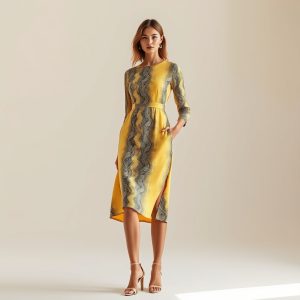
What does it mean to wear the future? It is not about the flash of technology or the novelty of innovation, but about the quiet revolution of a garment that fits as if it were born from your skin, that carries the weight of its making with grace. It is about the moment when you slip into a dress and feel not just the fabric against your body, but the intention behind every stitch—the hours of analysis, the careful selection of materials, the reverence for the earth’s resources. This is the future of clothing: not a departure from the past, but a return to its essence, where every thread is a thread of connection.
Perhaps the most radical act in fashion today is not to create something new, but to create something true. True to the body, true to the earth, true to the hands that made it. Precision fit analysis and sustainable fabric selection are not just techniques; they are philosophies. They remind us that clothing is not merely something we put on, but something we carry—like a second skin, like a story, like a promise. And in a world that often feels fragmented, these garments are the stitches that hold us together, one careful seam at a time.