The Living Dialogue: How Modular Clothing Systems and Anthropometric Design Are Teaching Fabric to Listen
The first time I held a piece of fabric shaped by modular design, it felt like touching a conversation. Not the kind of chatter that fills silence with noise, but the quiet, deliberate exchange between two beings learning to understand each other. The seams weren’t just lines of thread; they were sentences, each stitch a word in a language the body had been waiting to speak. This was clothing that didn’t just drape over skin—it engaged with it, responded to it, as if the fabric itself had been taught to listen.
The Body as a Living Blueprint
Anthropometric design has long promised a future where clothing isn’t just made for the body, but with it. Yet, for all its precision—its measurements, its algorithms, its digital avatars—there’s something almost sacred in the way modular systems take this promise further. They don’t just fit the body; they adapt to its rhythms. A sleeve that shortens with a tug, a hem that adjusts with a snap, a waistband that expands with a breath. These aren’t just adjustments; they’re acknowledgments. The body isn’t static, and neither, then, should be what covers it.
I remember the first time I saw a garment constructed this way—a jacket with detachable panels, a dress with interchangeable collars. It wasn’t just versatile; it was alive. The wearer wasn’t just choosing a style; they were participating in a dialogue. Each modification was a question: How do you feel today? Each response was an answer: This is who I am right now. The clothing didn’t just reflect identity; it helped shape it.
The Poetry of Precision
There’s a certain poetry in the way modular systems marry precision with fluidity. Zero-waste pattern cutting, for instance, doesn’t just minimize fabric waste; it forces the designer to think in terms of relationships. How does this panel connect to that one? How does the negative space become part of the design? It’s a dance between constraint and creativity, where every cut is both a limitation and an invitation. The result isn’t just sustainable; it’s intentional.
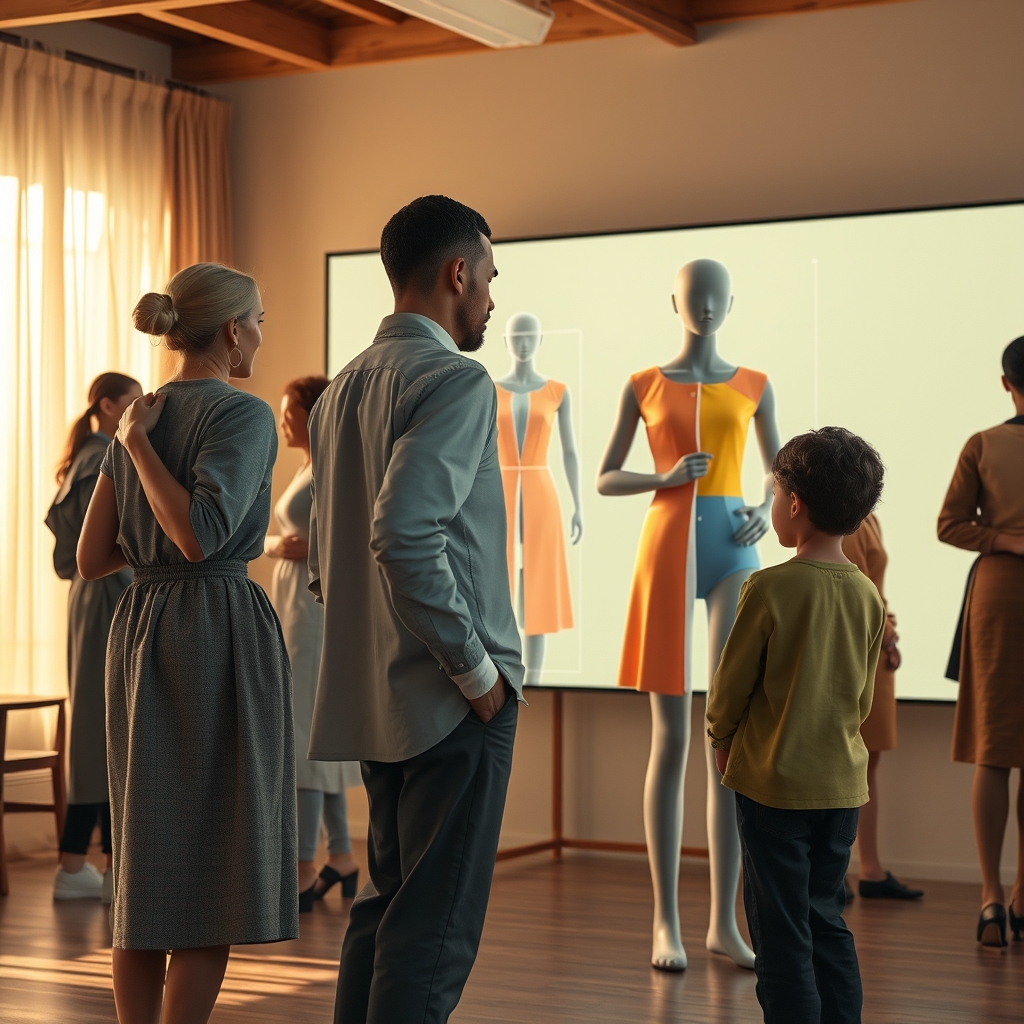
And then there’s the digital layer—the 3D simulations, the virtual try-ons, the algorithms that predict how a garment will move before it’s even sewn. These tools don’t replace craftsmanship; they deepen it. They allow designers to see not just how a garment fits, but how it lives. A sleeve that flutters just so in a breeze, a skirt that sways with the wearer’s steps—these aren’t accidents. They’re the result of a process that treats clothing as a living extension of the self.
The Unseen Conversations
What fascinates me most about modular and anthropometric design is how they reveal the unseen conversations we have with our clothes every day. We tug at hems when we’re nervous, adjust collars when we’re uncertain, loosen waistbands when we’re full—not just physically, but emotionally. Clothing that adapts to these moments doesn’t just fit better; it understands better. It becomes a collaborator in the way we navigate the world.
I’ve seen this in action with adaptive clothing solutions—garments designed for bodies that don’t conform to traditional sizing, or for people whose needs change throughout the day. A zipper that can be operated with one hand, a magnetic closure that replaces buttons, a fabric that stretches without losing shape. These aren’t just functional details; they’re acts of empathy, woven into the very structure of the garment. They say: I see you. I’m here for you.
The Future as a Collaborative Draft
Perhaps the most beautiful aspect of this approach is how it turns the act of getting dressed into a creative act. When clothing is modular, it’s no longer a finished product; it’s a draft, open to revision. The wearer becomes a co-designer, shaping their garment as their day—and their mood—unfolds. A morning commute might call for sleek, streamlined lines, while an evening with friends might invite something softer, more expressive. The garment doesn’t dictate the mood; it amplifies it.
This is where the true potential of modular and anthropometric design lies—not just in creating better-fitting clothes, but in redefining our relationship with what we wear. Clothing stops being something we consume and starts being something we engage with. It becomes a partner in our daily rituals, a witness to our transformations, a silent but constant presence in the way we move through the world.
The Fabric That Learns
There’s a moment in every fitting when the garment seems to sigh into place, as if it’s finally found its home. With modular and anthropometric design, that moment isn’t just about fit—it’s about recognition. The fabric learns the body’s contours, its habits, its quirks. It doesn’t just cover; it remembers. And in that remembering, it becomes more than just cloth. It becomes a second skin, one that grows and changes alongside us, always listening, always responding, always ready to adapt to the next chapter of our story.
We often think of clothing as something we put on, but what if it’s also something that puts us on? What if it doesn’t just reflect who we are, but helps us become who we’re meant to be? Modular systems and anthropometric design don’t just dress the body—they unfold it, revealing layers of possibility with every stitch, every seam, every silent, listening thread.